How can homeowners reduce pool hazards for dogs and other pets?
Do not assume a dog can swim or find the exit. Restrict unsupervised access, introduce water gradually, teach and mark a usable exit, consider a fitted pet life jacket, provide fresh drinking water, rinse after swimming, and lock concentrated pool chemicals away.
Not every dog can swim confidently, and even a strong swimmer may panic, tire, or fail to find the exit. Other pets face different risks. Restrict unsupervised access, introduce water gradually, teach and mark an exit, provide fresh drinking water, secure concentrated chemicals, and ask a veterinarian about individual health concerns.
Control access first
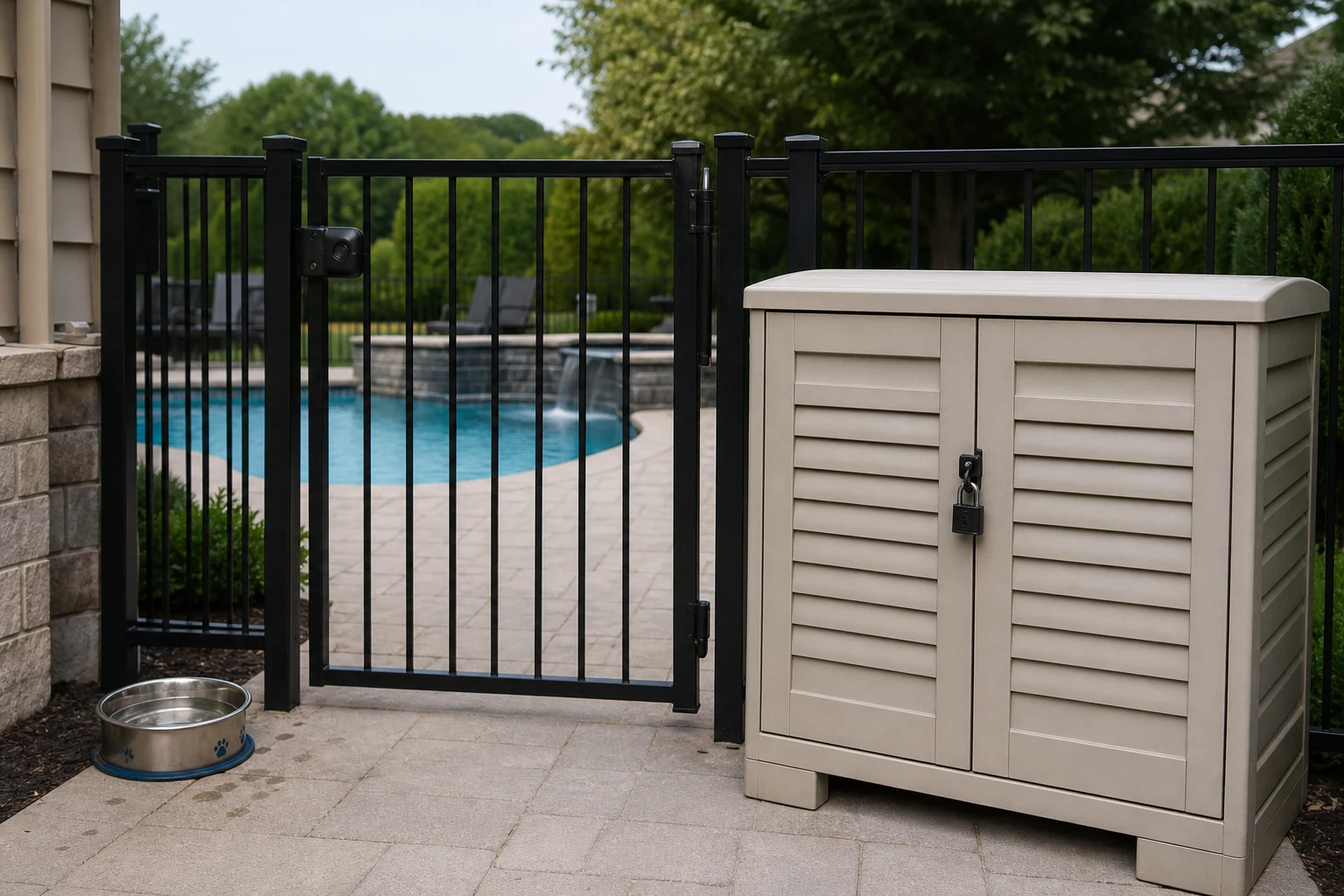
Use a pool barrier that also works for the animals in the household without weakening child protection. Check gaps under fences, pet doors, gates, climbable furniture, and landscaping. A small dog may pass through an opening that meets a different purpose.
Never prop a gate open for pet convenience. A pet door from the house to the pool area can create access for both animals and children. Create a separate secure yard zone if needed.
Pool alarms can add warning, but pets, wind, and water features may affect performance. Test the device; do not use it instead of a physical barrier.
Do not assume every dog can swim
Breed, body shape, age, health, coat, fear, vision, and experience affect ability. The American Kennel Club notes that not all dogs are natural swimmers. Short-legged, heavy-chested, elderly, or medically affected dogs may struggle.
Introduce the pool at a shallow, controlled entry with positive reinforcement. Never throw or force a dog into water. A frightened animal can scratch or climb onto the handler and put both at risk.
Ask a veterinarian whether swimming is suitable for a dog with heart, respiratory, joint, seizure, ear, skin, or recovery concerns.
Teach the exit repeatedly
Many pools have easy entry but only one set of steps. Guide the dog to that exit from different points until it consistently recognizes the route. Use a visual marker near the steps if it helps, but keep it from becoming a child climbing aid.
A pet ramp may improve access if it is stable, visible, finish-compatible, and does not interfere with the cover or barrier. Test it under direct supervision.
Supervise every swim even after training. A tired or panicked animal may not use a learned route.
Consider a fitted flotation aid
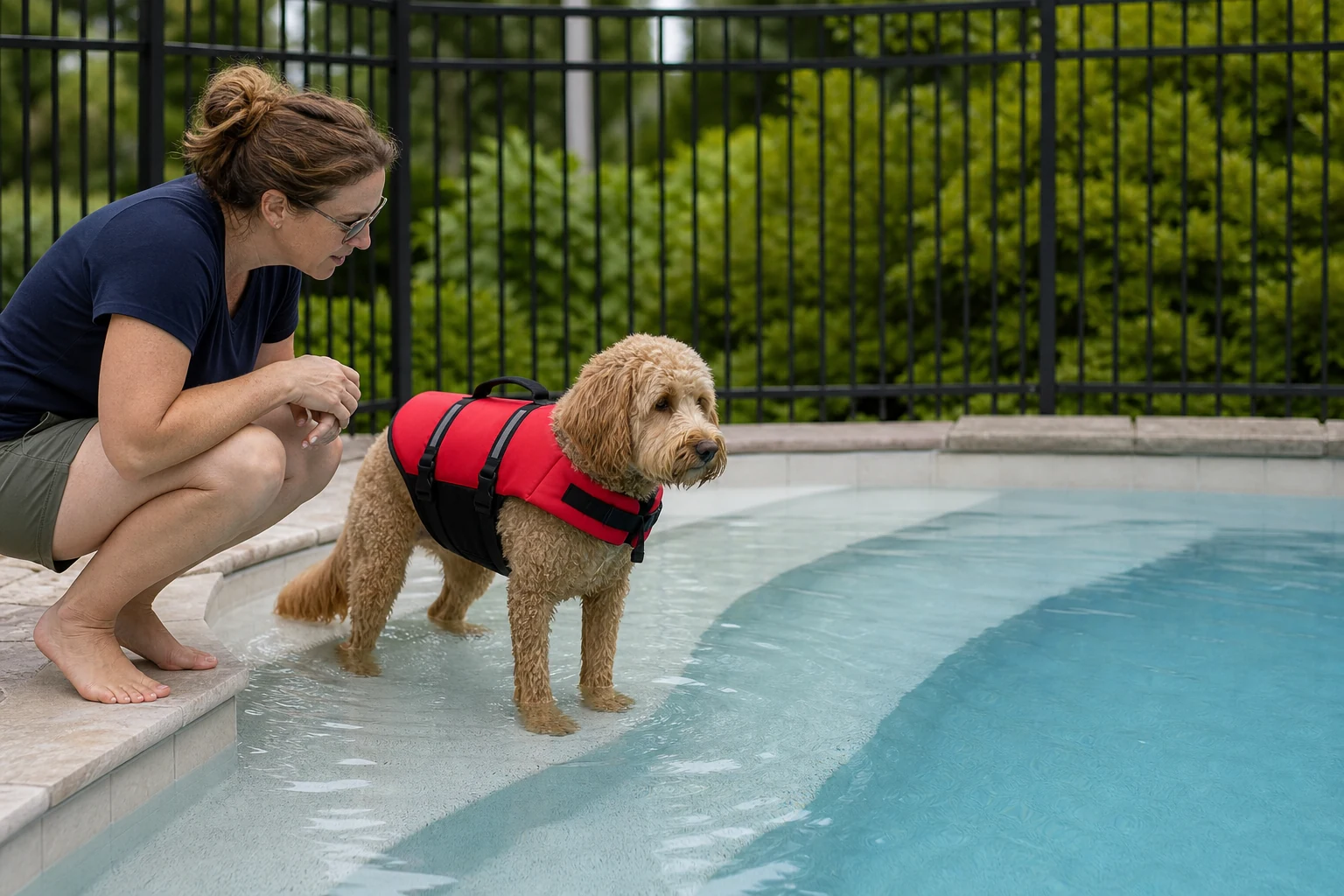
A pet life jacket can add buoyancy and a grab handle, particularly for new swimmers, boat use, or dogs with limited stamina. Select the correct size and fit, allow the dog to acclimate on land, and inspect straps and hardware.
The jacket is not permission for unsupervised access. It can snag, shift, or become ineffective if poorly fitted.
Protect drinking water and water quality
Provide a bowl of fresh water and discourage drinking from the pool. Excessive pool-water ingestion can cause illness, and saltwater systems do not make the water suitable to drink.
AKC guidance notes that normal maintained pool water is different from concentrated chlorine products. Lock tablets, liquids, acids, salt, algaecides, and test reagents in original containers where pets cannot reach spills or chew packaging.
Follow product re-entry labels before allowing pets into recently treated water. Do not assume a product safe for human swimming is automatically appropriate for every animal.
Rinse and dry after swimming
Rinse the coat with fresh water to remove pool residue. Dry the ears gently, especially for dogs prone to ear problems, and inspect eyes, skin, paws, and nails. Stop swimming and contact a veterinarian for persistent irritation, coughing, vomiting, weakness, disorientation, or other concerning signs.
Keep sessions short and provide rest and shade. Swimming is strenuous even when the dog appears excited.
Remove equipment hazards
Keep pets away from suction fittings, skimmers, robotic cleaners, cords, hoses, covers, and automatic-cover tracks. Remove a robotic cleaner before swimming if the manual requires it. A floating solar cover can entangle an animal and is not a safety cover.
Do not let pets chew pool toys or retrieve objects near a running drain. Trim or remove dangling tags that could snag, while maintaining required identification by a safer method.
Plan for other animals
Cats, rabbits, reptiles, backyard poultry, and wildlife do not share one safety profile. Barriers should prevent accidental entry without trapping an animal at the water. Provide wildlife escape devices designed for the pool where appropriate and check skimmers before starting equipment.
Do not use improvised pesticide, algaecide, or wildlife-control chemicals in pool water. Contact animal control or a wildlife professional for recurring entry.
Include pets in the emergency plan
Know the nearest emergency veterinary clinic and keep the pet’s medical information available. If an animal is struggling, avoid entering in a way that creates a human drowning risk. Use a reachable exit, ramp, or aid when possible.
After a submersion, chemical exposure, or suspected aspiration, seek veterinary advice even if the animal appears to recover.
Final takeaway
Pet pool safety begins with access control and supervision. Let animals approach gradually, teach the exit, use a fitted flotation aid when appropriate, supply fresh water, rinse afterward, and secure chemicals and equipment. Individual ability varies, so combine household barriers with advice from the pet’s veterinarian.
Sources and Supporting Claims
American Kennel Club
- Not every dog should be assumed to be a confident swimmer.
- Dogs need supervision and a practiced pool exit.
- Concentrated chlorine products must be secured and dogs should have fresh drinking water.
American Kennel Club
- Pool access should be fenced when pets cannot be supervised.
- Drinking excessive chlorinated pool water and drowning are pet hazards.
Centers for Disease Control and Prevention
Published 2025-05-29
- Close supervision, four-sided fencing, water skills, and CPR are complementary safety layers.
- Pool chemicals should be secured and used according to their labels.
- Swimmer hygiene reduces contaminant demand on disinfectant.