How does routine maintenance differ among cartridge, sand, and DE filters?
Use the installed filter's clean-pressure baseline, pressure gauge, flow symptoms, and manufacturer instructions to decide when service is needed. Cartridge elements are removed and rinsed, while sand and many DE systems use model-specific backwashing; every pressurized filter must be isolated and depressurized before opening.
Every pool filter is a pressure vessel connected to a circulation system. Maintenance begins with the installed manual, a readable pressure gauge, a known clean-filter pressure, and safe isolation—not with opening a clamp because the calendar says it is time. Cartridge, sand, and diatomaceous-earth filters handle debris differently, so their service methods, water use, and hazards differ too.
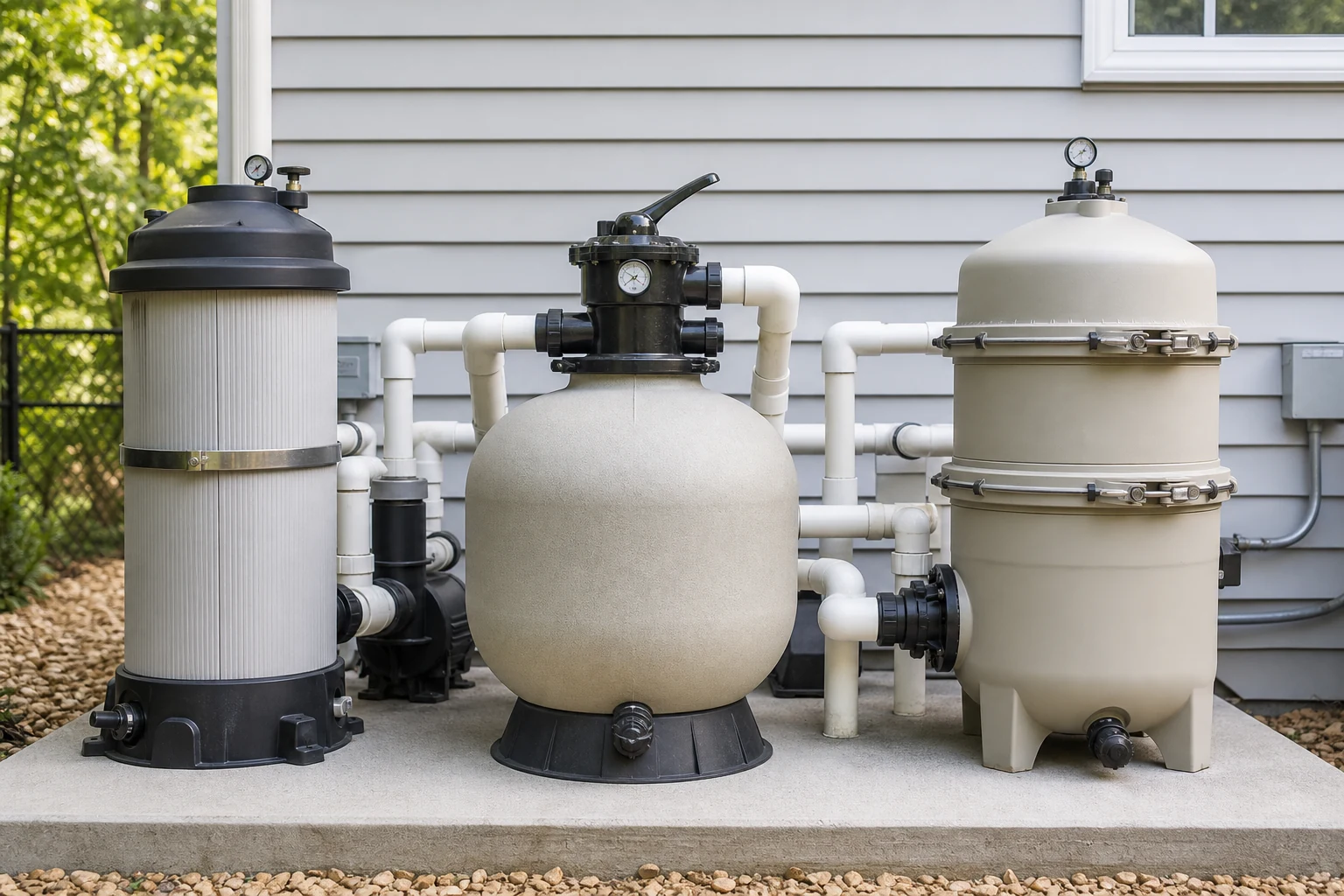
Establish a trustworthy baseline
After the filter has been correctly cleaned or serviced and the pump is free of obvious restrictions, run the system at a documented speed and valve position. Record the stabilized pressure. This is the clean baseline for that configuration. A variable-speed pump may show different pressure at different speeds, so comparisons must use the same operating condition.
Inspect the gauge when the pump is off. If it does not return to zero, is cracked, or is difficult to read, replace it with a compatible part. Also note normal return flow and pump sound. Filter pressure is useful evidence, but a bad gauge, blocked suction line, air leak, closed valve, or failing pump can create misleading readings.
Depressurize before opening anything
Turn off the pump at the correct disconnect and prevent an automatic controller from restarting it. Close or position valves as the manual specifies. Open the air relief only as directed and confirm that pressure is fully released. Stand clear of lids, clamps, and bands during startup and service.
Never loosen a filter closure while the vessel is pressurized. Inspect clamps, O-rings, lid surfaces, air-relief assemblies, and internal parts for damage. Use the lubricant, torque, orientation, and replacement parts specified for the model. If the closure is corroded, distorted, incomplete, or unfamiliar, stop and obtain professional service.
Cartridge filter maintenance
Cartridge filters use pleated elements that are removed for cleaning. EPA WaterSense notes that they do not require backwashing, which can reduce water use. Shut down and depressurize the vessel, remove elements according to the manual, and inspect pleats, end caps, bands, and cores. A torn or collapsed element cannot filter correctly.
Rinse from top to bottom with a moderate hose stream, spreading pleats gently so debris can escape. A pressure washer can damage fabric and drive particles deeper. Oils or scale may require a manufacturer-approved cleaning process in the correct order; applying acid before removing oils can set contamination into the media. Never mix cleaning products.
Reassemble the elements in their proper positions, inspect and seat the tank seal, close the vessel correctly, and use the air-relief startup procedure. Record the new pressure. If it remains unusually high or low, investigate flow, valves, elements, and the gauge rather than assuming the cleaning failed.
Sand filter maintenance
Sand filters direct water through a bed of graded media. Many are cleaned by backwashing, which reverses flow and sends dirty water to a waste line. Use the exact multiport or push-pull valve sequence in the manual and always stop the pump before changing valve position. Verify that the discharge hose and destination are secure and legal.
Backwash based on pressure or flow evidence, not automatically every week. Excessive backwashing wastes water. Insufficient backwashing can leave the bed loaded and restrict circulation. Some valves use a rinse step before returning to filter mode. Never run a multiport valve between indexed positions.
Sand does not need routine seasonal replacement merely because it is old. Channeling, calcification, incorrect media, damaged laterals, or a valve problem can reduce performance. Opening a sand tank is heavy, awkward work and may expose fragile internal parts; use a qualified technician if the diagnosis requires internal inspection.
DE filter maintenance
Diatomaceous-earth filters coat grids or fingers with fine filter media. Many models backwash, but they require the correct amount and type of fresh media afterward. Running without the required coating can foul or damage elements; adding too much can raise pressure and reduce flow.
DE dust can be harmful when inhaled. Avoid creating airborne dust, follow the product label, use appropriate protective equipment, and comply with local disposal requirements. Some jurisdictions restrict where backwash water or DE can be discharged. Alternative cellulose media may be allowed only if the filter manufacturer accepts it.
Periodic teardown may be needed to clean and inspect grids, manifolds, septa, and seals. Follow the model procedure exactly. A torn grid or cracked manifold can return media and debris to the pool.
Diagnose the system, not just the filter
Rapidly rising pressure after cleaning can indicate heavy debris, algae, undersized filtration, a chemical treatment that is loading the media, or a downstream restriction. Low pressure with weak returns may indicate a blocked skimmer, clogged pump basket, low water level, suction air leak, impeller obstruction, or pump problem.
Cloudy water can result from inadequate sanitizer, short operating time, bypass around damaged media, improper valve position, poor circulation, or particles too fine for the current setup. Cleaning the filter repeatedly will not correct every cause.
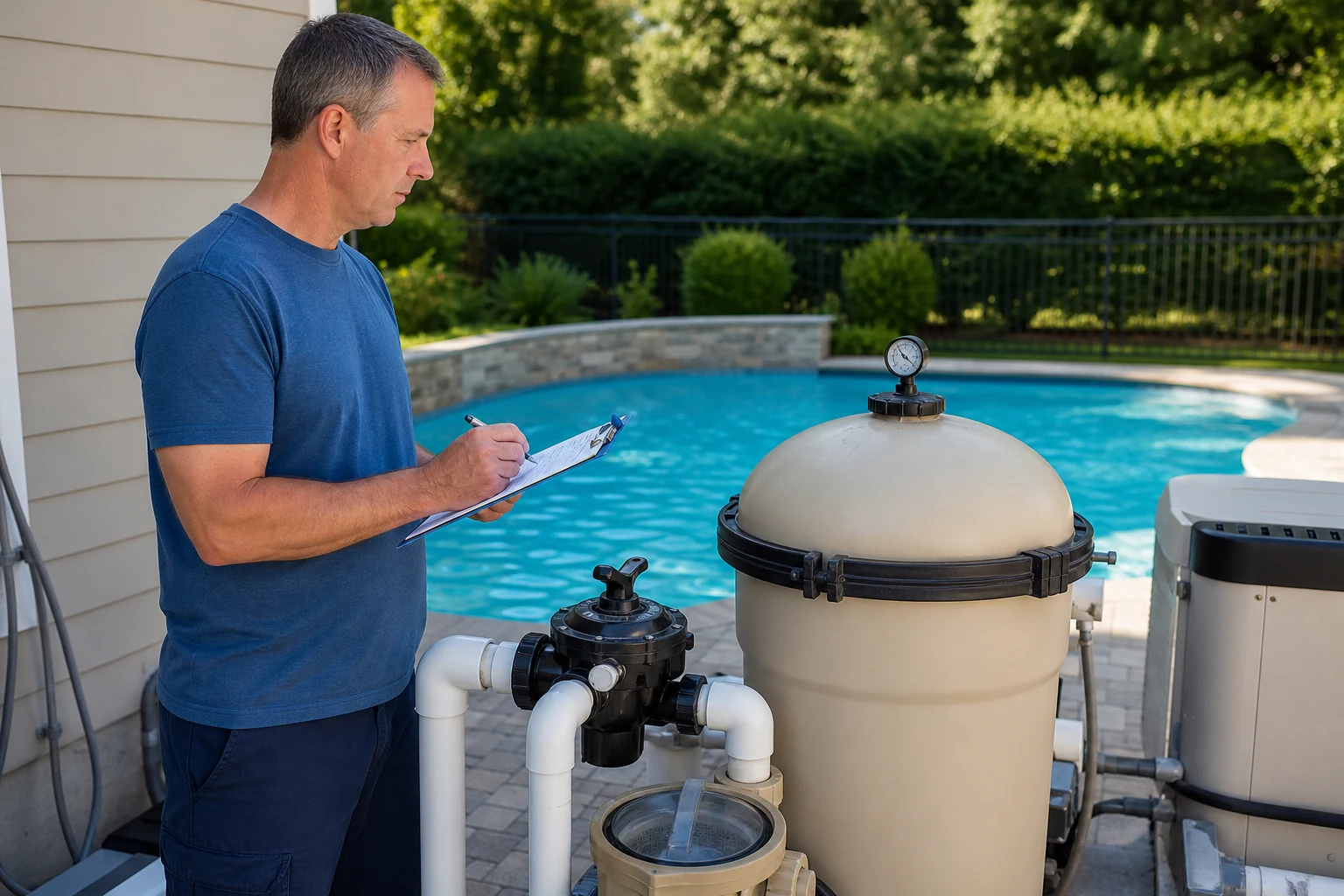
Final takeaway
Maintain a filter by evidence: know the clean baseline, watch pressure and flow, protect baskets, and follow the installed manual. Cartridge elements are rinsed without backwashing; sand systems generally use controlled backwash cycles; DE systems require safe media handling and recoating. For every type, full depressurization and correct closure are non-negotiable.
Sources and Supporting Claims
U.S. Environmental Protection Agency WaterSense
Published 2022-09-01
- Pool filter types differ in particle capture, maintenance, and backwash water use.
- Cartridge filters do not require backwashing.
- Pool covers and equipment choices affect water and energy efficiency.
U.S. Environmental Protection Agency WaterSense
Published 2026-06-01
- Skimming and vacuuming reduce load on filtration.
- Filters should be cleaned based on need and pressure rather than an arbitrary schedule.
- Pool equipment and plumbing should be drained before freezing weather where applicable.
- Automatic-fill systems should be monitored for leaks.
Pentair
- Filter disassembly and reassembly are safety-sensitive and model-specific.
- Poor clarity can reflect sanitizer, flow, sizing, media, or installation problems.
- The installed equipment manual controls service procedures.