What electrical hazards should homeowners recognize around a pool?
Stop swimming and shut power off from a safe location if anyone feels tingling, lights flicker, or equipment behaves abnormally. GFCIs, grounding, bonding, suitable equipment, dry connections, safe separation, and inspection by a qualified electrician are essential; homeowners should not troubleshoot energized pool systems.
Water, wet skin, grounded surfaces, and electrical faults can create fatal conditions around a pool. Homeowners should recognize warning signs, keep unsuitable devices and cords away, test GFCIs as directed, and use qualified pool electricians for wiring, grounding, bonding, lights, pumps, heaters, and controls. Never troubleshoot energized pool equipment from the water.
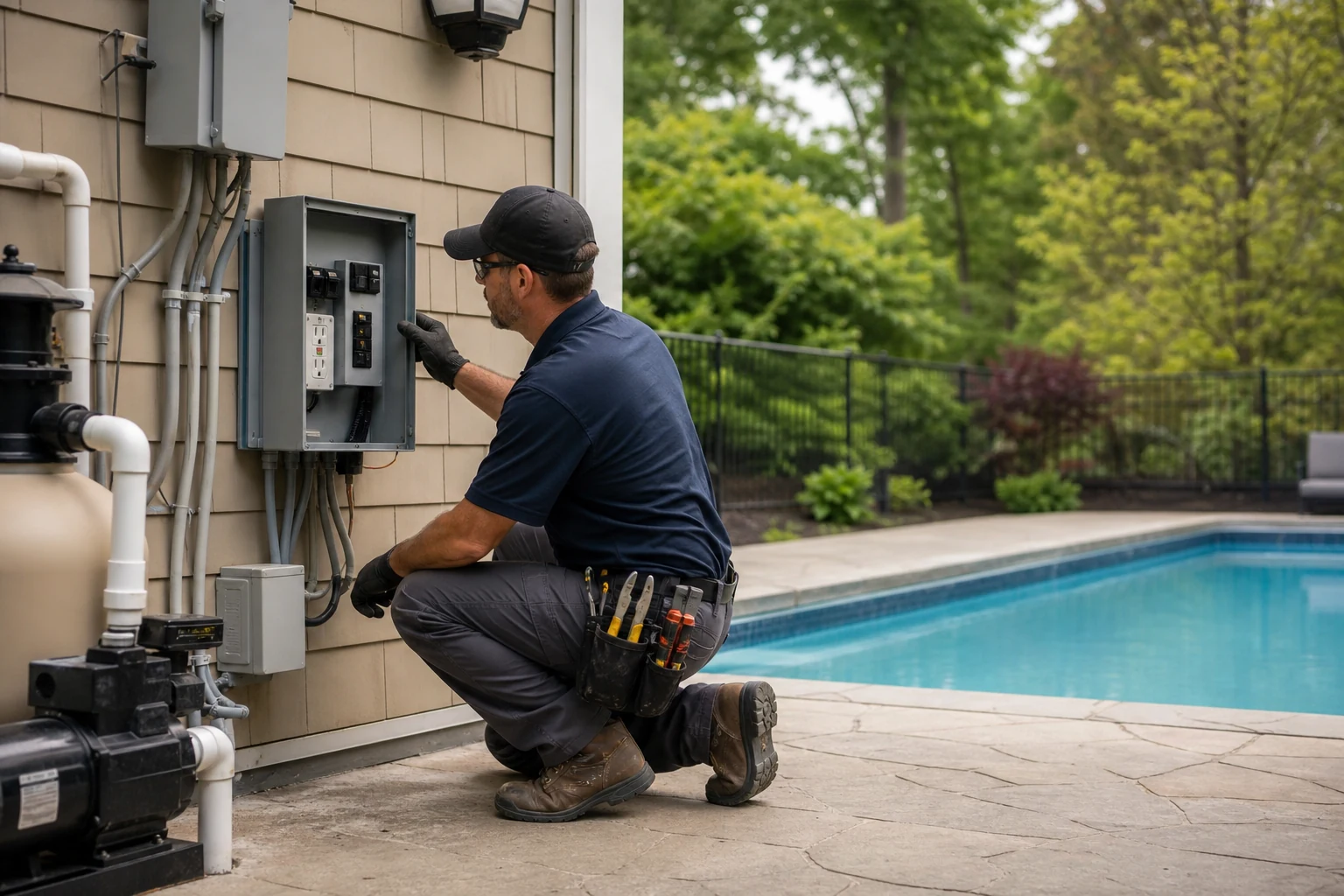
Recognize an electrical emergency
CPSC identifies tingling, muscle cramps, an inability to move, unusual swimmer behavior, and malfunctioning underwater lights as possible shock signs. If anyone reports tingling or lights flicker, order everyone out without touching metal fixtures and shut power off from a safe, dry location if that can be done without approaching the hazard.
Call emergency services. Do not enter the water to assist if electricity may be present; doing so can create another victim. Follow dispatcher instructions and have the complete electrical system inspected before reopening.
Use GFCI protection
A ground-fault circuit interrupter is designed to disconnect power when it detects current leaving the intended path. ESFI recommends GFCIs for outdoor and pool-related applications and regular testing according to the device instructions.
A GFCI is not a cure for damaged wiring, missing bonding, an incorrect light, or an unsuitable extension cord. Repeated trips are evidence of a fault. Do not keep resetting the device or substitute a standard breaker.
Pool and spa GFCI requirements depend on equipment, circuit, distance, voltage, and the adopted electrical code. A qualified electrician should verify protection and test operation.
Understand grounding and bonding
Grounding provides a fault-current path intended to help protective devices operate. Equipotential bonding connects conductive parts around the pool to reduce voltage differences a person could bridge. They serve related but different purposes.
Pump motors, metal parts, reinforcing steel, rails, ladders, water, heaters, covers, and other components can be involved under the applicable code. A visible wire is not proof that the system is complete. Do not cut, move, or add bonding connections without qualified design.
Keep household devices away
CPSC lists radios, televisions, cords, outlets, switches, and overhead lines among pool hazards. Keep plug-in devices and extension cords well away from the water. Use battery-operated equipment when appropriate, but keep it dry and follow its listing.
Do not charge a phone on the deck, operate a corded tool with wet hands, or route decorative lighting over the pool. Holiday lights, speakers, fans, projectors, and outdoor kitchens need the same discipline.
Never use a household extension cord to power a robotic pool cleaner or pump. Follow the product manual for outlet, GFCI, distance, and power-supply placement.
Inspect underwater lights
Cloudy lenses, water inside a fixture, flicker, corrosion, a damaged niche, or a tripping circuit need professional evaluation. Do not remove a light from the niche with power on or assume a low-voltage light is harmless.
Replacement lamps, gaskets, transformers, and fixtures must be compatible and installed as listed. Changing one component can affect sealing, heat, grounding, bonding, or code.
Maintain the equipment pad
Keep drainage working so pumps, controls, outlets, and connections are not submerged. Repair leaks before they spray motors or panels. Keep panel doors closed, seals intact, and labels readable.
Do not store acid, chlorine, or salt against electrical equipment. Corrosive vapors can damage contacts and enclosures. Maintain required clearances and ventilation.
If a motor hums, overheats, smells burned, trips protection, or has a damaged cord, shut it down and obtain service. Mechanical symptoms can have electrical causes.
Watch overhead and underground utilities
Do not place a pool, tall pole, cleaning tool, or structure under unsafe overhead lines. Before construction, locate utilities and coordinate required clearances. A long aluminum pole can contact a line even when the person never sees it touch.
Call the utility-location service before digging, but understand that private lines may require a separate locator. Pool bonding conductors and landscape wiring can also be hidden.
Plan for storms and floods
Leave the pool at the first thunder. Water and open yards increase exposure; do not wait for rain. Secure equipment without handling long metal poles near a storm.
After flooding, keep power off. Submerged motors, panels, receptacles, heaters, and controls need qualified evaluation and may require replacement. Dry appearance does not prove safety.
Schedule professional inspection
Have the system inspected after buying a home, adding equipment, experiencing shocks or repeated trips, finding unpermitted wiring, or completing deck work that may affect bonding. Ask the electrician to document GFCI tests, grounding, bonding, equipment condition, and applicable corrections.
Final takeaway
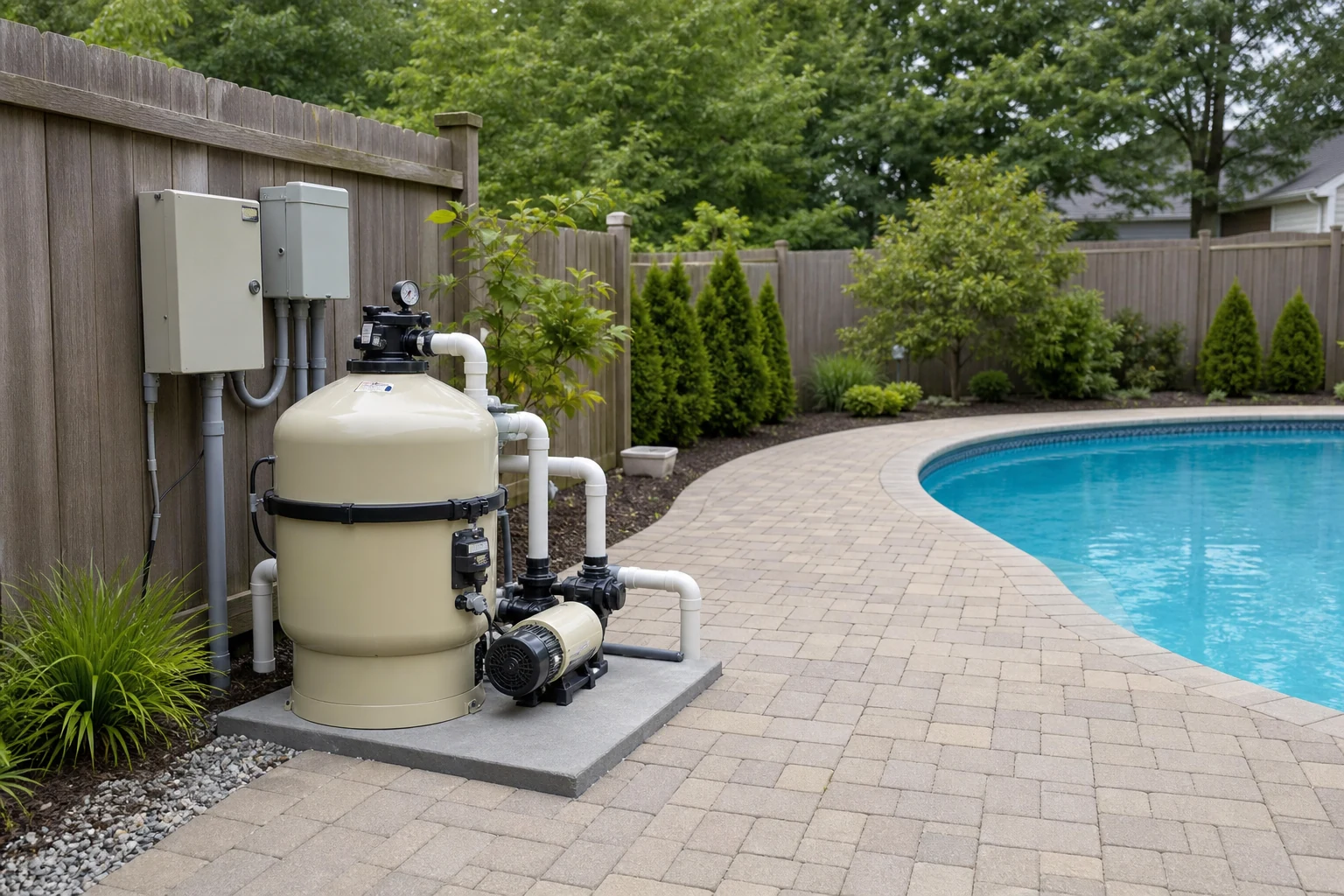
Electrical pool safety depends on a complete system: suitable equipment, GFCIs, grounding, bonding, dry connections, safe separation, and qualified inspection. Treat tingling, flickering lights, damaged cords, repeated trips, and flooded equipment as stop conditions. Keep swimmers out and power off until a pool electrician verifies the repair.
Sources and Supporting Claims
U.S. Consumer Product Safety Commission
- Pool electrical hazards include lights, pumps, filters, vacuums, cords, receptacles, and overhead lines.
- Tingling, cramps, unusual swimmer behavior, or malfunctioning lights are warning signs requiring immediate action.
Electrical Safety Foundation International
- GFCI protection, dry receptacles, equipment grounding, and qualified electrical inspection reduce risk.
- Electrical devices and cords should be kept away from pool water.
- Applicable electrical codes and qualified electricians control corrective work.
Maytronics
- Swimmers should not be in the pool while a robotic cleaner is operating.
- Power, GFCI, cord, retrieval, and service precautions are model-specific.