What should a home pool emergency plan include?
Assign a distraction-free water watcher, keep a phone and reaching or throwing aid accessible, post the address and emergency steps, know how to shut down equipment, and ensure responsible adults receive hands-on CPR and water-rescue training. Practice roles without staging unsafe in-water rescues.
A home pool emergency plan should be short enough to use under stress and practiced before anyone needs it. Assign supervision, control access, keep rescue equipment and a phone available, post the address, know how to stop equipment, and have responsible adults complete hands-on CPR and water-safety training. Do not rely on reading instructions during an emergency.
Prevent the emergency first
The plan begins with four-sided isolation, self-closing gates, door controls, safety covers or alarms where appropriate, safe drain covers, and clear water. These reduce the chance that the emergency response will ever be used.
Before every swim, identify non-swimmers, medical needs, and who may require a life jacket or close support. Remove broken equipment, glass, trip hazards, and toys left in the pool. Check weather and stop for thunder.
Assign a water watcher
Name one sober adult whose only job is active observation. The watcher stays close, scans the entire pool, and avoids phones, books, cooking, and conversations. Young children and weak swimmers need especially close supervision.
Use a verbal handoff: the new watcher says they have responsibility before the previous watcher leaves. At a party, rotate on a schedule and use a visible card or lanyard. A lifeguard, when hired, needs verified current qualifications and a briefing on the pool.
Stage suitable rescue equipment
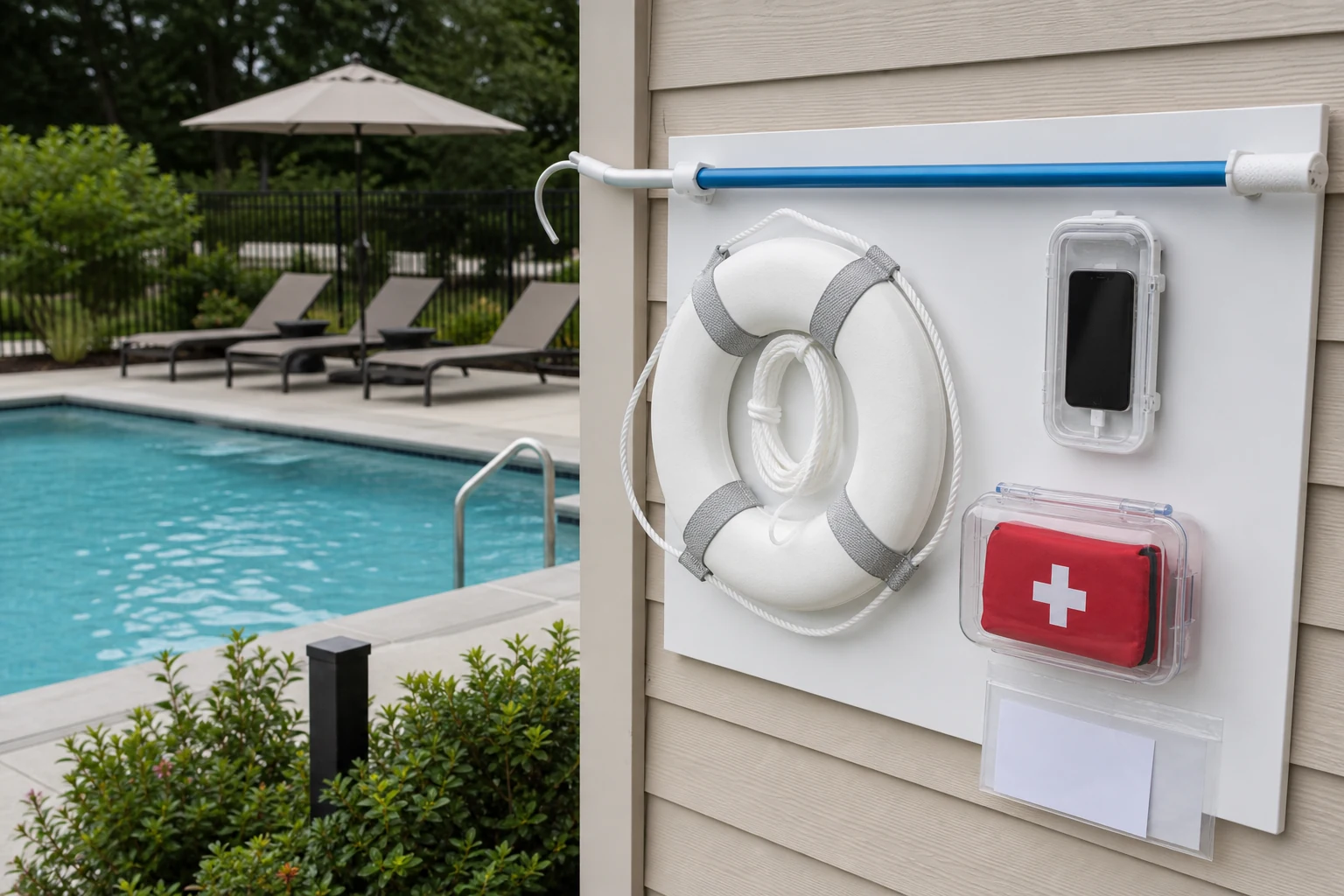
Keep a reaching pole and a throwing aid where an adult can reach them without entering the water. Inspect ropes, rings, hooks, and mounting. They should not be buried in storage or used as toys.
The Red Cross promotes “reach or throw, don’t go” for people without trained in-water rescue skills. A panicked person can endanger a rescuer. Learn and practice safe use through a recognized course rather than improvising.
Keep U.S. Coast Guard-approved life jackets in appropriate sizes if the household uses them. Inflatable toys are not rescue devices.
Make emergency calling easy
Keep a charged, working phone accessible without leaving the pool area. Post the complete street address, gate or access instructions, and emergency number. Visitors may not know the address, and location services can be imprecise.
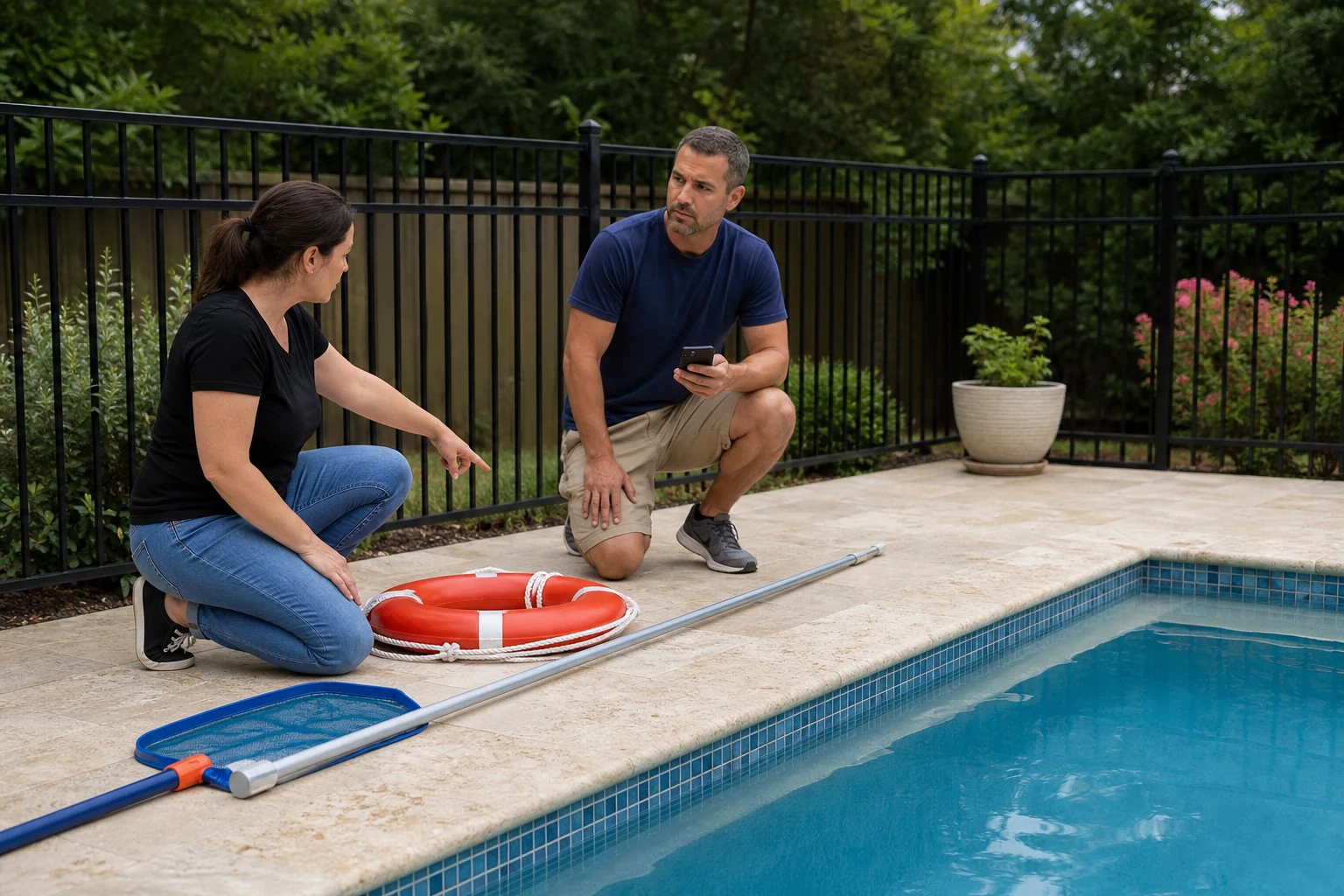
Decide who calls 911, who starts the safe rescue, who meets responders, and who moves other children away. If only one adult is present, follow emergency dispatcher instructions. Unlock access for responders without leaving the pool unsecured to children.
Obtain CPR and first-aid training
Responsible household members should take current hands-on CPR/AED and first-aid training from the Red Cross or another recognized provider. Drowning response has specific priorities, and skills decay without refreshers.
This article deliberately does not provide a compression-and-breath sequence. An online paragraph cannot evaluate technique or replace current instruction. Keep certification dates in the plan and schedule refreshers.
Know equipment shutdown
Label the pool pump, heater, cover, lighting, and emergency disconnects. Adults should know how to shut power off from a safe, dry location. Do not enter water if electrical shock is suspected.
If anyone feels tingling, swimmers behave unusually, or underwater lights flicker, CPSC guidance treats electrical shock as a serious possibility. Keep people out, disconnect power safely, call emergency services when needed, and use a qualified electrician.
Write pool-specific hazards
Mark the shallow and deep areas, safe entry, no-diving zones, steps, ladders, drain locations, and any ledges. Note an automatic cover, spa spillway, deep hopper, or visibility challenge.
List medical information only with appropriate privacy and household consent. Store medications as directed and do not leave them on a hot deck. If a swimmer has a condition requiring an individual action plan, obtain it from their clinician.
Practice without creating risk
Walk through roles on a dry deck: watcher notices a problem, points to the person, directs someone to call, retrieves a reaching or throwing aid, and guides responders to the gate. Do not stage a submerged-child scenario or have untrained people perform in-water rescues.
Test phone coverage, address visibility, gate access, equipment placement, and whether the reaching pole covers the pool. Review after moving furniture or changing a fence.
Review after every change
Update the plan when the pool, cover, automation, household, caregiver, or phone arrangement changes. Provide it to babysitters and regular visitors. Translate or simplify it where needed.
After any real incident or near miss, obtain medical help as appropriate and review what failed. Correct barriers or supervision rather than treating the event as unavoidable.
Final takeaway
An emergency plan coordinates prevention, observation, safe assistance, calling, trained care, and responder access. Assign a real water watcher, stage a reaching and throwing aid, post the address, label shutdowns, and complete formal CPR and water-safety training. Practice the roles on dry land so the household does not improvise under pressure.
Sources and Supporting Claims
American Red Cross
- Home-pool safety uses barriers, a designated water watcher, close supervision, water competency, and emergency preparation.
- CPR and water-rescue skills should be learned through appropriate training.
- Swim sober and keep swimmers away from drains.
American Red Cross
Published 2014-01-01
- Pool parties need specifically assigned supervision and an emergency plan.
- Supervision responsibilities should be explicit and continuous.
Centers for Disease Control and Prevention
Published 2025-05-29
- Close supervision, four-sided fencing, water skills, and CPR are complementary safety layers.
- Pool chemicals should be secured and used according to their labels.
- Swimmer hygiene reduces contaminant demand on disinfectant.