How do homeowners safely reopen a backyard pool after winter?
Open a pool by making the site and barriers safe, removing and cleaning the cover, inspecting the basin and equipment, restoring plumbing according to equipment instructions, establishing circulation, and only then testing and adjusting water. Swimming waits until the water is clear, equipment is stable, and sanitizer and pH are in an acceptable range.
Opening day should restore the pool in controlled stages, not turn green winter water into a same-day swimming promise. Make the area safe, clean and remove the cover, inspect the pool and equipment, restore plumbing according to the system manuals, establish dependable circulation, and then test and adjust the water. The pool is ready only when the bottom is visible, barriers and equipment are working, and sanitizer and pH are stable.
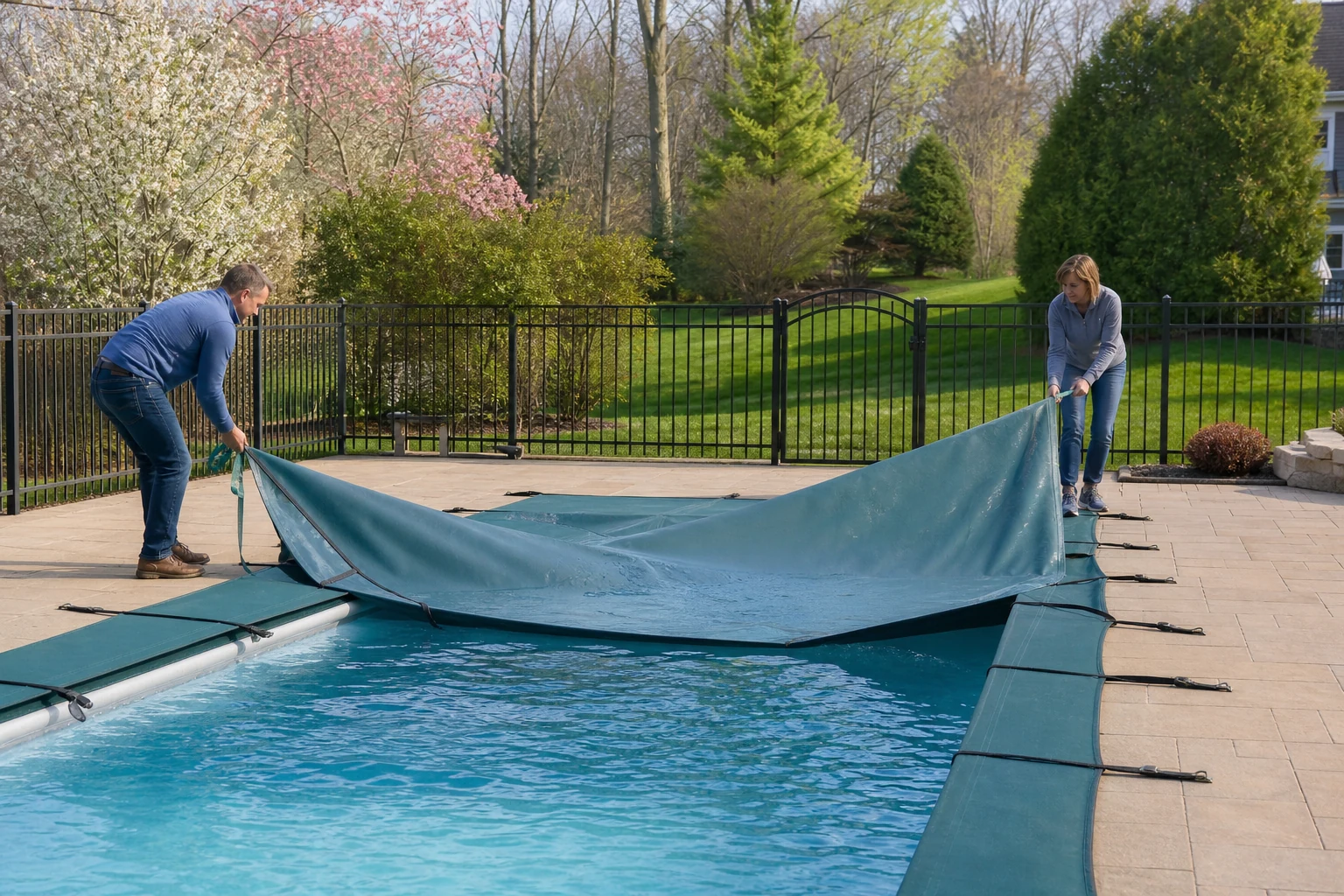
Prepare the site before uncovering the water
Clear branches, standing water, and loose debris from the deck and cover area. Confirm that gates self-close and self-latch and that door controls, alarms, handrails, and rescue equipment are available. Keep children and pets out of the work zone. If the cover is a powered or safety model, follow its operating instructions rather than improvising with pumps, cords, or anchors.
Remove water and debris from the cover without dumping it into the pool. Work with enough help to avoid dragging a heavy cover across coping or falling toward the water. Clean, dry, inspect, and store the cover according to its material requirements. A wet folded cover can develop mildew and damage long before the next closing season.
Inspect the pool before starting equipment
Walk around the exposed shell or liner. Look for cracking, bulges, loose fittings, damaged tile, staining, shifted coping, or a liner that has pulled away. Check the water level and photograph anything questionable. Do not drain an inground pool simply because the water looks poor; groundwater pressure can damage an empty vessel, and draining rules vary by pool type and location.
Inspect skimmers, returns, drain covers, ladders, and lights. A missing or damaged suction cover is a stop condition. So is a flickering light, damaged cable, burned wiring, or evidence that equipment was submerged. Electrical and gas concerns belong with qualified professionals, not a seasonal trial run.
Restore plumbing one component at a time
The exact opening sequence depends on how the pool was winterized. Locate the closing record, photographs, labels, and equipment manuals. Remove winter plugs only where required, reinstall drain plugs and pressure-gauge assemblies with sound seals, return valves to the correct starting positions, and restore water to the operating level. Never assume every line was winterized the same way.
Inspect pump and filter seals before assembly. If the filter was opened or drained, follow the manufacturer’s reassembly and air-relief procedure. A pool filter can store dangerous pressure; clamps, lids, and air-relief components must be correct before the pump starts. Reconnect a heater, salt cell, chemical feeder, or automation system only as its manual allows.
Start circulation carefully
Prime the pump as directed and start the system while watching it. Open the filter air relief if the manufacturer calls for it, remain clear of lids and clamps, and verify that air is expelled and water returns to the pool. Stop if the pump will not prime, the filter leaks, pressure behaves abnormally, or a pipe joint draws air.
Record the initial pressure only after flow is steady. Empty baskets as debris arrives and check valves, unions, the waste line, and the equipment pad for leaks. A winterized system may reveal a cracked fitting only after pressure returns. Do not run a heater or saltwater chlorine generator until the required flow and water conditions exist.
Clean before trying to perfect chemistry
Remove large debris with a net. Brush walls, steps, and the floor, then vacuum in a way that fits the amount and type of debris. Heavy sediment may require a service approach that avoids sending all material through the filter. Clean or service the filter based on its pressure and manual, not simply because opening day appears on the calendar.
Cloudy water must not be treated as safe because a single chemical reading looks acceptable. Keep swimmers out until the deepest point is clearly visible and suction fittings can be seen. Clarity is both a water-quality signal and a rescue requirement.
Test, adjust, circulate, and verify
Use a current test kit to measure free chlorine and pH first. CDC home-pool guidance recommends maintaining these together and following product directions. Test total alkalinity, calcium hardness, cyanuric acid, and salt when applicable to the pool and treatment system. Very cold water, old reagents, or very high chlorine can affect some tests, so repeat surprising readings before dosing.
Make one controlled adjustment at a time. Calculate for the actual pool volume, follow the label, distribute the product as directed, maintain circulation, and respect re-entry instructions. Never mix pool chemicals or add water to a chemical container. Store products dry, secure, and separated according to their labels.
Perform a readiness review
Run the system long enough to confirm stable flow and pressure. Test barriers and alarms, secure chemical storage, remove tools and trip hazards, and restore drain and skimmer covers. Check that the cover hardware does not create sharp or loose obstacles. If automation is used, verify schedules rather than assuming last year’s program is still appropriate.
Final takeaway
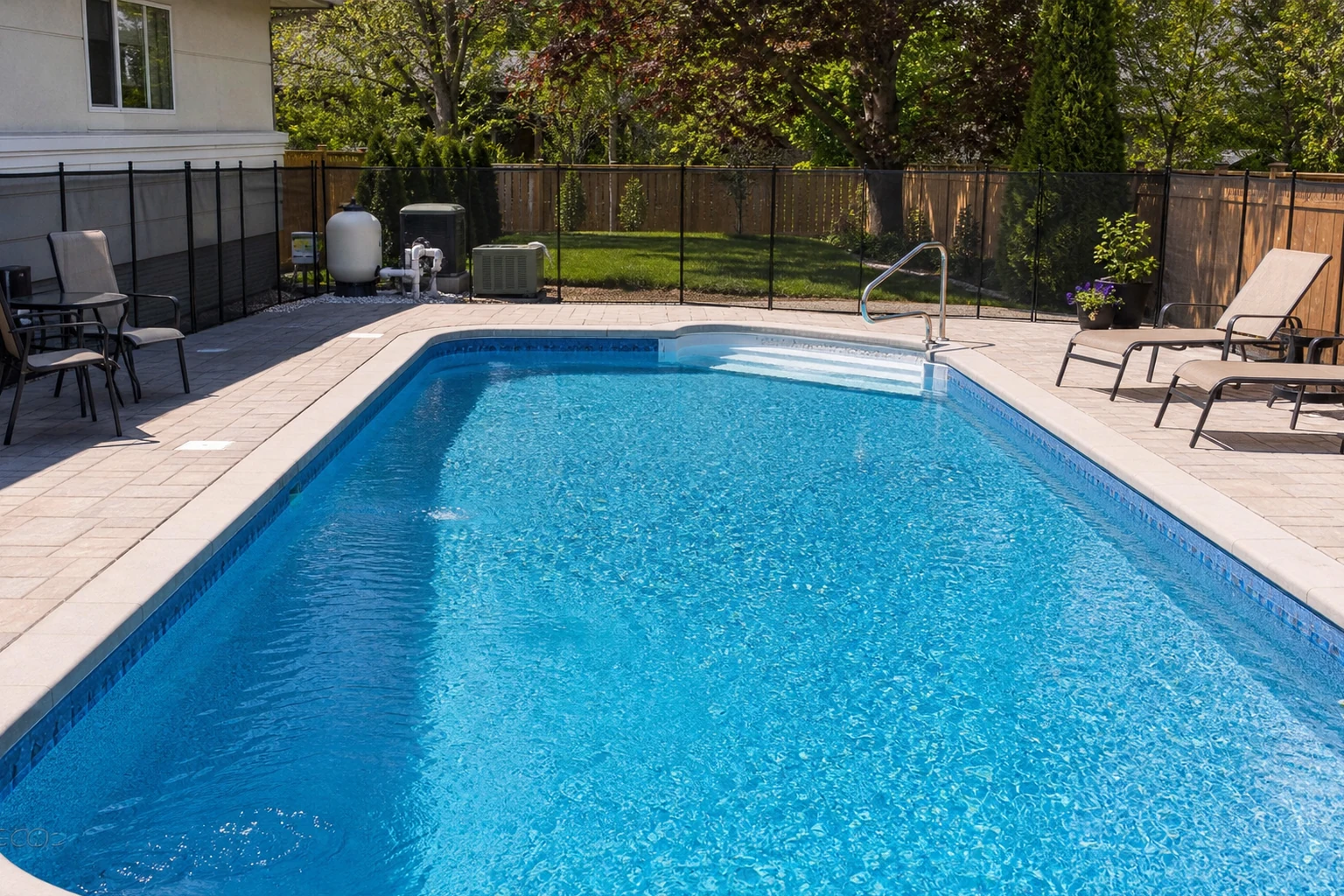
A successful opening is a sequence of passed gates: safe site, sound pool, correctly restored plumbing, stable circulation, clear water, verified chemistry, and functioning barriers. Taking an extra day to diagnose a leak, equipment fault, or stubborn water problem is safer and often cheaper than forcing the pool into service before the evidence supports it.
Sources and Supporting Claims
Maytronics
Published 2026-07-07
- Seasonal opening begins with inspection and debris removal before normal operation.
- Cleaning, equipment checks, circulation, and chemistry are separate readiness gates.
U.S. Environmental Protection Agency WaterSense
Published 2026-06-01
- Skimming and vacuuming reduce load on filtration.
- Filters should be cleaned based on need and pressure rather than an arbitrary schedule.
- Pool equipment and plumbing should be drained before freezing weather where applicable.
- Automatic-fill systems should be monitored for leaks.
Centers for Disease Control and Prevention
Published 2024-05-10
- Residential pools need routine free-chlorine and pH testing.
- CDC recommends pH 7.0 to 7.8 and provides minimum free-chlorine guidance.
- DPD kits are more accurate than strips and product directions control use.