How should a residential pool be closed for freezing weather?
Closing a pool means cleaning and balancing it, lowering or managing water only as the pool design requires, protecting freeze-sensitive plumbing and equipment, and securing a suitable cover and barriers. Exact draining and antifreeze steps are system- and climate-specific and should follow the builder and equipment manuals.
Winterizing protects a pool from freezing water, neglected chemistry, debris, and uncontrolled access. The correct process depends on climate, pool construction, plumbing layout, cover type, and equipment. A homeowner can plan and document the work, but the builder and equipment manuals control draining, blowing lines, antifreeze, plugs, and disassembly. When the system is unfamiliar, professional closing is safer than guessing.
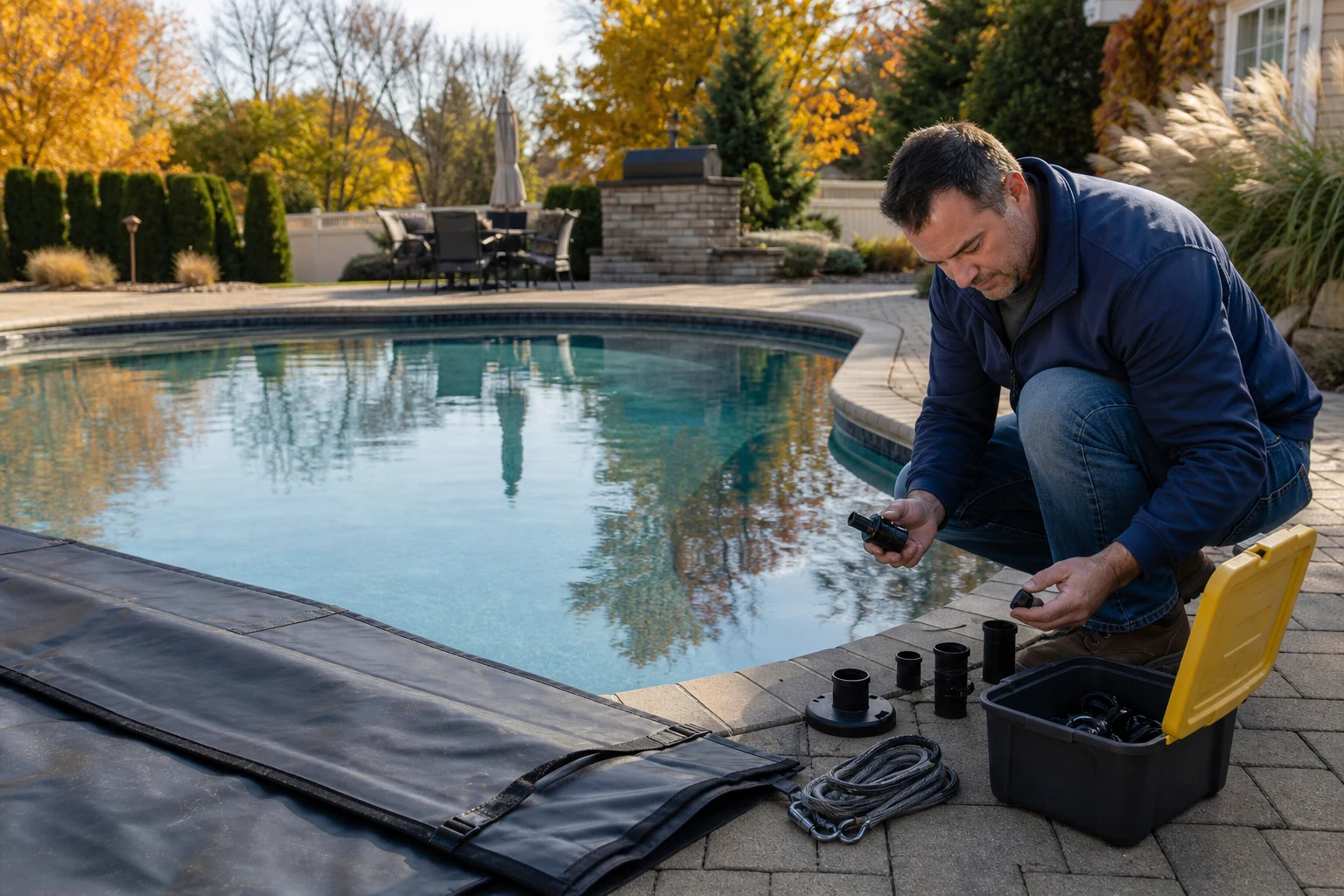
Choose the closing date from conditions
Closing too early can leave warm water with inadequate circulation and sanitizer, encouraging algae before winter. Closing too late risks an unexpected freeze. Use local weather patterns, water temperature, leaf fall, and your ability to monitor the pool. Owners in mild climates may not perform a full freeze closing at all; they may run circulation and use a freeze-protection strategy instead.
Do not rely on an automation “freeze” setting as the only defense if power failure, a closed valve, or a mechanical problem can leave water trapped. Ask a local pool professional how the plumbing is normally protected in your region and document that method.
Clean and inspect while the pool is visible
Remove leaves, brush the entire surface, and vacuum settled debris. Empty baskets and inspect the waterline, tile, liner or finish, drain covers, returns, skimmers, lights, and fittings. Photograph the pool and equipment before disassembly. A closing record gives you a baseline for spring and helps distinguish winter damage from an older condition.
Repair a leaking cover anchor, broken gate, damaged suction cover, or questionable electrical component before snow or debris hides it. Store removable ladders and accessories clean and dry. Do not leave toys or furniture where they can blow onto the cover or help a child climb a barrier.
Balance water without creating a chemical hazard
Test the water with reliable reagents and record free chlorine, pH, total alkalinity, calcium hardness, and cyanuric acid where used. The goal is not a magical “winter number”; it is water that is appropriate for the pool surface and treatment system, plus a closing treatment that follows its label. Avoid extreme pH or sanitizer levels that can damage finishes, liners, covers, or equipment during long contact.
Do not mix chemicals, combine leftover products, or improvise doses from another pool’s checklist. Add each labeled product separately with the required circulation and wait time. Secure remaining chemicals in a dry, ventilated location away from children, pets, incompatible products, and sources of moisture.
Protect water level and plumbing correctly
Some pools lower water below specific fittings; others must retain a higher level to support a cover or protect the structure. Vinyl liners, fiberglass shells, high groundwater, automatic covers, tile bands, and safety covers can have different requirements. Follow the builder and cover manufacturer rather than assuming that “lower is safer.”
EPA WaterSense guidance notes that freeze-prone systems need water removed from filters, pumps, heaters, and piping before freezing temperatures. How that is done is system-specific. Lines may be blown with controlled air, isolated, and plugged; some configurations use pool antifreeze labeled for that purpose. Never use automotive antifreeze. Excessive air pressure, the wrong valve position, or a poorly secured plug can cause injury or damage.
Drain and store equipment with manuals in hand
Turn off electrical power and fuel as the equipment instructions require. Remove drain plugs from pumps, filters, heaters, and other components designated for winter drainage. Store small plugs and fittings in a labeled container or pump basket so they are available in spring. Open filter air reliefs only in the manufacturer’s prescribed state and never loosen a pressurized clamp or lid.
Salt cells, probes, feeders, robotic cleaners, and removable pumps may need cleaning, dry storage, or temperature protection. Do not scrape a salt cell with an unsuitable tool or soak it in an improvised chemical mixture. Record what was removed and where it is stored.
Install the cover as a safety system
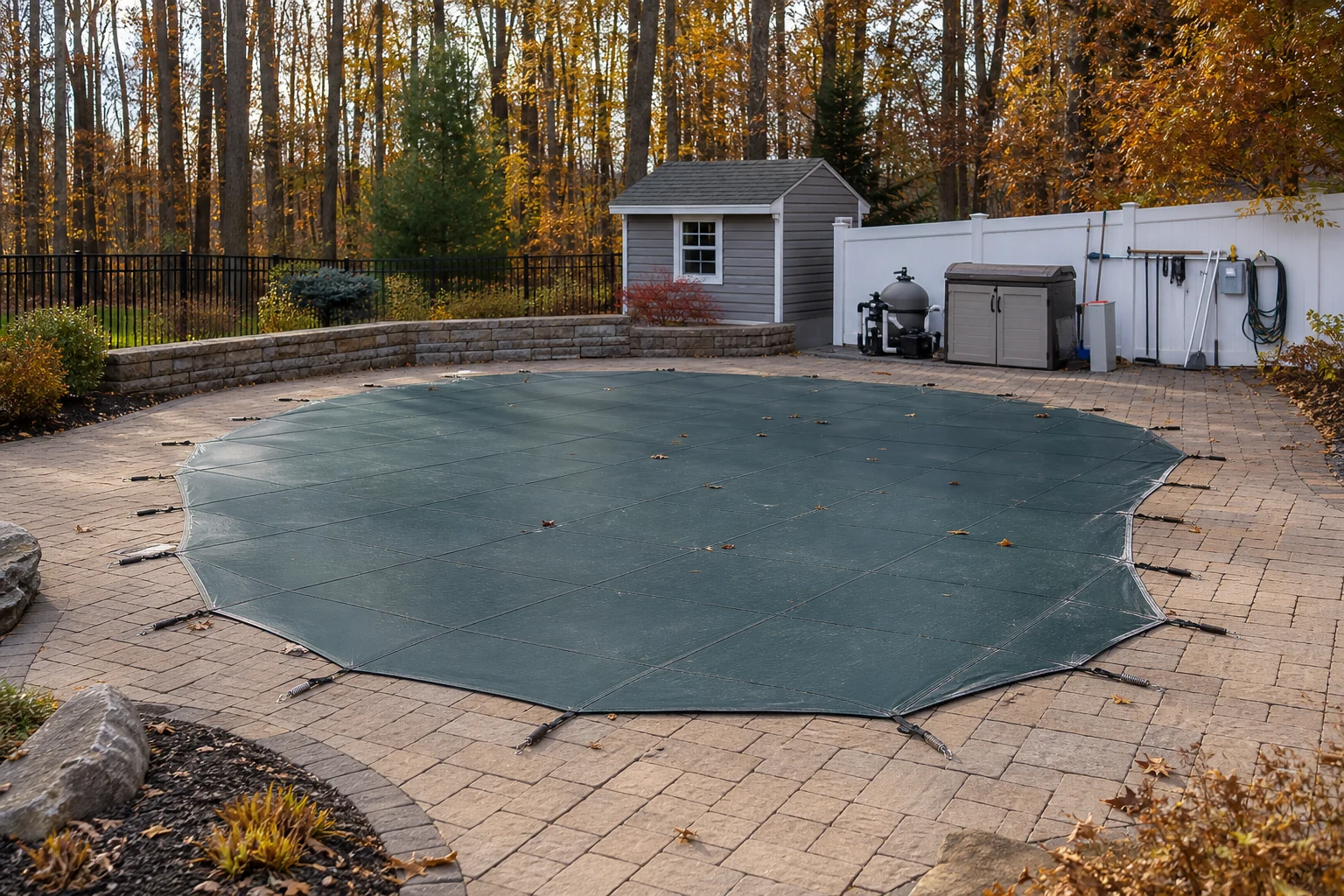
Clean the cover and inspect seams, springs, straps, anchors, tracks, pumps, and controls. A leaf net or floating tarp is not automatically a safety cover. Use only the hardware and tension specified for the installed product. The cover should not create accessible standing water, loose edges, or openings at steps and raised walls.
Maintain the fence, gates, door controls, and alarms throughout winter. A cover is one layer, not permission to disable other barriers. Keep snow, water, and debris within the cover manufacturer’s maintenance limits, and never walk onto a covered pool unless the product specifically permits a defined service procedure.
Make a closing map
Write down the water level, test results, products and amounts used, valve positions, breakers or fuel valves turned off, plugs installed, lines protected, components removed, and cover setup. Add photographs of equipment labels and valve positions. Note any unresolved issue, such as a small leak or weak pump seal, so it is not forgotten at opening.
Perform periodic winter checks after storms or thaws. Confirm that barriers remain secure, the cover is supported and tensioned, water is not accumulating dangerously, and equipment has not been disturbed.
Final takeaway
Winterizing is controlled preservation, not simply shutting the pump off and stretching a tarp over the water. Clean and document the pool, balance water conservatively, protect plumbing using pool-specific instructions, drain and store equipment safely, and maintain real barriers all winter. If you cannot trace the plumbing or verify a step, hire a qualified closer and use the visit to create a reliable system map for future seasons.
Sources and Supporting Claims
U.S. Environmental Protection Agency WaterSense
Published 2026-06-01
- Skimming and vacuuming reduce load on filtration.
- Filters should be cleaned based on need and pressure rather than an arbitrary schedule.
- Pool equipment and plumbing should be drained before freezing weather where applicable.
- Automatic-fill systems should be monitored for leaks.
U.S. Environmental Protection Agency WaterSense
Published 2026-03-06
- Pools lose water through evaporation, cleaning, leaks, and splash-out.
- Consistent pool-cover use can greatly reduce evaporation and heat loss.
- Water-efficient maintenance can reduce water, energy, and chemical use.
Centers for Disease Control and Prevention
Published 2025-05-29
- Close supervision, four-sided fencing, water skills, and CPR are complementary safety layers.
- Pool chemicals should be secured and used according to their labels.
- Swimmer hygiene reduces contaminant demand on disinfectant.