What drives the cost of an inground pool in the United States?
There is no single reliable national price for an inground pool. Current consumer databases show a wide range, but a usable budget comes from local written bids that define excavation, engineering, permits, utilities, shell or vessel, decking, barriers, equipment, drainage, restoration, and exclusions.
There is no dependable one-price answer for an inground pool across the United States. Current 2026 consumer cost databases show broad national ranges, but they combine projects with different materials, sizes, regions, access, decks, barriers, and equipment. A useful budget starts with local written proposals that define the complete scope and exclusions.
Use national figures only as an orientation
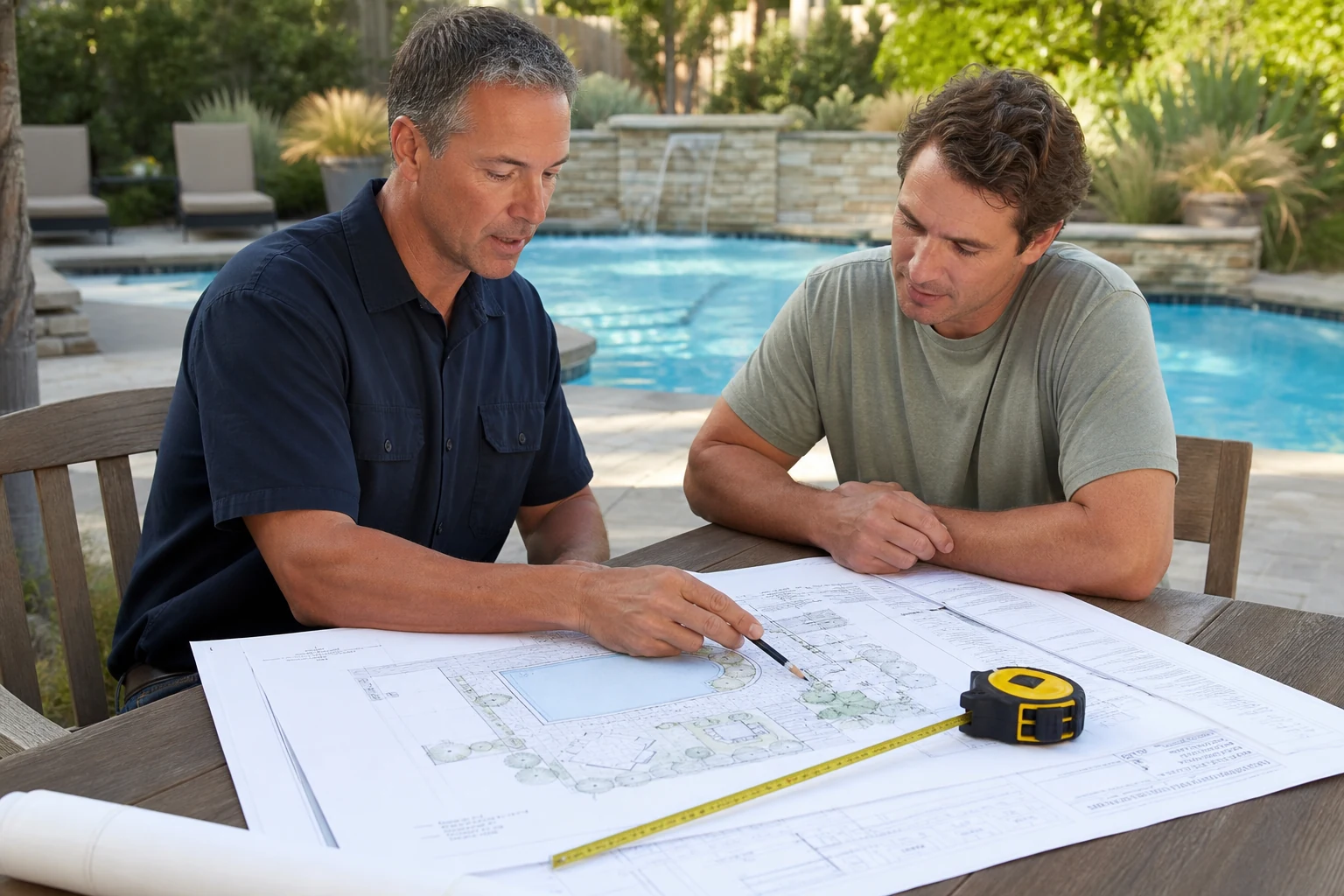
Angi’s March 2026 guide reports an average near $65,900 and a common range of roughly $44,500 to $87,300, while noting projects outside that band. HomeAdvisor reported a similar range in June 2026. These figures are commercial datasets, not government bids or a price guarantee.
They are most useful for detecting unrealistic expectations. They cannot tell you what rock excavation, coastal engineering, union labor, a long utility run, or a small urban access route costs at your address. Data methodology, project mix, and included scope can also change.
Define the pool before requesting a quote
Document interior length, width, depths, shape, entry, shell material, finish, coping, and waterline tile. Identify the pump, filter, sanitizer, heater, cleaner, lighting, automation, cover, and water features. State whether the proposal includes startup, owner training, and the first season’s service.
Decide what is essential and what is an alternate. A basic rectangular pool with a conventional deck is easier to compare than three bids containing different spas, ledges, finishes, and landscaping.
Add site investigation
Survey, setback, easement, utility, soil, groundwater, drainage, slope, retaining wall, access, and tree conditions can dominate cost. The least expensive bid may simply assume favorable excavation.
Ask how unknown subsurface conditions are priced. A rock allowance, dewatering plan, haul distance, and change-order unit price are more informative than “additional charges may apply.” Confirm who locates private utilities and repairs irrigation, fencing, pavement, and lawn.
Capture permits and safety work
Local government may require zoning review, building permits, electrical and gas permits, engineering, inspections, setbacks, barriers, alarms, drainage, or stormwater measures. Homeowners associations can add design review. Fees are only part of the impact; required design changes can affect the entire site.
Treat the permanent fence, self-closing gate, door controls, alarms, drain covers, and rescue equipment as core project scope. Do not move them into an optional “later” budget merely to make the pool quote look smaller.
Include the yard around the shell
A pool price may omit decking beyond a narrow allowance, grading, retaining walls, drainage, landscape restoration, outdoor power, gas service, water supply, equipment screening, and access repair. Ask for square footage and material specifications.
Include furniture, shade, storage, lighting, cover handling, and a safe walking route only if they matter to the household. These lifestyle items can be phased, but drainage and barrier work cannot be improvised after the pool is full.
Compare equipment on installed performance
Request exact model numbers, sizes, warranties, and design assumptions. A larger pump is not automatically an upgrade. A smaller filter can create more maintenance. A heater may require a gas-meter or electrical-service change.
Ask for the pump’s programmed speeds, expected filter pressure, heater flow, cleaner coverage, automation functions, and electrical commissioning. Include permits and licensed trades. Equipment value comes from a functioning system, not the retail sum of boxes.
Build a realistic contingency
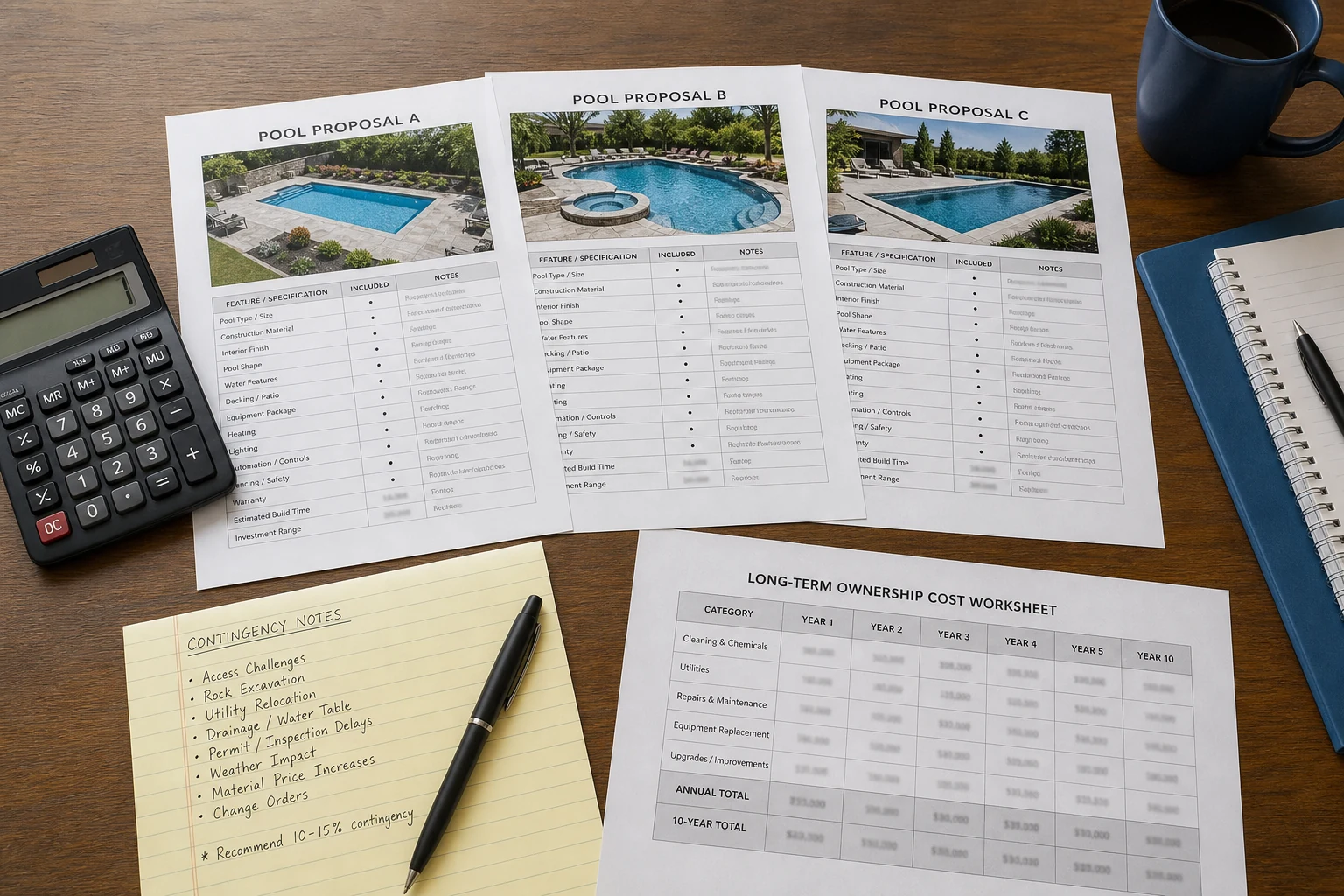
A contingency is not an invitation to spend; it is protection against documented uncertainty. The appropriate amount depends on how well the site has been investigated and how complete the contract is. Keep owner changes separate from unforeseen conditions so you can see why the budget moved.
Create a cash-flow schedule for deposit, excavation, shell, equipment, deck, final inspection, and retainage where legal. Verify lien-release and contractor-licensing requirements in your state. Do not make payment advice from a national article substitute for local legal guidance.
Budget for ownership
Construction is only the first cost. Estimate electricity or fuel, water, chemicals, cleaning, winterization, insurance, cover maintenance, filter elements, salt cells, pumps, heaters, and resurfacing. Obtain local service prices and utility rates.
A pool can affect homeowners insurance and property assessment. Disclose the planned pool to the insurer before construction and ask the local assessor how improvements are handled. Keep contracts and invoices; IRS Publication 523 lists a swimming pool as an example of a home improvement that may affect basis, but individual tax treatment requires current professional advice.
Normalize bids
Create a spreadsheet with the same rows for every bidder: design, engineering, permits, excavation assumptions, shell, finish, coping, deck, barrier, equipment, utilities, drainage, cleanup, startup, warranty, schedule, allowances, exclusions, and change-order rates.
Investigate unusually low bids. Confirm contractor license, insurance, references for recent similar work, subcontractors, and who provides warranty service.
Final takeaway
National cost ranges can start a conversation, but only a complete local scope can produce a budget. Define the pool, investigate the site, include barriers and the surrounding yard, normalize exact equipment and allowances, carry a transparent contingency, and plan for ownership. The right question is not “What is the average?” but “What does this complete, permitted project cost at this property?”
Sources and Supporting Claims
Angi
Published 2026-03-05
- Reported inground-pool costs vary widely by location, material, size, access, and features.
- Excavation, permits, fencing, decking, and equipment can sit outside a base quote.
- Published national figures are planning references, not local bids.
HomeAdvisor
Published 2026-06-19
- Current consumer cost data show a broad national range for inground installations.
- Material, scope, and professional trades materially change project cost.
Internal Revenue Service
Published 2026-01-01
- A swimming pool is listed as an example of a home improvement that can increase tax basis.
- Maintenance and repairs are treated differently from qualifying improvements.
- Tax outcomes depend on the taxpayer's facts and current rules.