What layers of protection reduce child drowning risk around a home pool?
No single product prevents every drowning. Use active adult supervision plus four-sided isolation fencing, self-closing and self-latching gates, secured doors, maintained alarms or covers, water competency, rescue equipment, and CPR preparation.
No single fence, alarm, cover, swim lesson, or attentive adult prevents every drowning. A safer home pool uses layers that remain effective when another layer fails: active supervision, four-sided isolation, controlled doors and gates, maintained alarms or covers, water competency, safe drains, rescue equipment, and adults trained to respond.
Make supervision an assigned job
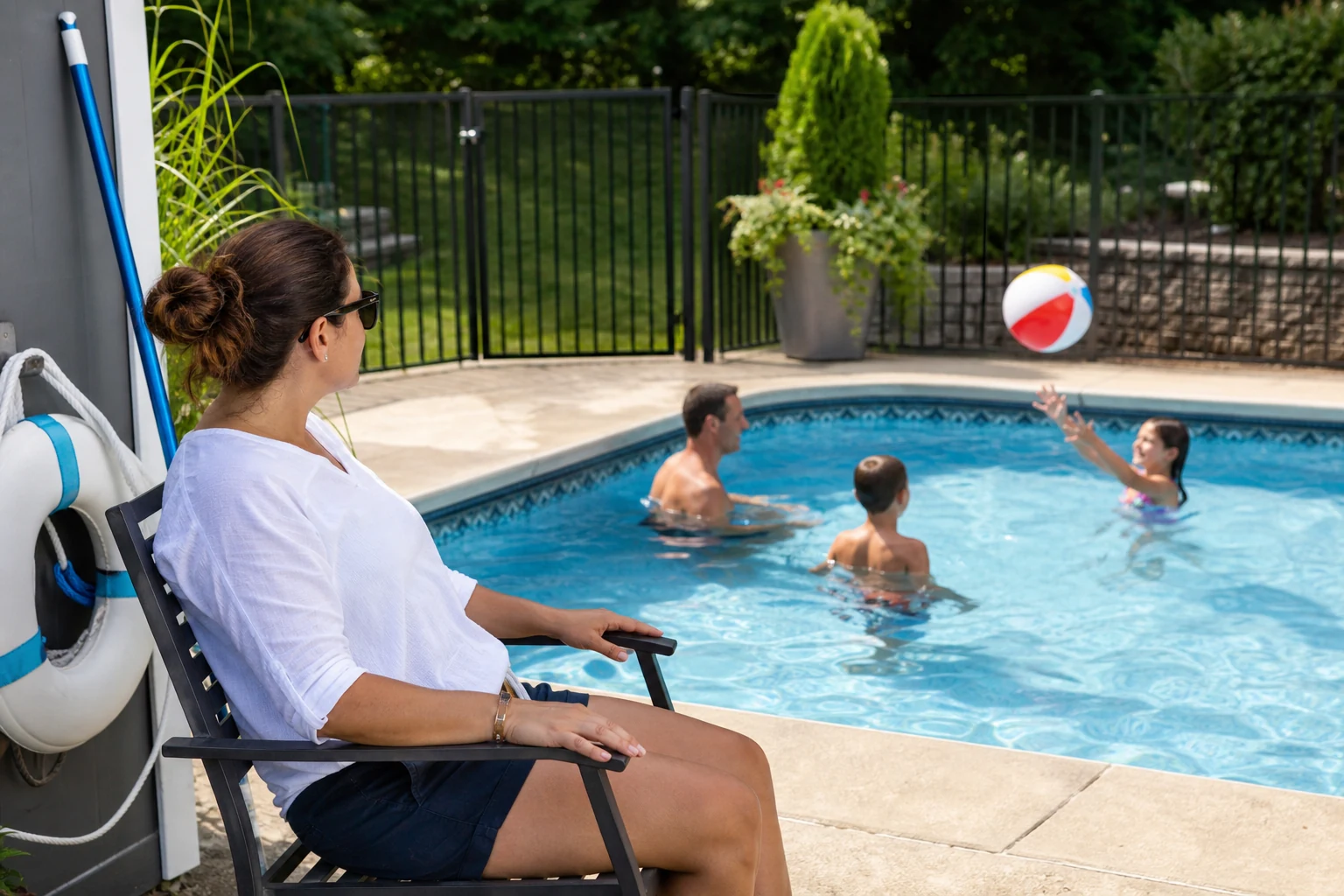
When children are in or near the water, name one responsible adult as the water watcher. That person stays close, scans continuously, avoids phones, reading, alcohol, and social conversation, and transfers responsibility with a clear verbal handoff.
Young children and weak swimmers need close, often arm’s-reach supervision. A gathering with many adults can be riskier when everyone assumes someone else is watching. Use a visible water-watcher card or lanyard and rotate before attention declines.
Supervision ends only when all swimmers are accounted for and access is secured. A child can enter the area while adults are cleaning up or moving food.
Isolate the pool from the house and yard
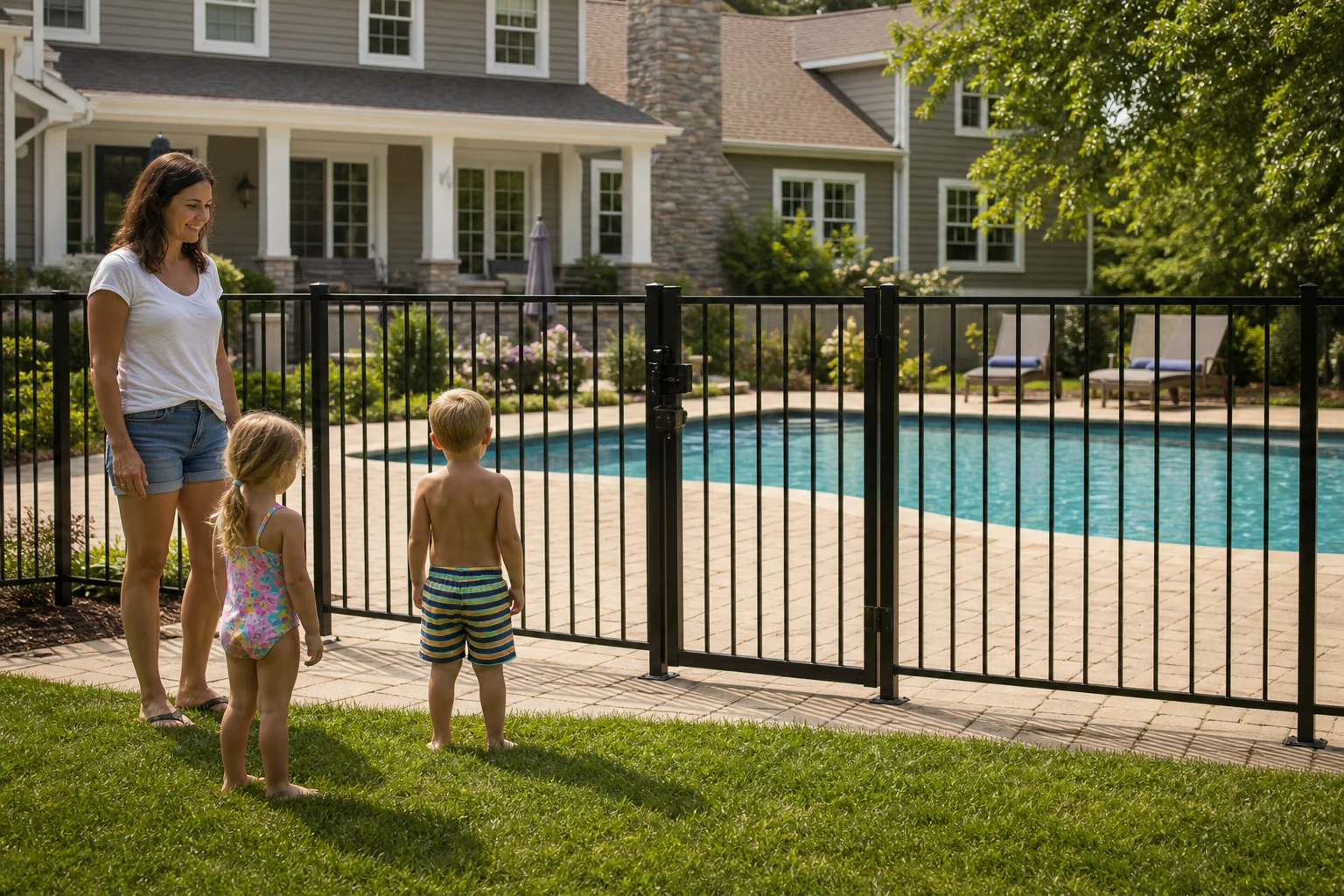
The American Red Cross and CPSC support four-sided isolation fencing that separates the pool from the home and general yard. A property-line fence with the house as the fourth side leaves doors as direct access points.
The fence should be difficult to climb and prevent a child from getting over, under, or through it. Gates should self-close and self-latch, open as local rules require, and have hardware positioned to reduce child access. Exact height, spacing, latch, and setback rules are local; verify them with the authority having jurisdiction.
Keep chairs, planters, toys, grills, and storage boxes away from the barrier so they do not become climbing aids. Test the gate from fully and partially open positions.
Control doors, windows, and pet openings
Where the house provides access, use locks and alarms placed and configured appropriately for children. A chime used for convenience may not satisfy a pool-barrier requirement. Test batteries and audibility in occupied rooms.
Pet doors can defeat a barrier by giving a small child access. Sliding doors, screen doors, garage paths, and rental-property access need deliberate control. Visitors must know that propping a gate open is never acceptable.
Use covers and alarms as additional layers
A compliant safety cover can restrict access when correctly closed and maintained. A floating solar cover is not a safety cover and can entangle a person or pet. Automatic covers require working controls, tracks, drainage, and fabric.
Pool alarms, surface-wave alarms, subsurface alarms, gate alarms, and wearable devices have different detection methods and false-alarm patterns. Test as directed. An alarm provides warning after a layer has been breached; it does not supervise or physically prevent entry.
Build water competency without reducing barriers
Swimming lessons and water competency can reduce risk, but no child becomes drown-proof. The Red Cross describes competency as being able to enter, surface, float or tread, turn, swim, and exit. Skill changes with fatigue, clothing, cold water, panic, and unfamiliar conditions.
Use U.S. Coast Guard-approved life jackets where appropriate and as directed. Inflatable toys, water wings, and decorative floats are not substitutes. Remove tempting toys from the water after use.
Maintain safer suction and equipment
Keep drain covers intact, secured, and appropriate for the system. Teach swimmers to stay away from drains and suction fittings. Tie back long hair and avoid loose items that can become entangled.
Know how to shut off pumps and other equipment from a safe location. If a cover is missing, cracked, or loose, close the pool and obtain qualified repair. Do not let a child sit on a drain or play with fittings.
Prepare for an emergency
Keep a reaching pole and throwing aid accessible, a charged phone nearby, and the property address visible. Adults should take hands-on CPR and water-rescue training from a recognized provider. Written instructions cannot replace practice and instructor feedback.
If a child is missing, check the pool and other water first while another person calls for help. Avoid an untrained in-water rescue that creates a second victim; reach or throw when possible and follow emergency dispatcher instructions.
Inspect layers every day of use
Walk the barrier, latch, doors, alarms, cover, drain covers, deck, and rescue equipment. Correct a gate that does not latch instead of promising to watch more carefully. Remove standing water from a cover according to its manual.
Share rules with relatives, babysitters, neighbors, and contractors. Construction and maintenance often leave gates open or disable alarms, so assign someone to restore protection before workers leave.
Final takeaway
Layers of protection work because no human or device is perfect. Combine assigned supervision, true isolation, controlled openings, maintained alarms and safety covers, water competency, safe suction, rescue equipment, and trained response. Inspect the system repeatedly and verify local requirements; one failed layer should never give a child a clear path to water.
Sources and Supporting Claims
American Red Cross
- Home-pool safety uses barriers, a designated water watcher, close supervision, water competency, and emergency preparation.
- CPR and water-rescue skills should be learned through appropriate training.
- Swim sober and keep swimmers away from drains.
U.S. Consumer Product Safety Commission
- Residential pool barriers include fences, self-closing gates, door alarms, and safety covers.
- Barrier design should prevent a child from getting over, under, or through it.
- Local codes may impose additional requirements.
Pool Safely, U.S. Consumer Product Safety Commission
Published 2017-03-01
- Fences, self-closing gates, covers, and alarms are complementary layers.
- No barrier device replaces active supervision.
Centers for Disease Control and Prevention
Published 2025-05-29
- Close supervision, four-sided fencing, water skills, and CPR are complementary safety layers.
- Pool chemicals should be secured and used according to their labels.
- Swimmer hygiene reduces contaminant demand on disinfectant.