Which recurring expenses make up the monthly cost of pool ownership?
Monthly ownership cost is the sum of electricity or fuel, water, treatment products, routine service, insurance effects, and a reserve for equipment and surface work. Use actual utility rates and a 12-month log because climate, equipment, pool size, and service choices overwhelm generic averages.
The monthly cost of a pool is not one service invoice. It combines electricity or fuel, water, treatment products, routine labor, insurance effects, and a reserve for equipment and surface work. The only reliable household number comes from a 12-month log using actual utility rates, operating hours, purchases, and repair history.
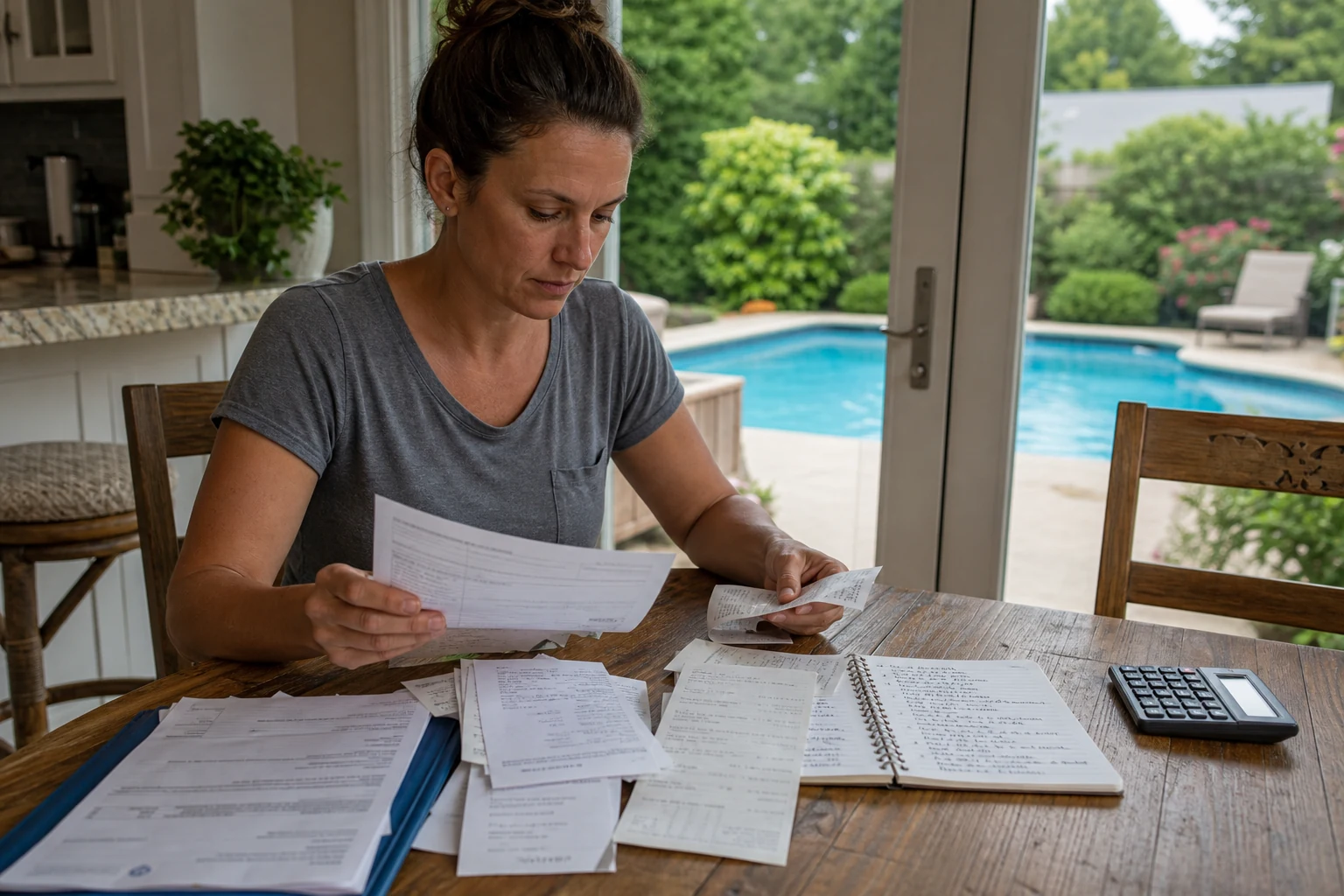
Separate cash expenses from reserves
Cash expenses appear this month: electricity, gas, water, chemicals, a cleaner, or a service visit. Reserves recognize that a pump, salt cell, heater, cover, robot, filter cartridge, liner, or plaster finish will eventually need work. Ignoring reserves makes the pool look cheap until one large bill arrives.
Create categories for utilities, routine supplies, contracted service, seasonal opening or closing, insurance, permits or testing, small repairs, and long-term replacements. Divide annual costs by twelve only for planning; the actual summer and winter cash flow can be very uneven.
Measure pump electricity
The circulation pump can be a major pool load. Record model, programmed speeds, watts where available, and hours at each speed. Multiply kilowatt-hours by the current delivered electricity rate, including relevant charges.
ENERGY STAR explains that variable-speed pumps can match lower speeds to filtration and higher speeds to demanding tasks. Do not assume a replacement saves a fixed amount; savings depend on the old pump, hydraulic system, schedule, rates, and commissioning.
Add booster pumps, water features, spa jets, automation, lights, and robotic cleaners. A device with low wattage can still matter if it runs for many hours.
Estimate heating from local rates
For a gas heater, track fuel use and delivered natural-gas or propane price. For a heat pump, track electricity and operating conditions. The U.S. Energy Information Administration provides current state and monthly energy data, which is a better reference than an undated national figure.
Pool temperature, cover use, wind, humidity, season, and water features drive heat loss. A few warmer degrees can cost much more than expected. Separate spa use from pool maintenance temperature so one does not distort the other.
Track water as a signal
Water enters through initial fill, evaporation replacement, splash-out, backwash, filter cleaning, leaks, and planned exchange. Record meter or bill changes when practical. Test an automatic fill valve rather than letting it hide consumption.
EPA WaterSense recommends covers to reduce evaporation and need-based filter cleaning to avoid unnecessary water waste. A rising refill pattern can signal a leak before it becomes visible.
Water also carries treatment implications. Refill can dilute salt and cyanuric acid while adding hardness, alkalinity, metals, or phosphates. Those changes affect chemical cost.
Count treatment products honestly
Record sanitizer, acid, alkalinity products, stabilizer, salt, calcium, specialty treatment, test reagents, and laboratory testing. Avoid assigning every retail purchase to one month if it lasts a season; use annual totals for comparison.
Repeated “emergency” products often indicate a testing, circulation, filter, stabilizer, leak, or volume problem. Diagnosis can cost less than continuing to buy corrections. Never reduce cost by under-sanitizing or using unlabeled substitutes.
Decide what your time is worth
Self-maintenance includes testing, brushing, vacuuming, basket cleaning, filter service, cover handling, chemical purchasing, record keeping, and seasonal work. You may enjoy it, but it still consumes time.
A service contract may include only cleaning and basic chemistry, not filters, repairs, salt-cell cleaning, storm cleanup, or supplies. Compare proposals line by line. If you do the work yourself, budget for quality tools, protective equipment, and training.
Ask the insurer
Pools increase liability exposure. The National Association of Insurance Commissioners advises homeowners to discuss coverage, barriers, alarms, and liability with their insurance professional. Record any premium change and the cost of required safety improvements.
Do not assume the existing policy automatically covers every pool, diving board, slide, rental, or guest situation. Coverage terms vary.
Create replacement reserves
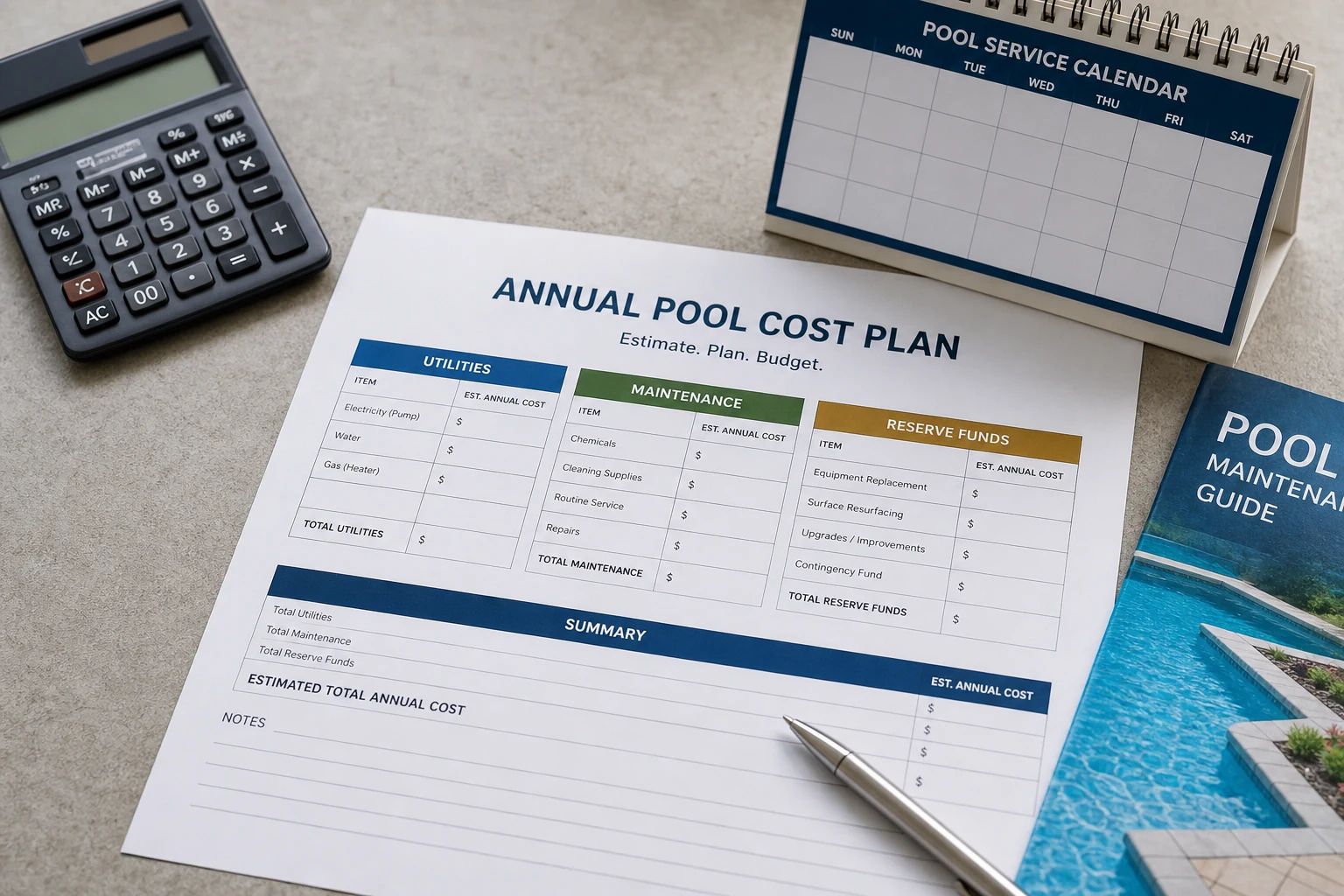
List major components, current age, approximate replacement scope, and a conservative planning year. Divide a current local estimate by remaining years, then update annually. The number is not an accounting guarantee; it is a warning that ownership includes lifecycle cost.
Keep surface work separate from equipment. Plaster, aggregate, tile, fiberglass coatings, and vinyl liners have different service patterns. A covered automatic system may need fabric, ropes, tracks, or motor work.
Build a one-page dashboard
Each month record kilowatt-hours, heating fuel, water added, product purchases, service, repairs, and unusual events. Add water temperature, cover use, and pump changes when analyzing energy. Compare year over year by season, not July with January.
Use rolling averages so one heater repair does not look like the normal monthly bill, but never remove it from annual ownership cost.
Final takeaway
The real monthly cost is household-specific. Measure utilities, water, products, service, insurance, and long-term reserves for a full year. Use local rates and actual schedules, then improve the largest verified driver. Honest tracking is more useful than a national monthly average—and it makes future equipment and maintenance decisions far easier.
Sources and Supporting Claims
U.S. Energy Information Administration
Published 2026-07-23
- Residential electricity prices vary over time and by location.
- Current utility rates are necessary for a household-specific operating-cost estimate.
U.S. Energy Information Administration
Published 2026-06-30
- Residential natural-gas prices are available by state and month.
- Fuel-price assumptions must be localized and dated.
U.S. Environmental Protection Agency ENERGY STAR
- Variable-speed pumps can match speed to filtration and higher-flow tasks.
- Lower pump speed can substantially reduce power demand.
- Pump choice must be paired with preventive maintenance and correct system operation.
U.S. Environmental Protection Agency WaterSense
Published 2026-03-06
- Pools lose water through evaporation, cleaning, leaks, and splash-out.
- Consistent pool-cover use can greatly reduce evaporation and heat loss.
- Water-efficient maintenance can reduce water, energy, and chemical use.