Which pool automation features are useful for a residential upgrade?
Start automation with dependable pump scheduling and only then add compatible heating, lighting, sanitation, or remote monitoring. Confirm voltage, relay capacity, communication compatibility, freeze strategy, and a usable local fallback before buying an app-centered upgrade.
Pool automation is most valuable when it makes essential operation reliable: the pump runs at the right speed, heating occurs only with safe flow, freeze strategy is clear, and schedules can be understood locally. App control, voice assistants, and color effects come after electrical capacity, equipment compatibility, safe interlocks, and a manual fallback.
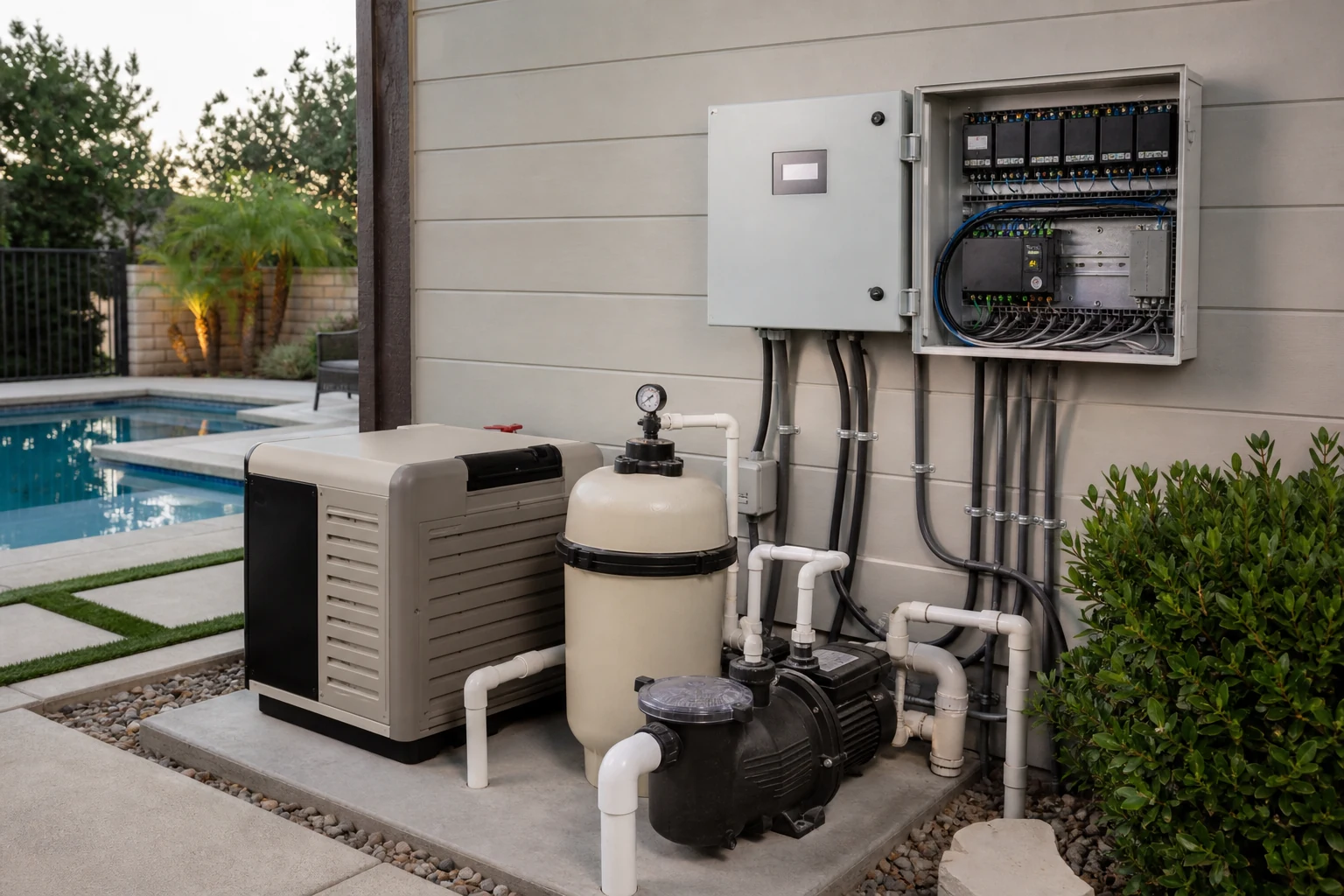
Start with a control inventory
List every load and signal: filter pump, auxiliary pumps, heater, solar valve, saltwater generator, lights, water features, spa valves, cleaner, sensors, and freeze protection. Record model numbers, voltage, current, control protocol, relay needs, and existing timers.
Some modern pumps and heaters use low-voltage communication. Others accept relay or contact closure. A controller may show a device name without supporting every function of that model. Obtain written compatibility from the automation and equipment manufacturers.
Prioritize circulation schedules
Variable-speed pump scheduling is often the highest-value upgrade. ENERGY STAR explains that different tasks need different speeds. Automation can run low-speed filtration and sanitation, raise speed for the heater or cleaner, then return to an efficient baseline.
Commission each speed from measured behavior: filter pressure, skimming, heater or salt-cell flow status, water features, noise, and energy. Do not copy an RPM schedule from another pool.
Make the schedule visible in plain language. An owner should know what is expected at 8 a.m. without opening three apps.
Add heating with interlocks
A heater must not fire without adequate flow. Automation should respect pump startup, valve position, heater cooldown, water temperature, and equipment limits. Jandy’s AquaLink documentation illustrates how pump presets can be associated with pool heat, spa heat, solar, and cleaner modes; the exact implementation is model-specific.
Use separate pool and spa setpoints and avoid automatic schedules that surprise occupants or waste energy. Pair heating control with a cover routine, because reducing evaporation can save more than a clever thermostat schedule.
Evaluate sanitation control carefully
Automation can adjust a salt-cell output or enable a chemical controller, but a displayed percentage is not a water test. Manual verification of free chlorine and pH remains essential. Sensors need calibration, cleaning, flow, and replacement.
An oxidation-reduction-potential controller does not directly measure free chlorine. Its reading changes with pH, stabilizer, temperature, and other water conditions. Automated chemical feed is safety-critical and should include flow interlocks, limits, secured storage, and professional commissioning.
Treat remote access as optional
Remote monitoring can alert an owner to temperature, pump status, a freeze event, or a fault. It can also fail because of Wi-Fi, a router change, cloud service, account lockout, or vendor support. Essential schedules and safe shutdown must work locally.
Ask whether the controller requires a subscription, what data it collects, whether updates are automatic, and how long the platform is supported. Use unique credentials and multifactor authentication if available. Do not expose an equipment controller directly to the internet.
Plan the electrical work
An automation panel can contain line voltage, relays, breakers, and low-voltage communications. It belongs with a qualified pool electrician. Confirm service capacity, GFCI requirements, grounding, bonding, conductor ratings, separation of voltage classes, weather rating, disconnects, and local permits.
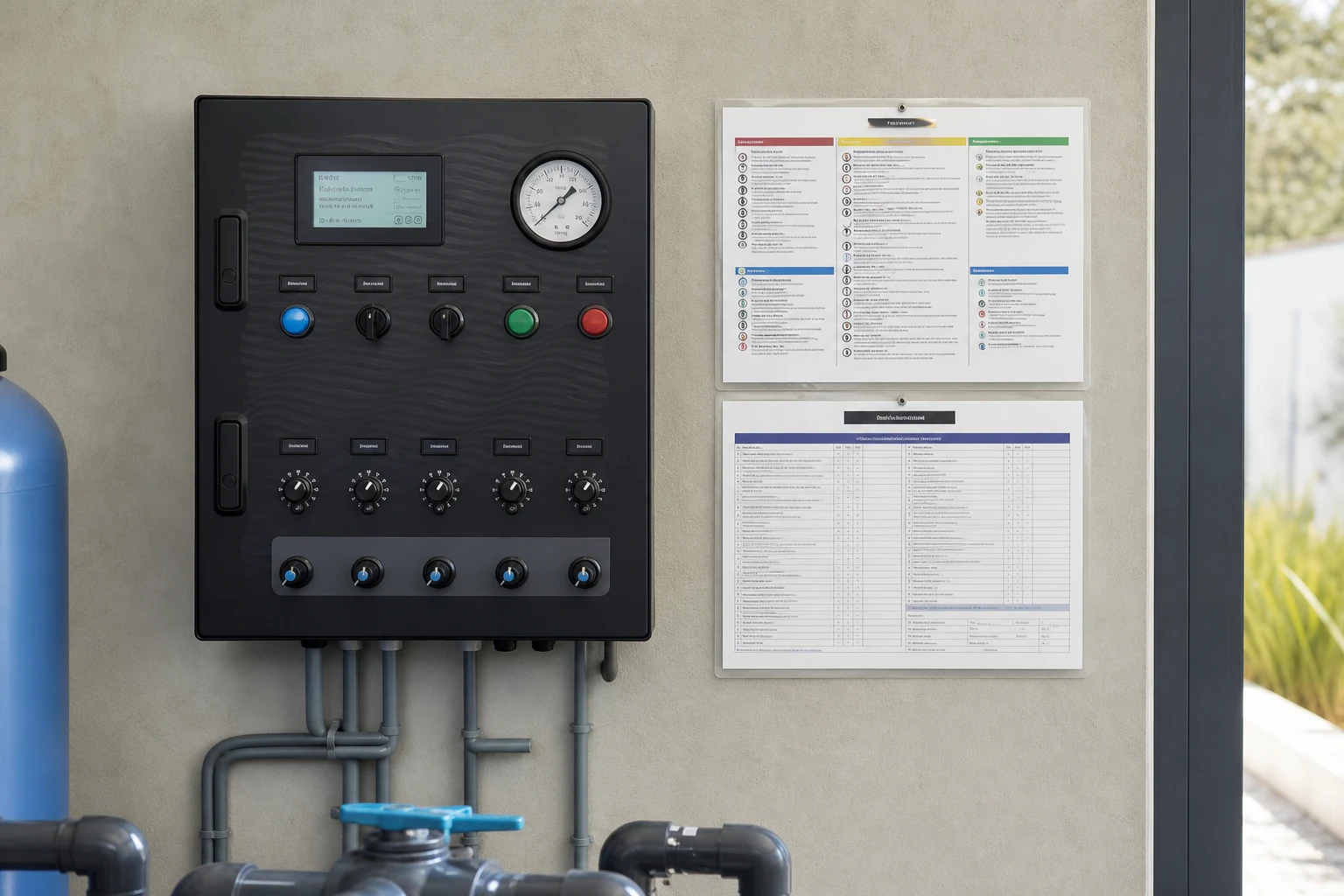
Label circuits, relays, valves, and manual overrides. Update the panel schedule and leave a printed operating summary at the equipment pad. A future technician should not have to guess which relay controls a pump.
Keep a manual fallback
Owners need a documented way to stop the system safely, run basic circulation locally, and place valves in a safe state if automation fails. Manual mode should not bypass heater flow or chemical-feed interlocks.
Test the fallback during commissioning. Simulate loss of internet, a sensor fault, and a power restoration. Confirm whether schedules resume, remain off, or start unexpectedly.
Avoid over-automation
Do not automate a leaking valve, unstable chemistry, undersized filter, or failing pump. Repair the system first. Avoid motorized valves or features with little benefit if they add difficult failure points.
Set alerts for conditions that prompt a clear action, not every minor fluctuation. Too many notifications train the owner to ignore important ones. Document which alert means “monitor,” “service soon,” or “shut down now.”
Commission and document
Test every mode: filtration, cleaning, pool heat, spa heat, solar, lights, sanitation, freeze response, and manual shutdown. Record pump speed, valve position, filter pressure, flow status, temperature behavior, and electrical observations. Verify that one mode cannot create an unsafe combination.
Final takeaway
Useful automation starts with reliable local control of circulation and safe heating. Add sanitation, lighting, features, and remote access only when compatibility and interlocks are proven. Favor a labeled system with a tested manual fallback over a feature-rich app that hides how the pool actually operates.
Sources and Supporting Claims
Pentair
- Residential pool automation can schedule pumps and heaters.
- Compatibility and supported loads must be verified before purchase.
Jandy
- Automation presets coordinate pump speeds with filtration, cleaning, heating, and solar functions.
- Configuration is system-specific and must follow the installed manual.
U.S. Environmental Protection Agency ENERGY STAR
- Variable-speed pumps can match speed to filtration and higher-flow tasks.
- Lower pump speed can substantially reduce power demand.
- Pump choice must be paired with preventive maintenance and correct system operation.