How do gas, heat-pump, and solar pool-heating options compare?
Gas heaters favor fast, on-demand temperature increases; heat pumps favor efficient operation in suitable air conditions; solar systems trade roof or site area and weather dependence for low purchased-energy use. A cover and realistic temperature schedule often matter as much as heater type.
Gas, heat-pump, and solar pool heaters solve different problems. Gas is well suited to fast temperature rise and intermittent use. A heat pump transfers heat from outdoor air and often favors steady operation in suitable conditions. Solar heating uses available sunlight and collector area, trading fuel purchases for weather dependence. A cover and realistic temperature schedule can reduce the load on any of them.
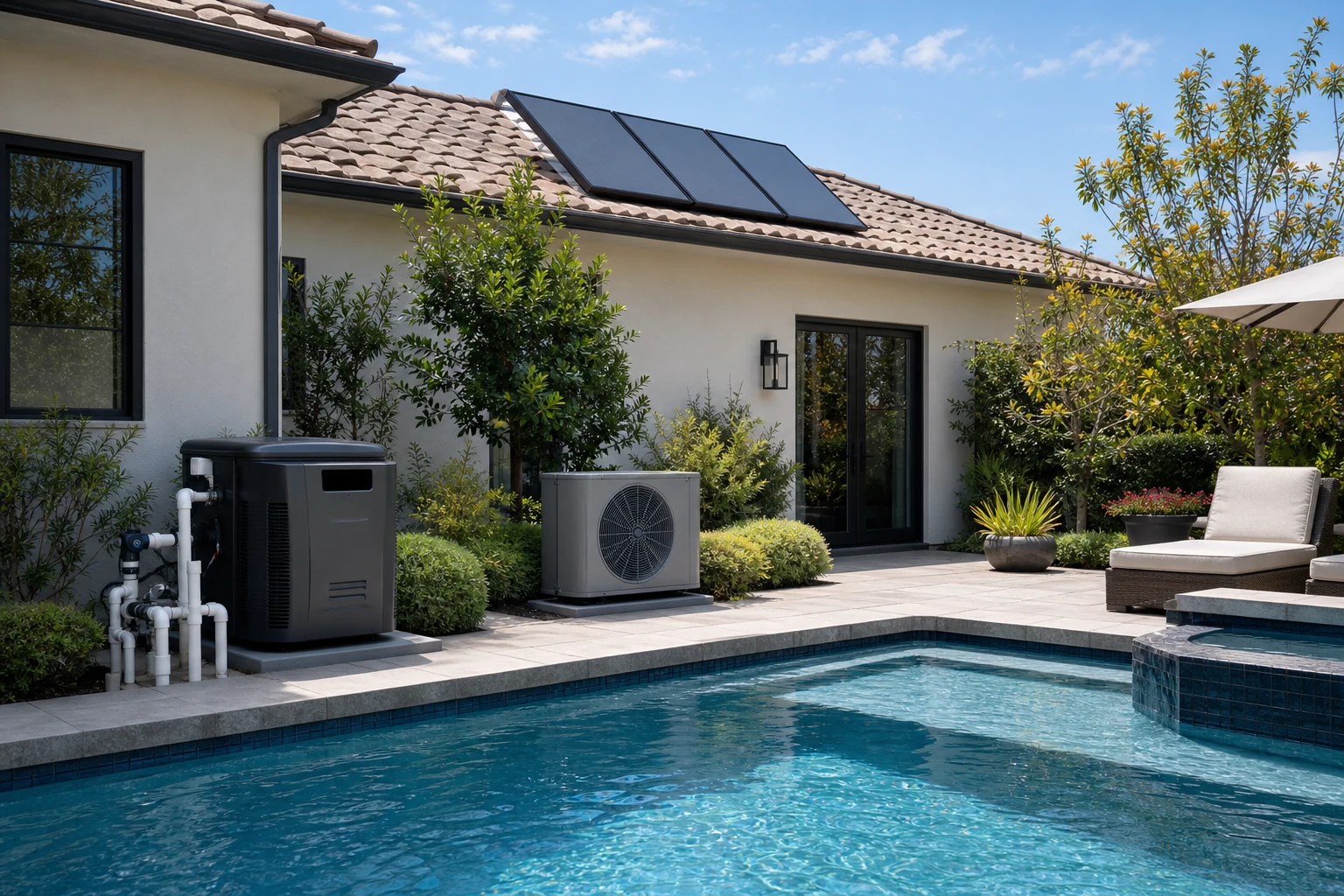
Define the heating job
Start with pool surface area and volume, current and desired temperature, swimming season, local nighttime temperatures, wind, humidity, shade, and how quickly heat is needed. A household that wants occasional weekend use has a different requirement from one maintaining a steady temperature for daily therapy or exercise.
Separate the pool and spa loads. A small spa needs rapid heating at a high target temperature; a large pool needs far more total energy. One heater may serve both through valves and automation, but the design flow and controls must work in each mode.
Gas pool heaters
Gas heaters burn natural gas or propane and transfer heat to circulating pool water. Their high input can raise temperature relatively quickly, making them attractive for spas, occasional use, cold starts, or climates where air-source heat pumps lose capacity.
Operating cost depends on delivered fuel price, thermal efficiency, pool heat loss, and run time. Natural-gas and propane economics can differ sharply by location. Installation may require a larger gas line or tank, combustion air, venting, clearances, electrical control, permits, and utility coordination.
Corrosive water, inadequate flow, blocked heat exchangers, and poor venting can damage equipment or create hazards. Use qualified gas and pool professionals and follow the exact heater manual.
Heat-pump pool heaters
A heat-pump pool heater uses electricity to move heat from outdoor air into the water. It can deliver more heat energy than the electric energy it consumes because it transfers rather than creates most of the heat. Performance changes with air temperature, humidity, water temperature, and flow.
Heat pumps usually warm a pool more slowly than a large gas heater. They favor a planned schedule, steady maintenance, and a climate with usable ambient heat. In cool or dry conditions, capacity and efficiency decline, and defrost behavior or minimum operating temperatures may matter.
The equipment needs adequate airflow and clearance. Discharge air is cool and can affect nearby landscaping or occupied space. Electrical service, condensate drainage, noise, and heater bypass arrangements belong in the design.
Solar pool heating
Solar thermal collectors circulate pool water—or a protected transfer fluid in some systems—through sun-exposed collectors. Operating energy is mainly pumping, but useful heat depends on collector area, orientation, shading, weather, season, roof or ground structure, and control strategy.
Solar can extend a season or maintain a modest temperature rise when the site is favorable. It is not an unlimited hot-water source and may need auxiliary heat for a firm temperature or rapid spa use. Roof penetrations, wind loading, freeze protection, plumbing head, and local permitting require qualified design.
Solar covers, sometimes called bubble covers, reduce evaporation but are not solar collectors and are not automatically safety covers.
Control evaporation first
Evaporation is a major pool heat-loss path. EPA WaterSense reports that consistent cover use can greatly reduce evaporation and help retain heat. Wind barriers, lower water-feature run time, a modest temperature setting, and closing the cover promptly can reduce demand.
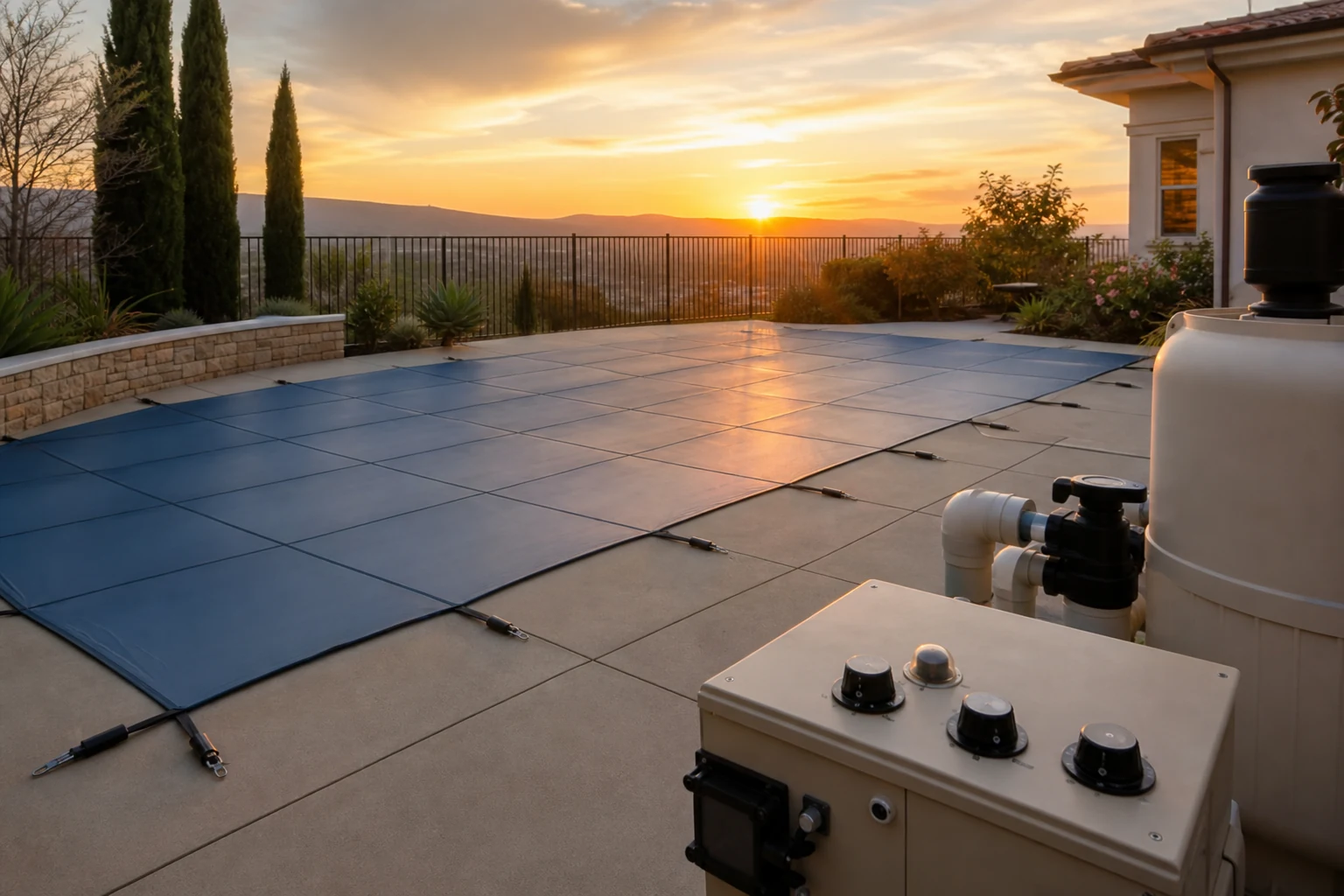
Choose a cover suitable for the pool and household. Manual covers require consistent handling and safe storage. Automatic covers require tracks, drainage, maintenance, and correct operation. Safety claims require a product designed and installed for that purpose.
Estimate operating cost with local inputs
Use current utility rates, not a national average from an old article. The U.S. Energy Information Administration publishes electricity and residential natural-gas data by state and period. Propane prices and delivery charges are local.
For gas, estimate required heat divided by heater efficiency, then multiply by delivered fuel cost. For a heat pump, divide required heat by expected coefficient of performance under realistic weather. Solar output needs a site estimate. In all cases, include standby heat loss and cover use.
Treat calculators as comparisons, not bills. Wind, evaporation, pool use, thermostat behavior, and equipment condition can dominate the result. Ask bidders to state their climate assumptions.
Compare installed—not catalog—cost
Request itemized proposals including heater, pad work, plumbing and bypass, electrical service, gas work or collectors, controls, permits, startup, disposal, warranty, and expected maintenance. Confirm compatibility with pump flow, filter pressure, automation, salt systems, and the pool finish.
A lowest-price heater that triggers a gas-meter upgrade or electrical-panel replacement may not be the lowest installed option. A high-efficiency model will not save money if it is poorly sized, bypassed, or used with an uncovered pool at an unrealistic temperature.
Final takeaway
Choose gas for speed and intermittent high demand, a heat pump for efficient steady heating in suitable air conditions, and solar when the site and schedule can use weather-dependent heat. Reduce evaporation first, model cost with local rates, and have qualified professionals verify flow, fuel, electrical, structural, and control requirements.
Sources and Supporting Claims
U.S. Department of Energy
Published 2023-03-01
- Pool heaters are covered consumer products with federal energy-conservation standards.
- Efficiency comparisons should use the metric and conditions applicable to each heater type.
U.S. Environmental Protection Agency WaterSense
Published 2022-09-01
- Pool filter types differ in particle capture, maintenance, and backwash water use.
- Cartridge filters do not require backwashing.
- Pool covers and equipment choices affect water and energy efficiency.
U.S. Environmental Protection Agency WaterSense
Published 2026-03-06
- Pools lose water through evaporation, cleaning, leaks, and splash-out.
- Consistent pool-cover use can greatly reduce evaporation and heat loss.
- Water-efficient maintenance can reduce water, energy, and chemical use.