How can a homeowner estimate pool-heating cost and reduce heat loss?
Heating cost depends on pool area and volume, starting and target temperature, weather, wind, evaporation, heater efficiency, operating schedule, and local energy price. Reduce evaporation with a suitable cover and test a lower temperature or shorter season before assuming a new heater is the only solution.
Pool-heating cost depends on the heat the water needs, the heat the pool loses, heater efficiency, and the local price of energy. Surface area, wind, humidity, nighttime temperature, water features, and cover use can matter more than gallons alone. Estimate with household inputs, then reduce evaporation before replacing equipment.
Define the temperature goal
Record current water temperature, target temperature, dates of use, and how quickly the pool must be ready. Raising a cold pool once is a different job from maintaining it for weeks. A spa is a separate high-temperature load.
Each extra degree increases the temperature difference between water and air and can increase loss. Test whether a slightly lower target still meets the household’s needs. Avoid heating on a fixed calendar when weather or travel makes swimming unlikely.
Understand where heat goes
Evaporation is a major loss from outdoor pools. Wind and dry air accelerate it. Convection, radiation, conduction into the ground, splash-out, and replacement water also matter. Fountains and spillways increase exposed water and can cool the pool when run for appearance.
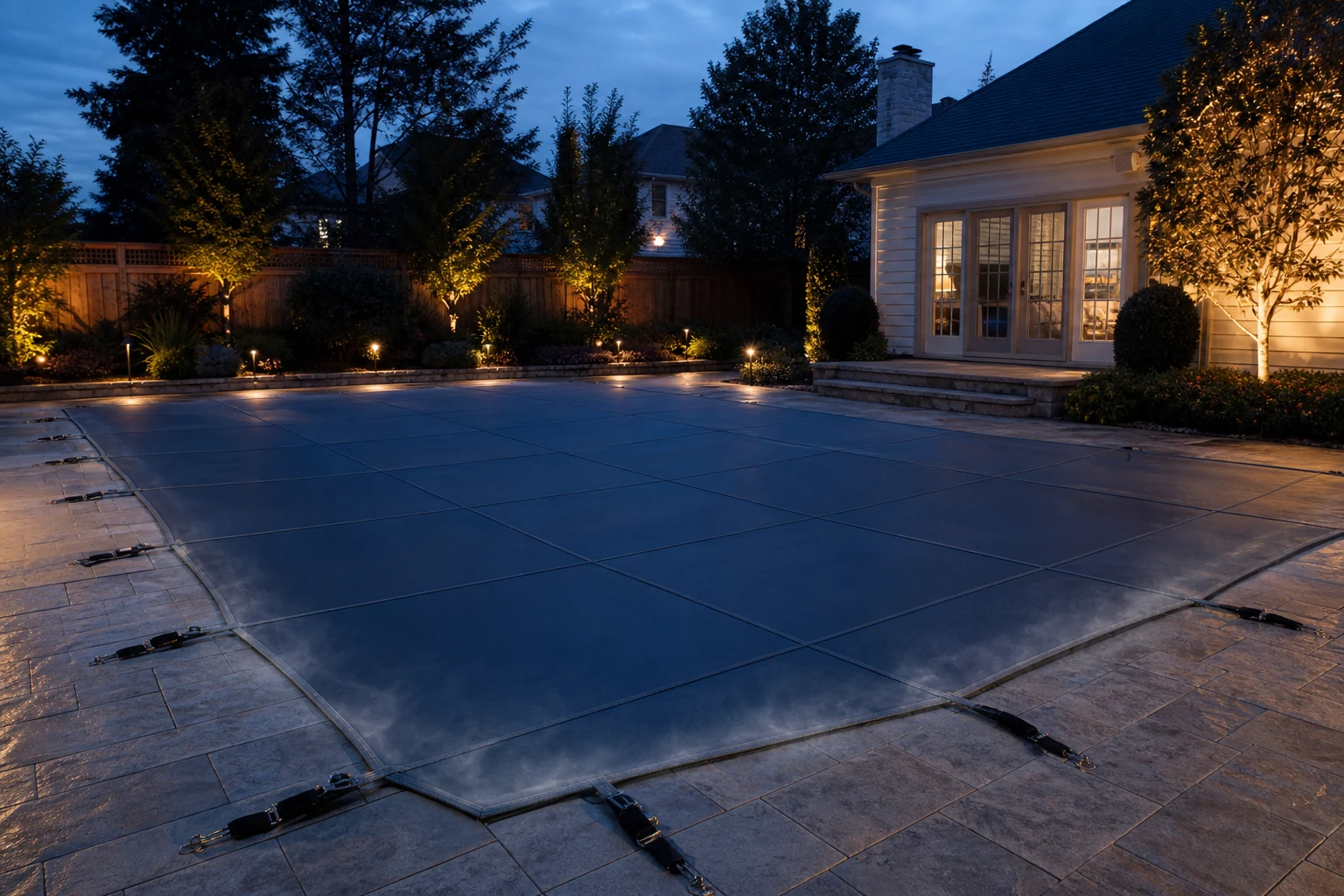
EPA WaterSense says consistent cover use can sharply reduce evaporation and helps retain heat. This does not make every cover a safety cover. Select, operate, and store the cover for its actual design.
Estimate the startup load
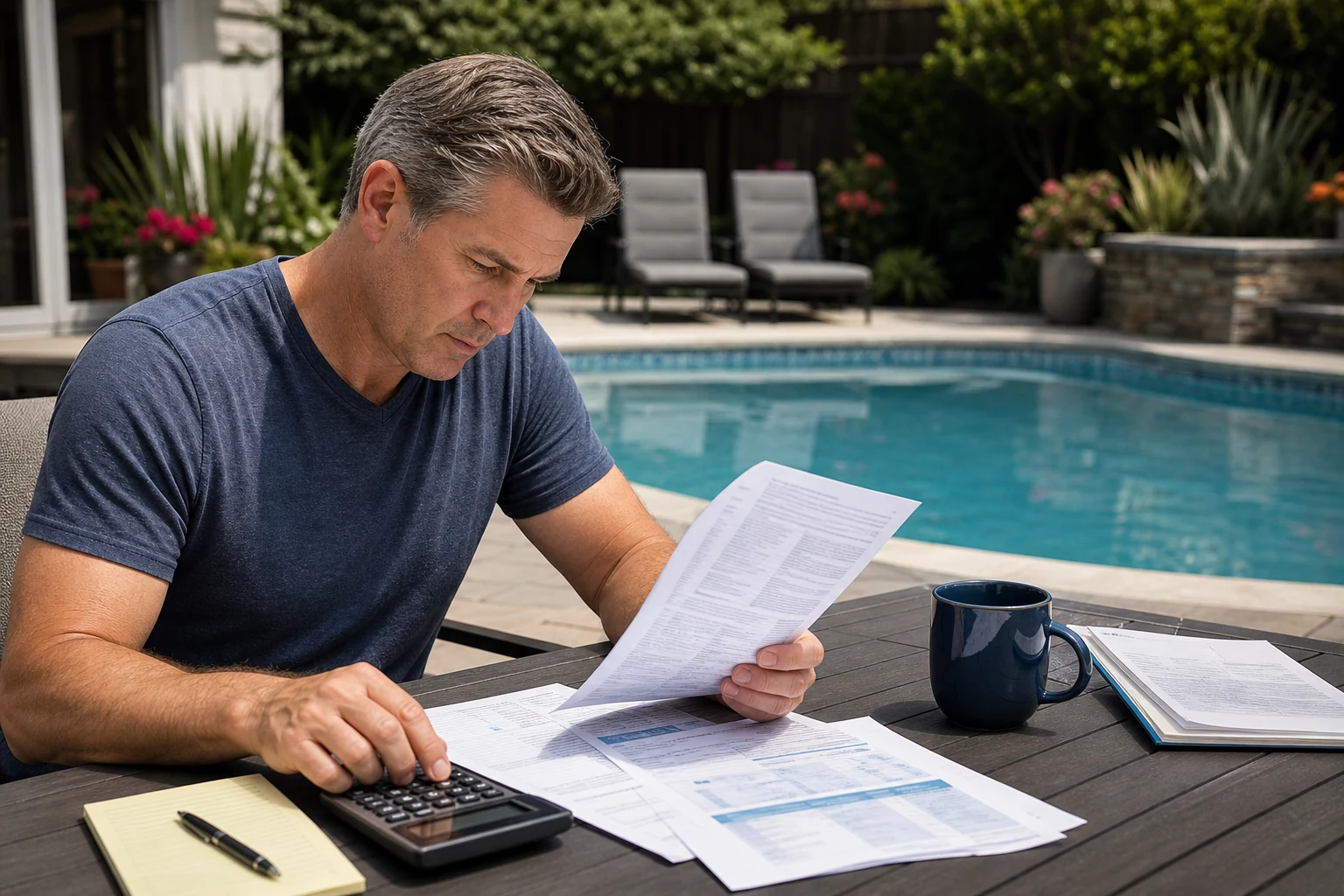
Water requires about 8.34 British thermal units to raise one gallon by one degree Fahrenheit. A simple theoretical calculation multiplies gallons by 8.34 and the desired temperature rise. Real operation requires more because the pool loses heat during warm-up.
For a gas heater, divide the required heat by thermal efficiency to estimate fuel input. For a heat pump, divide by a realistic coefficient of performance under expected air and water conditions. Solar output depends on collector area, sun, orientation, weather, and control.
Do not confuse heater input rating with heat delivered to water. Use the manufacturer’s current performance data.
Apply local energy prices
The U.S. Energy Information Administration publishes state and monthly residential electricity and natural-gas prices. Your bill may include tiers, delivery, taxes, demand features, or seasonal rates, so calculate the marginal cost of added use when possible.
Propane pricing depends on supplier, tank, delivery, and season. A national propane average may not reflect the delivered price. Record the date of every rate assumption because energy markets change.
Use a cover consistently
The best cover is one the household can use safely and regularly. Manual covers need a storage and handling plan. Automatic covers need tracks, drainage, controls, and maintenance. Liquid “covers” are not physical safety barriers and their real-world evaporation performance depends on conditions.
Cover the pool as soon as practical after use and keep water features off when they are not needed. Repair gaps, damaged fabric, or water accumulation according to the cover manual.
Reduce wind and unnecessary aeration
A code-compliant landscape windbreak can reduce air movement across the surface, but it must not create climbable objects near a safety barrier or drop excessive debris. Screen structures, walls, and plantings need local approval and drainage planning.
Schedule waterfalls, spillovers, deck jets, and fountains only when wanted. If a spa spillover is used primarily for circulation, ask whether a shorter controlled schedule can meet water-quality needs.
Tune equipment and flow
A dirty or bypassed filter, improper valves, scale, poor combustion, restricted airflow, or inadequate flow can reduce heating performance. Maintain equipment according to its manual. A heater that cycles on a flow or high-limit switch needs diagnosis, not a higher thermostat.
Program a variable-speed pump at the lowest speed that reliably satisfies heater flow requirements and system limits. Do not reduce flow below the heater’s safe range to save pump energy.
Compare strategies, not just heaters
Price a cover, automation correction, plumbing repair, and schedule change alongside heater replacement. A smaller heat load may allow different equipment. Conversely, a household needing rapid cold-weather spa heating may still prefer gas despite higher fuel cost.
Request lifecycle estimates using the same target temperature, season, cover assumption, and local rates. Include installation, electrical or gas upgrades, service, expected life, and warranty.
Track actual performance
Record starting and ending temperature, run time, weather, cover status, fuel or electricity, and pool mode. Compare similar days. A sudden increase can reveal a cover problem, leak, scale, valve error, or equipment decline.
Final takeaway
Estimate heating from water volume, temperature rise, heat loss, equipment performance, and current local rates. Then attack evaporation with a suitable cover, modest temperature, reduced wind, and disciplined water-feature schedules. Measure the result before buying a new heater; the least expensive unit of heat is often the one the pool never loses.
Sources and Supporting Claims
U.S. Environmental Protection Agency WaterSense
Published 2026-03-06
- Pools lose water through evaporation, cleaning, leaks, and splash-out.
- Consistent pool-cover use can greatly reduce evaporation and heat loss.
- Water-efficient maintenance can reduce water, energy, and chemical use.
U.S. Department of Energy
Published 2023-03-01
- Pool heaters are covered consumer products with federal energy-conservation standards.
- Efficiency comparisons should use the metric and conditions applicable to each heater type.
U.S. Energy Information Administration
Published 2026-07-23
- Residential electricity prices vary over time and by location.
- Current utility rates are necessary for a household-specific operating-cost estimate.
U.S. Energy Information Administration
Published 2026-06-30
- Residential natural-gas prices are available by state and month.
- Fuel-price assumptions must be localized and dated.