How can a residential pool affect homeowners insurance, property taxes, and resale?
Tell the insurer before installing or buying a home with a pool, ask the local assessor how improvements are treated, keep construction records for tax basis, and do not assume the pool adds a fixed resale percentage. Liability requirements, assessments, and buyer preferences are local and property-specific.
A residential pool can change liability exposure, insurer requirements, property assessment, tax records, inspections, and buyer interest. None of those effects is uniform across the United States. Tell the insurer, ask the local assessor, keep improvement records, maintain safety systems, and avoid promising a fixed resale return.
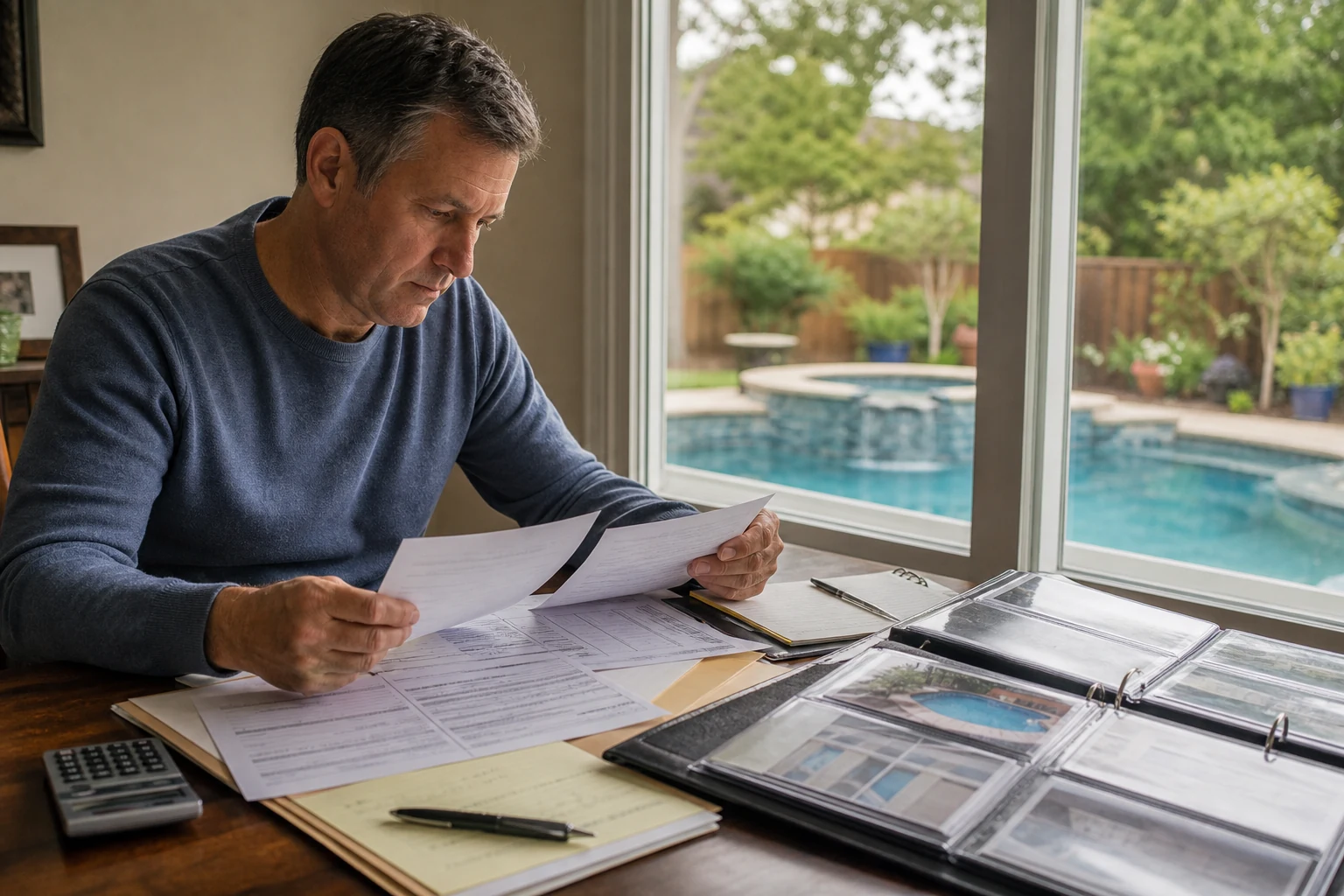
Disclose the pool to the insurer
The National Association of Insurance Commissioners recommends discussing pools and other backyard attractions with an insurance professional. The carrier may ask about fence height, self-closing gates, covers, alarms, diving boards, slides, rentals, and prior claims.
Do this before construction or immediately when buying a home with a pool. Failing to disclose a material condition can create coverage disputes. Ask for written confirmation of property and liability coverage, exclusions, required safeguards, and effective date.
Understand liability
The Insurance Information Institute describes pools as an attractive-nuisance liability exposure and advises owners to review liability limits. The appropriate limit and any umbrella policy depend on assets, risks, policy terms, and professional advice.
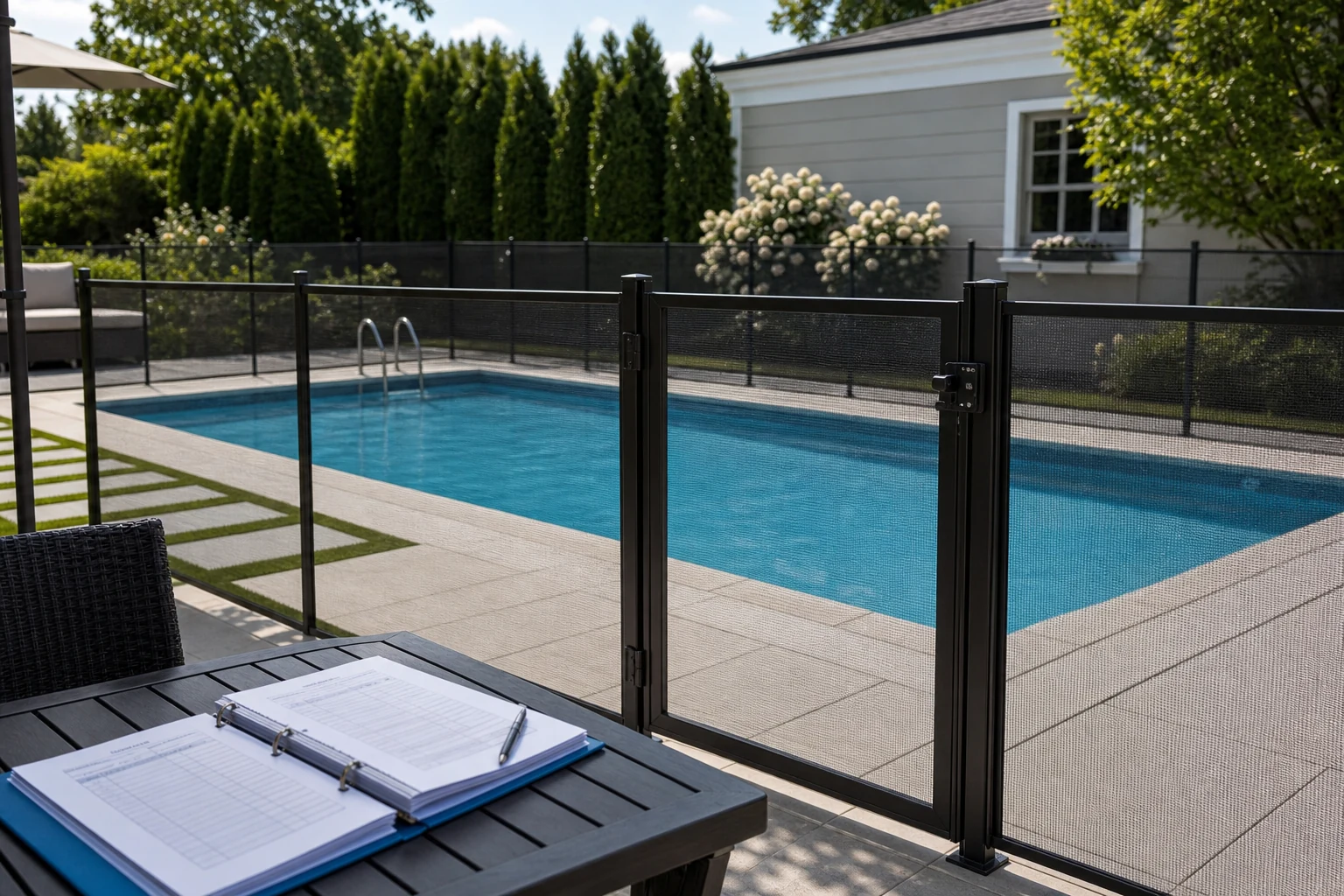
Safety is not merely an insurance checkbox. Maintain four-sided isolation where required, self-closing and self-latching gates, door controls, drain covers, lighting, rescue equipment, and supervision. Compliance with one insurer’s checklist does not guarantee compliance with local law or prevent injury.
Separate the structure from accessories
Ask how the policy classifies the pool, equipment, deck, screen enclosure, cover, retaining walls, outdoor kitchen, furniture, and landscaping. Coverage can differ for attached structures, other structures, personal property, mechanical breakdown, freeze, earth movement, flood, or wind.
Clarify whether damage to the pool is covered for the same causes as the house and whether water loss, leaks, cracking, settling, or equipment failure are excluded. Request examples rather than assuming “the pool is covered.”
Ask the local assessor
Property-tax assessment is state and local. A building permit can trigger an inspection or record update, but the assessed effect depends on jurisdiction, property class, valuation method, and market.
Contact the assessor before relying on a contractor’s estimate. Ask when improvements are reported, how incomplete construction is treated, whether the pool is separately listed, how appeals work, and which records you should retain. A neighbor’s tax change is not a reliable forecast.
Keep federal tax-basis records
IRS Publication 523 lists a swimming pool as an example of an improvement that can increase a home’s basis. It distinguishes improvements from ordinary repair and maintenance. Basis matters when calculating gain or loss on a later sale.
Keep contracts, permits, invoices, proof of payment, plans, and dates for the pool and qualifying later improvements. Do not assume every chemical purchase, repair, or service bill increases basis. Tax law and household facts change; use a qualified tax professional.
Treat resale as market-specific
A pool can attract buyers seeking outdoor living in one neighborhood and deter buyers concerned about maintenance or child safety in another. Climate, lot size, pool condition, design, operating cost, school-age household mix, and comparable sales all matter.
The National Association of Realtors advises buyers to evaluate condition and renovation needs. A clean, inspected, documented pool is easier to assess than one with cloudy water, hidden equipment, an obsolete heater, or no service records.
Do not quote a universal percentage of construction cost “returned” at sale. An appraiser estimates contributory value from relevant market evidence, not owner spending alone.
Prepare for inspection
Before listing, organize permits, warranties, equipment manuals, service records, chemistry logs, utility history, cover information, and repairs. Correct leaks, unsafe barriers, damaged suction covers, electrical concerns, and nonworking equipment with qualified professionals.
Consider a pool inspection separate from a general home inspection. Define whether it includes shell, leak observations, circulation, heater, electrical visual review, automation, cover, and safety features.
Budget the combined effect
Add any premium increase, umbrella coverage, required barriers, assessment change, maintenance, utilities, and future renovation to ownership cost. A pool can still be worthwhile for enjoyment; the calculation simply prevents an incomplete financial picture.
When buying, request recent bills and service history but verify independently. When building, inform the insurer and assessor early enough to avoid surprise after completion.
Final takeaway
A pool affects more than the backyard. Disclose it to the insurer, verify liability and property coverage, ask the assessor about local treatment, keep tax-basis records, and let comparable market evidence—not a national promise—guide resale expectations. Good safety and documentation protect both daily use and future transactions.
Sources and Supporting Claims
National Association of Insurance Commissioners
- Pool owners should disclose the pool and ask their insurer about coverage, premiums, barriers, alarms, and liability limits.
- Policy terms and insurer requirements vary.
Insurance Information Institute
- A pool increases liability exposure and should be discussed with an insurance professional.
- Local pool laws and insurance requirements can differ.
Internal Revenue Service
Published 2026-01-01
- A swimming pool is listed as an example of a home improvement that can increase tax basis.
- Maintenance and repairs are treated differently from qualifying improvements.
- Tax outcomes depend on the taxpayer's facts and current rules.
National Association of Realtors
Published 2025-01-01
- Pool condition, age, inspection, and local buyer preferences affect a transaction.
- Resale contribution is market-specific rather than guaranteed.