What factors determine the cost of resurfacing an inground pool?
Compare resurfacing bids by measured surface area, removal and preparation, crack or structural repair, finish system, tile and coping scope, startup care, water handling, warranty, and exclusions. A lower unit price is not comparable if it omits preparation or repair work.
Pool resurfacing is not a single coating price. The proposal includes draining, access, removal or preparation, crack and bond repair, finish material, tile and fitting details, startup, water, permits, and warranty. Compare bids by measured area and defined scope, not by one total or a generic cost per square foot.
Confirm that resurfacing is the right repair
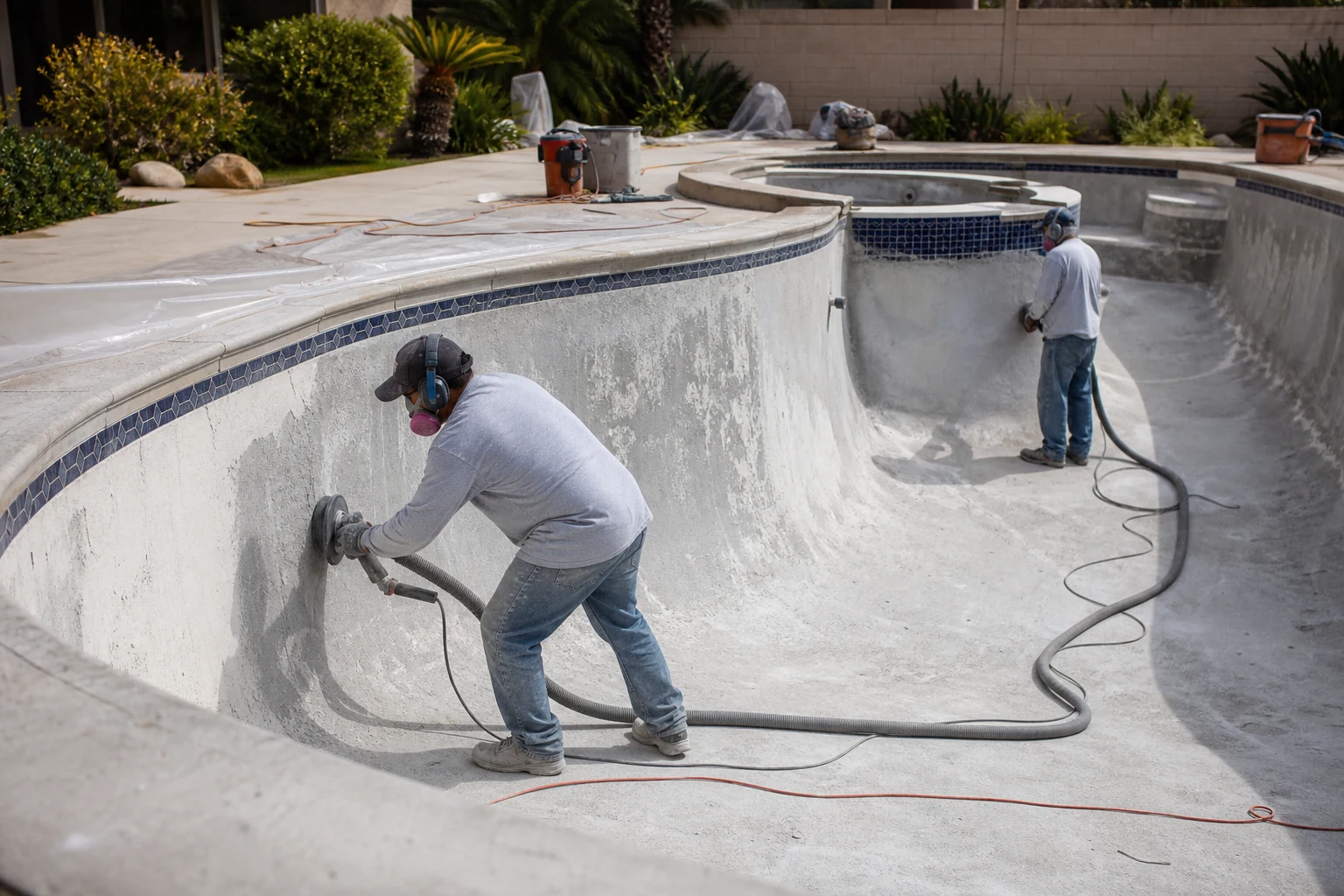
Roughness, staining, exposed aggregate, pitting, delamination, cracks, and water loss can point to different problems. A cosmetic finish cannot correct structural movement or a plumbing leak. Ask the contractor to identify each defect and state whether the proposal treats the cause or only the visible surface.
Tap testing, moisture observations, core samples, crack monitoring, or leak detection may be needed. Obtain structural or engineering advice when movement, settlement, shell cracking, or unexplained loss is present.
Measure the actual surface
Pool footprint is not interior surface area. Depth changes, walls, steps, benches, spas, shelves, coves, and complex geometry add material and labor. Ask for measured square footage and how it was calculated.
Clarify whether the bid includes the attached spa, waterline tile, step markers, fittings, main-drain covers, light niches, returns, skimmers, and exposed transition areas. Two contractors may be pricing different pools on paper.
Understand preparation
A new finish needs a sound substrate and a compatible bond. Preparation may include chipping out the old finish, hydroblasting, abrasive removal, bond coat, crack repair, and treatment around fittings. “Prep as needed” is not enough for comparison.
Ask what percentage or depth is removed, how hollow or delaminated areas are handled, and what happens if the crew discovers a poor prior application. Include unit rates or an approval process for concealed conditions.
Dust, noise, wastewater, debris hauling, access protection, and neighboring property deserve a plan. Confirm who repairs deck or landscape damage caused by equipment.
Compare finish systems
Traditional plaster, quartz or other aggregate, pebble, tile, and specialty coatings differ in appearance, texture, price, installation skill, chemistry sensitivity, repairability, and expected service life. Angi’s current 2026 cost guide shows large material and scope differences, but those national figures are only planning references.
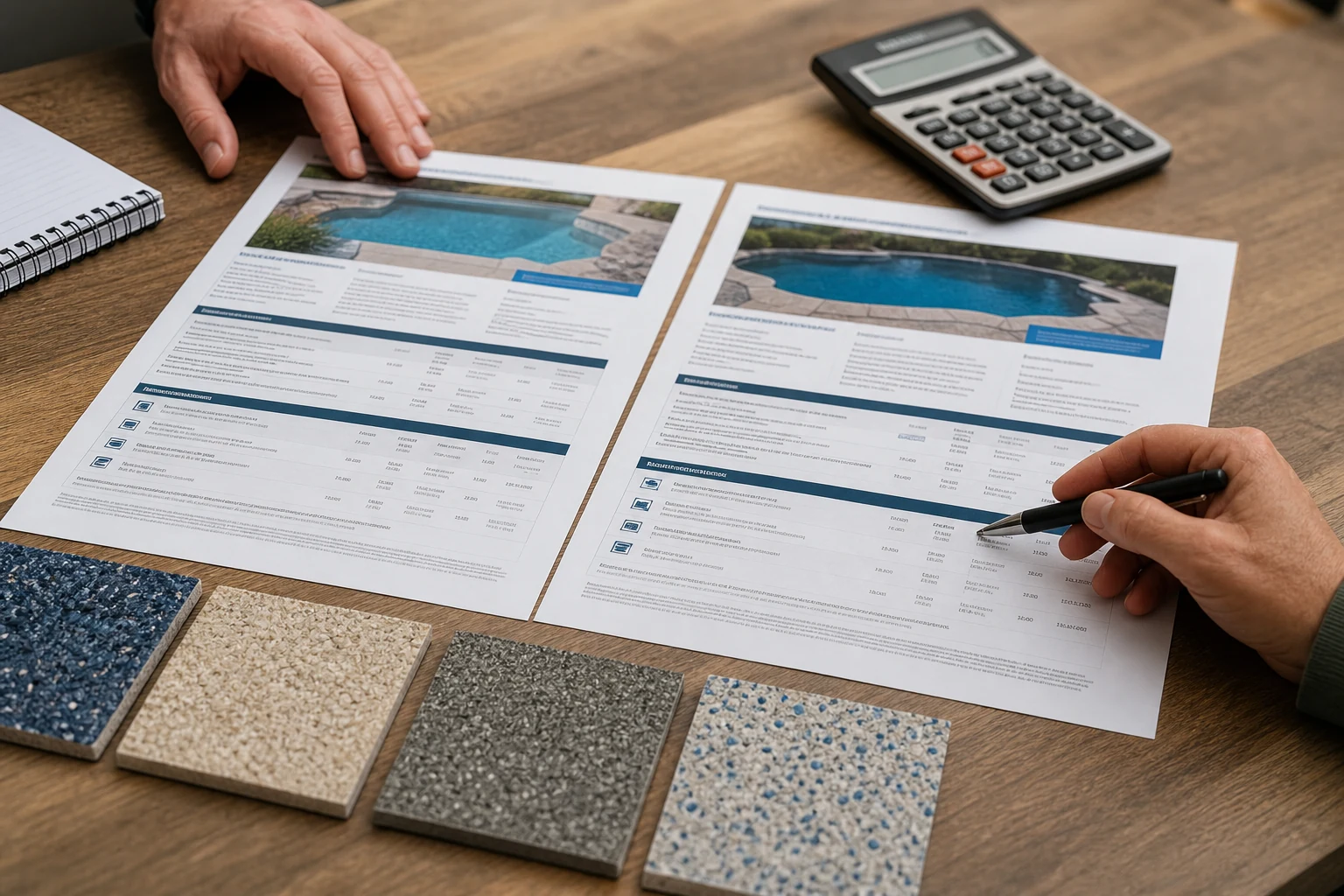
Ask for the exact manufacturer, product line, color, aggregate exposure, approved installer status, sample pool, and written warranty. Dark or mottled finishes can show variation differently. Slip resistance and comfort matter on steps and shallow areas.
Do not choose a finish solely from a small dry sample. View installed pools of similar age and water conditions.
Include tile, coping, and fittings
Resurfacing can expose failing waterline tile, grout, coping joints, skimmer throats, drains, and return fittings. It may be efficient to address them while the pool is empty, but each expands scope.
Replacement suction covers must be correct for the outlet and current safety requirements. Lights and electrical bonding require qualified evaluation. Avoid burying obsolete or damaged parts under a new finish.
Plan water removal and refill
Draining an inground pool can create groundwater and structural risk. The contractor should assess conditions, hydrostatic relief, weather, and discharge rules. Water containing chlorine, salt, or treatment products may not be legal to release to a storm drain or yard.
Refill cost depends on volume and local water source. Trucked water, hydrant use, sewer charges, drought restrictions, and fill-water chemistry vary. Confirm who orders water, monitors the fill, and prevents the new finish from stopping at a stain-producing line.
Treat startup as part of the finish
Fresh cementitious finishes often require controlled filling, brushing, filtration, and water chemistry. The specific startup method should come from the finish manufacturer and warranty provider. Ask who performs daily startup, supplies chemicals, cleans the filter, documents results, and authorizes heater or salt-cell use.
A low resurfacing price that excludes startup transfers risk to the homeowner. Get the process, duration, and responsibility in writing.
Normalize warranties
Separate workmanship and material warranties. Note covered defects, exclusions, required chemistry logs, service response, transferability, and remedy. A long warranty with narrow coverage may offer less protection than a shorter, clear one.
Keep test records, invoices, photographs, and product information. IRS Publication 523 lists swimming pools among improvements that may increase home basis; ask a tax professional which renovation records matter for your situation.
Compare complete proposals
Build rows for mobilization, access, draining, preparation, repairs, finish, tile, fittings, permits, disposal, refill, startup, cleanup, warranty, and exclusions. Include the schedule and who protects the empty pool during weather delays.
Use national cost guides to question an outlier, not to force a local contractor to match a number from a different region and scope.
Final takeaway
Resurfacing cost is driven by what lies under the finish as much as by the finish itself. Diagnose defects, measure the complete interior, define preparation and repairs, include safe draining and documented startup, and compare warranties and exclusions. The best value is a durable, supported system—not the lowest headline price.
Sources and Supporting Claims
Angi
Published 2026-07-15
- Resurfacing prices vary by finish, surface area, preparation, access, repairs, and location.
- Material choices trade initial price against expected service life and repairability.
Internal Revenue Service
Published 2026-01-01
- A swimming pool is listed as an example of a home improvement that can increase tax basis.
- Maintenance and repairs are treated differently from qualifying improvements.
- Tax outcomes depend on the taxpayer's facts and current rules.
U.S. Environmental Protection Agency WaterSense
Published 2026-03-06
- Pools lose water through evaporation, cleaning, leaks, and splash-out.
- Consistent pool-cover use can greatly reduce evaporation and heat loss.
- Water-efficient maintenance can reduce water, energy, and chemical use.