How should homeowners combine skimming, brushing, and vacuuming?
Skim floating debris before it sinks, brush surfaces to loosen attached film, and vacuum settled material after brushing. The best frequency depends on weather, swimmers, landscaping, and the pool surface rather than a universal daily schedule.
Pool cleaning works best when each tool handles the debris it was designed to reach. A skimmer removes material floating at the surface, a brush loosens film attached to walls and features, and a vacuum collects material that has settled. Use them in that order—skim, brush, then vacuum—while adjusting frequency for weather, swimmers, landscaping, pool finish, and circulation.
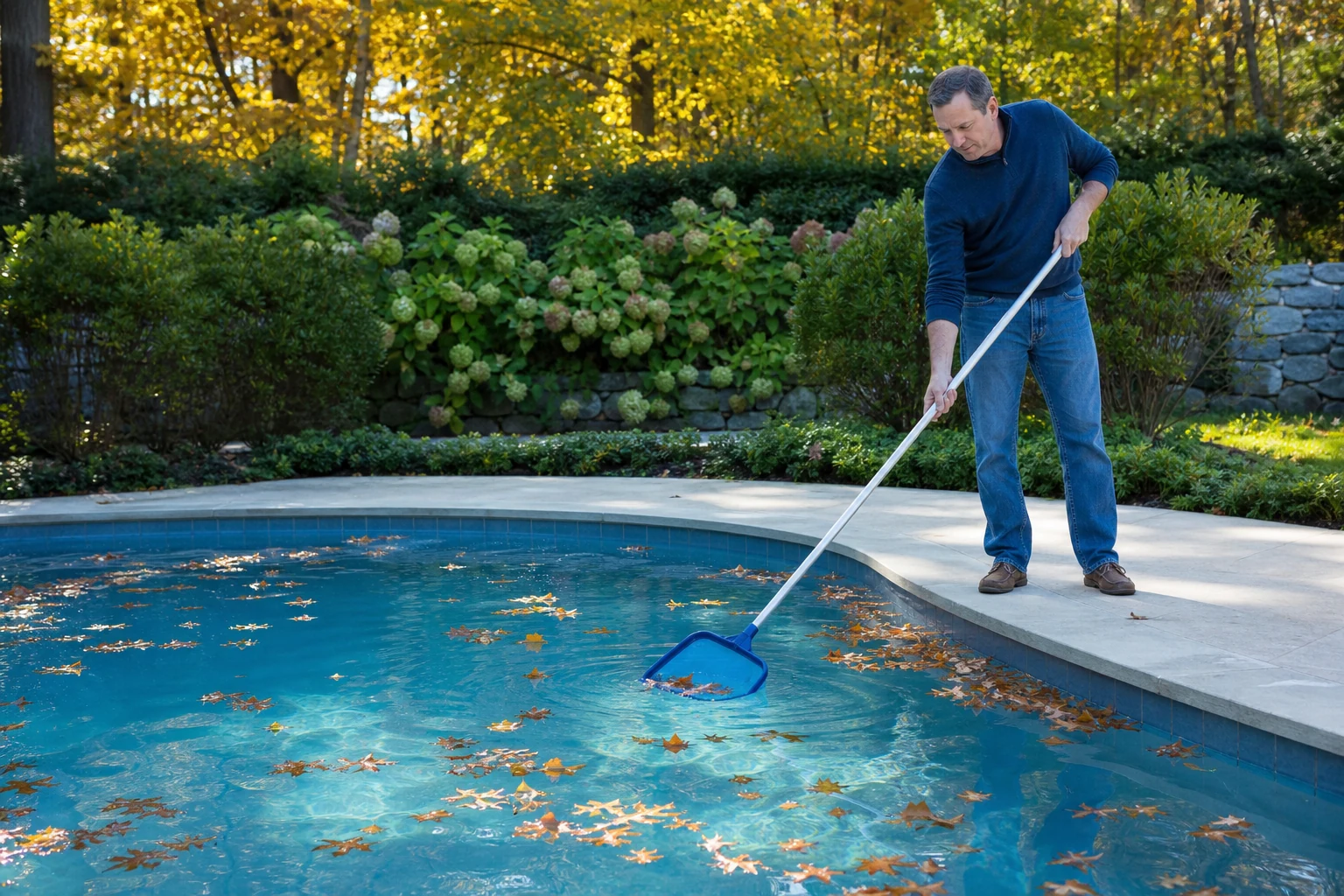
Skim before debris becomes a water problem
Leaves, insects, flowers, ash, and grass are easiest to remove while they float. Once they sink, they require more work and can stain a surface or increase the load on the sanitizer and filter. Move the net slowly enough that debris stays in the bag. Empty it frequently rather than pushing a heavy net against a liner or delicate finish.
Skim after storms, mowing, or windy afternoons even if the normal schedule says otherwise. Empty skimmer baskets at the same time, but turn equipment off if the installed design requires it and keep hands away from suction openings. A packed basket can reduce flow; a cracked basket can allow debris to reach the pump impeller.
Brush the places circulation misses
Brushing disrupts the thin film that forms on surfaces and moves fine sediment toward filtration or vacuuming. Select a brush approved for the finish. A tool suitable for durable plaster may scratch fiberglass, vinyl, painted surfaces, tile accents, or soft stone. When in doubt, consult the pool builder or finish manufacturer.
Start at the waterline and work downward with overlapping strokes. Pay attention to steps, benches, corners, behind ladders, around returns, below the skimmer, and shaded areas. Brush toward the main floor or a location the vacuum can reach. Good brushing is controlled; striking fittings, lights, drains, or a liner seam with a stiff tool can cause damage.
An isolated slimy patch, recurring discoloration, or material that will not brush away deserves diagnosis. It might be algae, mineral scale, organic staining, metal staining, or surface deterioration. Do not attack every mark with acid, chlorine, or an abrasive pad.
Vacuum after loosened material settles
Let heavy debris settle briefly after brushing if the water remains clear enough to work safely. A manual suction vacuum, pressure cleaner, robotic cleaner, or service vacuum handles debris differently. Follow the equipment instructions and never allow swimmers in the water with powered cleaning equipment unless the manufacturer explicitly permits it.
For a manual suction vacuum, assemble and prime the hose as directed so air is not drawn into the pump. Move slowly; fast strokes stir dust into a cloud. Watch the pump basket, return flow, and filter pressure. Stop if suction becomes unstable or the system draws air.
When the pool contains a large amount of fine sediment, dead algae, or construction debris, vacuuming through the filter may rapidly load it or return fine particles to the pool. Some systems can vacuum to waste, but that uses significant water and can lower the level quickly. Confirm that the valve and discharge location are suitable and that local rules allow the water to be discharged there.
Coordinate cleaning with filtration
EPA WaterSense recommends regular skimming and vacuuming because removing material mechanically reduces the load on filtration. That does not mean running a pump at maximum speed all day. The circulation schedule should provide the flow required by filtration, sanitation, heating, and water features without exceeding equipment limits.
Check filter pressure before and after a heavy cleaning session. Service the filter when actual pressure, flow, or the manufacturer’s criterion indicates it. Unnecessary backwashing wastes water and can leave some filter types less effective until the media settles again.
Robotic cleaners can reduce manual floor work, but they do not eliminate waterline cleaning, spot brushing, basket maintenance, water testing, or inspection. Clean the robot’s filter after use, inspect its cable or battery system, and store it as directed.
Choose a frequency based on evidence
A weekly full clean is a reasonable planning point for many households, but the pool decides. Heavy pollen may call for daily skimming. Warm, sunny, low-circulation areas may need more frequent brushing. A screened pool with little debris may need less vacuuming. Track how much material each task removes and shorten or lengthen the interval.
Swimmer habits matter too. A quick shower reduces sweat, cosmetics, and body oils. Keeping food, soil, and grass away from the edge reduces debris. A suitable cover can lower evaporation and cleaning demand when used consistently, although it must be maintained and never confused with a safety cover unless certified for that role.
Keep the work safe
Store poles, hoses, cords, and cleaner caddies where they do not create trip hazards. Do not clean during a thunderstorm. Keep electrical cords and unsuitable devices away from water, and use the GFCI-protected supply specified for powered equipment. Stop immediately if a cleaner cable is damaged, an underwater light flickers, or anyone feels tingling.
Maintain clear visibility to the deepest point. If brushing or vacuuming makes the water so cloudy that the floor or suction fittings cannot be seen, close the pool to swimmers and let the filtration and treatment process restore clarity.
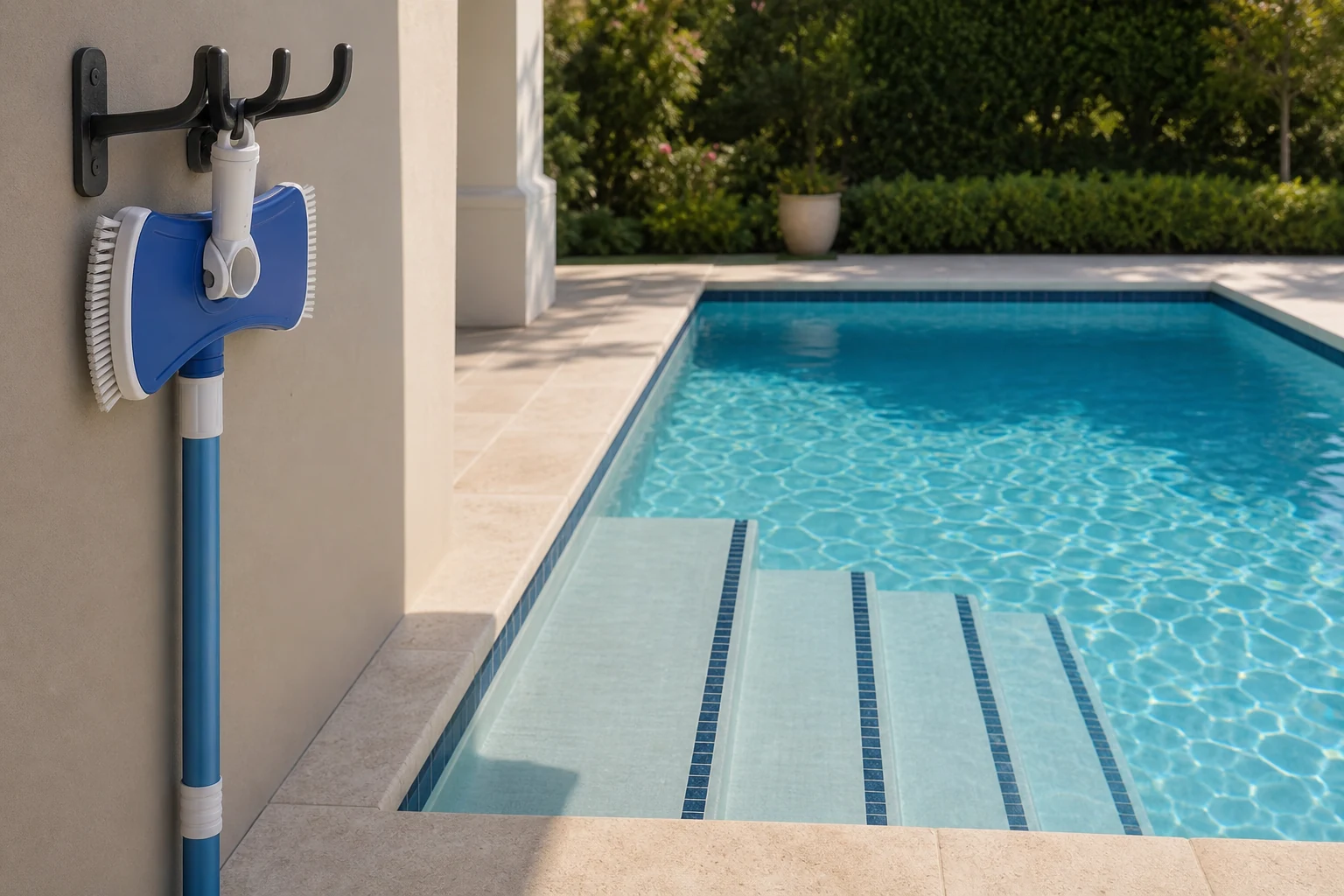
Final takeaway
Efficient cleaning follows the debris: skim what floats, brush what clings, and vacuum what settles. Match tools to the finish and equipment, protect circulation from overloaded baskets, and use pressure and flow evidence to manage the filter. A routine built around actual conditions produces a cleaner pool with less wasted water, energy, and effort.
Sources and Supporting Claims
U.S. Environmental Protection Agency WaterSense
Published 2026-06-01
- Skimming and vacuuming reduce load on filtration.
- Filters should be cleaned based on need and pressure rather than an arbitrary schedule.
- Pool equipment and plumbing should be drained before freezing weather where applicable.
- Automatic-fill systems should be monitored for leaks.
U.S. Environmental Protection Agency WaterSense
Published 2026-03-06
- Pools lose water through evaporation, cleaning, leaks, and splash-out.
- Consistent pool-cover use can greatly reduce evaporation and heat loss.
- Water-efficient maintenance can reduce water, energy, and chemical use.
Centers for Disease Control and Prevention
Published 2025-05-29
- Close supervision, four-sided fencing, water skills, and CPR are complementary safety layers.
- Pool chemicals should be secured and used according to their labels.
- Swimmer hygiene reduces contaminant demand on disinfectant.