How can a homeowner distinguish normal pool water loss from a leak?
Track water level under comparable conditions, turn off automatic fill, compare pool loss with a bucket of water, and inspect equipment and discharge lines. A consistent difference between pool and bucket levels—or water loss that continues with equipment off—justifies professional leak detection.
Every outdoor pool loses some water to evaporation and splash-out. A leak becomes more likely when the pool consistently loses more water than a nearby open container under the same weather, the automatic fill runs unusually often, the equipment pad stays wet, or the level stops at the same elevation repeatedly. A measured comparison is more useful than guessing from a single hot day.
Understand normal water movement
Evaporation increases with warm water, dry air, wind, low humidity, and water features that expose more surface area. Heated pools can lose water rapidly when cool, dry air moves across the surface. Swimmers carry and splash water out. Backwashing, vacuuming to waste, draining a spa spillover, and cleaning a filter can also lower the level.
EPA WaterSense identifies evaporation, leaks, cleaning, and splash-out as major pool water uses and recommends covers as an effective way to reduce evaporation. Cover performance depends on consistent use and fit. A cover also changes the comparison, so note whether it was on during the observation period.
Disable hidden replacement water
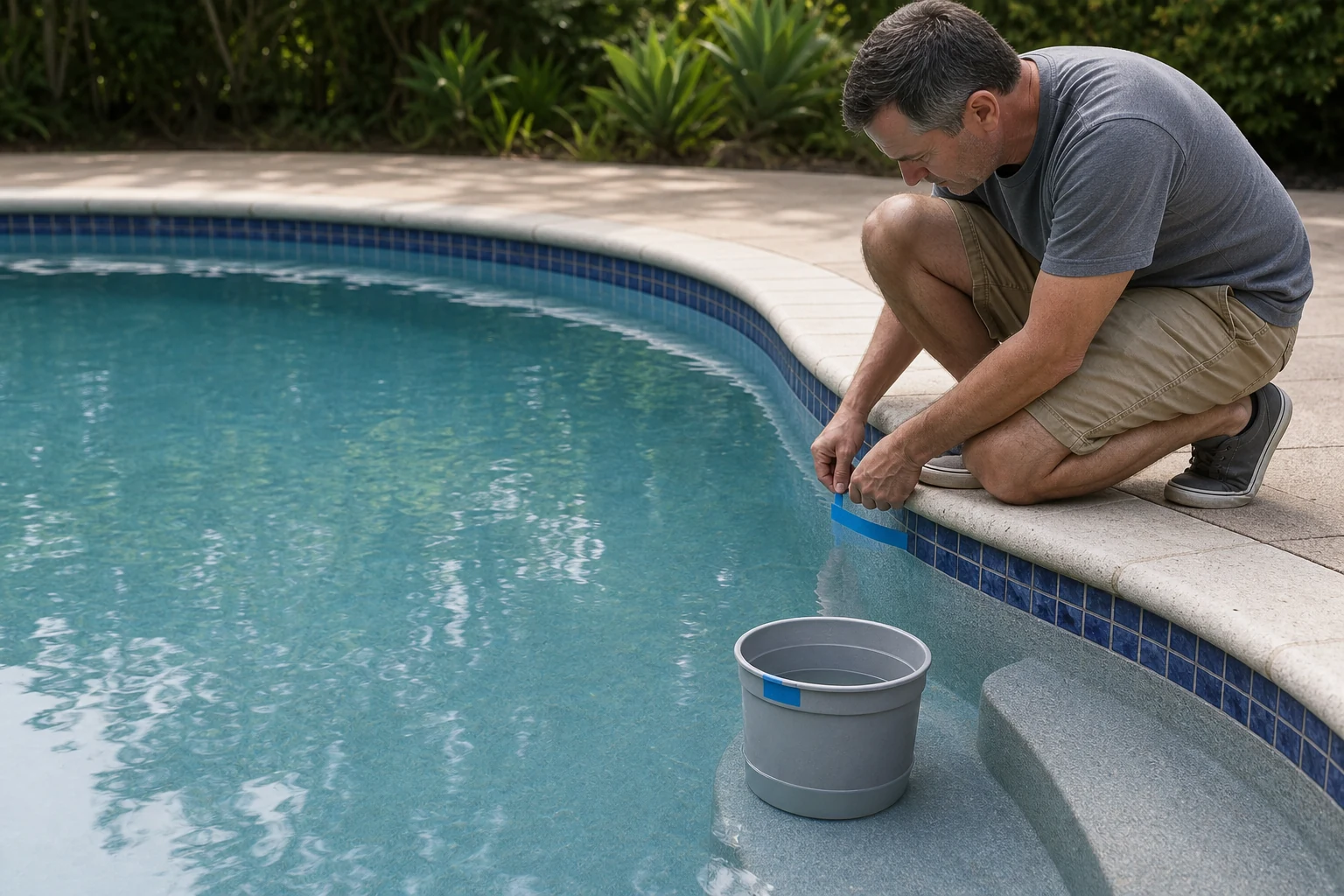
An automatic fill valve can conceal a leak by keeping the level constant while the water bill rises. Turn it off for a controlled test if doing so is safe and the system instructions allow it. Mark the pool level with removable tape or a pencil at the skimmer. Photograph the water meter or record its reading if the pool supply can be isolated from other household use.
Inspect the fill valve for continuous flow, a stuck float, or water entering through an overflow. Listen when the yard is quiet. A fill line that runs at night may be the first sign of a problem.
Run a bucket comparison
Place a clean bucket on a pool step or secure shelf so the bucket and pool experience similar sun, wind, and temperature. Add pool water to the bucket, leaving enough freeboard to prevent waves from spilling in or out. Mark the water level inside the bucket and the pool level outside it.
Run the comparison for about 24 hours during normal, stable weather and without swimming, backwashing, or adding water. Keep the pump schedule typical unless you are conducting separate on/off tests. Compare the drop in the pool with the drop in the bucket. If the pool falls materially farther, repeat the test to rule out marking error or unusual weather.
The bucket test does not locate a leak and is not a calibrated laboratory measurement. Rain, animals, irrigation, a loose bucket, an autofill, or a water feature can invalidate it. Treat it as a screening tool.
Inspect common visible loss points
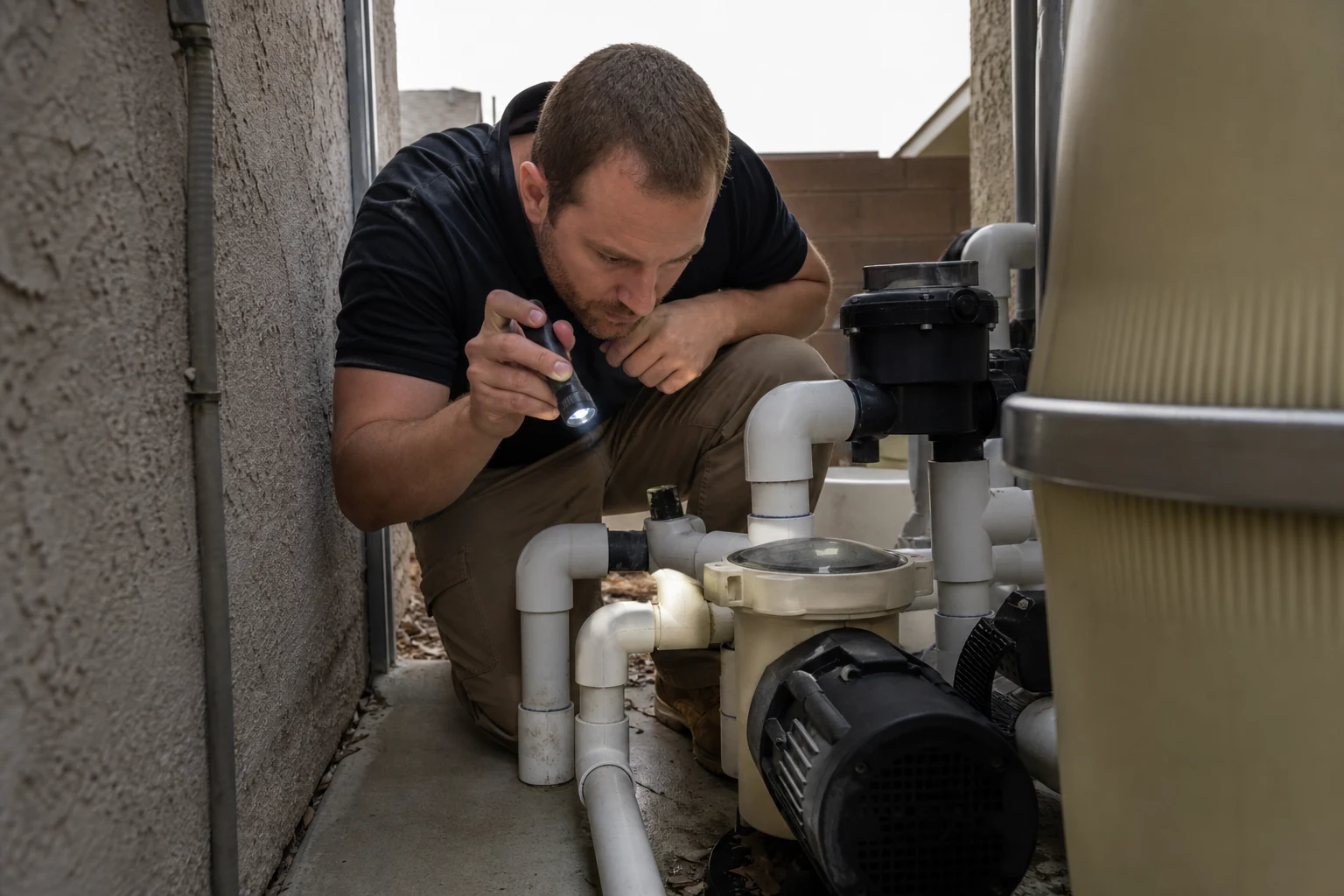
Walk the equipment pad while the system is running and after it stops. Look at pump seals, unions, drain plugs, filter closures, heater connections, chlorinators, valves, and the waste line. A backwash valve can leak to waste without leaving water at the pad. Check the discharge point when the system is in filter mode.
Look for air in the pump basket, bubbles returning to the pool, damp soil, eroded mulch, unusually green landscaping, deck cracks, loose tile, or water behind a vinyl liner. Inspect around skimmer throats, returns, lights, steps, and fittings without entering cloudy or unsafe water. Do not use dye near a suction fitting while circulation is operating.
Compare pump-on and pump-off behavior
A pressure-side leak may become more obvious when the pump runs. A suction-side problem may draw air while operating and leak water only after shutdown. A vessel or fitting leak may continue regardless of circulation. Conduct separate, clearly timed observations with equipment on and off, but never close valves in a way that deadheads a running pump or isolates a heater incorrectly.
If the level repeatedly stops at the same height, inspect fittings and penetrations near that elevation. Do not let the water fall far enough to uncover a skimmer while the pump runs; loss of prime can damage equipment.
Know when to call a leak specialist
Escalate when repeated tests show excess loss, the structure or deck is moving, water appears behind a liner, the pool cannot maintain operating level, or plumbing is buried. Professional leak detection may use pressure testing, acoustic tools, controlled dye tests, cameras, or line isolation. Ask what the service includes and whether repair is part of the quote.
Before the visit, provide water-level records, weather, cover use, pump schedule, autofill status, photographs, and any on/off comparison. This evidence shortens diagnosis and reduces the temptation to begin with destructive excavation.
Reduce loss while preserving safety
Use a suitable cover when practical, repair fill-valve problems, limit unnecessary backwashing, and clean filters based on pressure evidence. Do not lower the pool below structural or equipment requirements to “save water.” Keep sanitizer and circulation adequate while testing; a suspected leak does not make stagnant water safe.
Final takeaway
Start with measurement: expose the automatic fill, mark the level, compare pool loss with a bucket, inspect visible equipment, and repeat under controlled conditions. Normal evaporation varies, but persistent excess loss is evidence. Document it and call a specialist before a small leak wastes large amounts of water or causes structural, soil, or equipment damage.
Sources and Supporting Claims
U.S. Environmental Protection Agency WaterSense
Published 2026-03-06
- Pools lose water through evaporation, cleaning, leaks, and splash-out.
- Consistent pool-cover use can greatly reduce evaporation and heat loss.
- Water-efficient maintenance can reduce water, energy, and chemical use.
U.S. Environmental Protection Agency WaterSense
Published 2026-06-01
- Skimming and vacuuming reduce load on filtration.
- Filters should be cleaned based on need and pressure rather than an arbitrary schedule.
- Pool equipment and plumbing should be drained before freezing weather where applicable.
- Automatic-fill systems should be monitored for leaks.