Which household rules make pool use safer for guests and parties?
Name one sober, distraction-free water watcher at a time, verify barriers before guests arrive, learn each swimmer's needs, prohibit unsupervised access and unsafe diving, pause for storms, and review the emergency plan. A party host should never assume another adult is watching.
A safe pool gathering is managed, not assumed. Before guests arrive, secure barriers, assign a sober water watcher, learn who can swim, stage rescue equipment, check weather, and explain the rules. During the event, responsibility transfers explicitly. After swimming, account for everyone and restore every layer of protection.
Prepare the physical space
Test the gate from several positions, activate door and pool alarms, inspect the cover and drain covers, and remove broken furniture, glass, loose cords, and trip hazards. Confirm clear water to the deepest point.
Place a reaching pole, throwing aid, first-aid kit, and charged phone where adults can reach them. Post the address and unlock a responder route without leaving the pool accessible to children.
Create separate zones for food, running games, and towels so the deck does not become crowded. Keep grills and electrical equipment away from water and barriers.
Ask about swimmers
Do not rely on age or confidence. Ask caregivers which children are non-swimmers, who needs close support, and whether anyone has a medical condition requiring a plan. Use U.S. Coast Guard-approved life jackets as appropriate and as directed.
Show every guest the shallow and deep areas, steps, safe exits, and no-diving locations. A person who swims well in lessons may struggle in a crowded unfamiliar pool.
Assign a water watcher
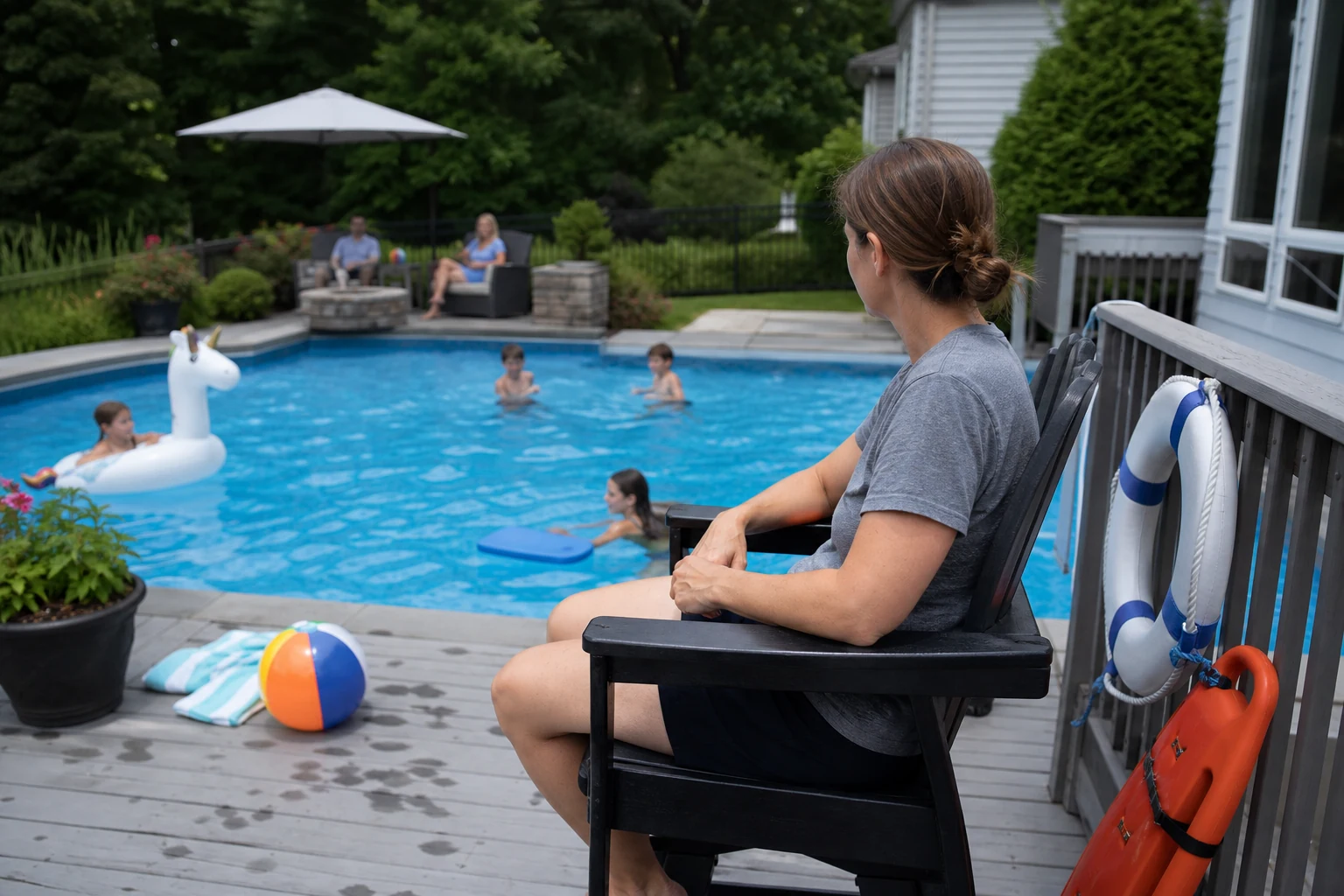
The American Red Cross recommends designated supervision. Name one sober adult at a time. The watcher stays close, scans continuously, and does not cook, text, read, drink alcohol, or host a conversation.
Use a visible card or lanyard. Set a rotation interval and make a verbal transfer: the new watcher confirms responsibility before the previous watcher leaves. Do not assign an older child to supervise younger children.
If the gathering is large, consider a qualified lifeguard. Verify current credentials, references, expected equipment, and duties. A hired lifeguard does not eliminate caregiver responsibilities or barriers.
Establish simple behavior rules
No unsupervised entry. No running, pushing, breath-holding contests, unsafe diving, or playing near drains. Swim with a buddy, but remember that a buddy does not replace adult supervision. Keep toys away from the cover and barrier when the pool closes.
Require swimmers to stay out if they have diarrhea. Encourage a shower before swimming and bathroom breaks for children. CDC explains that hygiene reduces contaminants that consume disinfectant and form irritants.
Stop anyone whose behavior, fatigue, cold, illness, or impairment makes continued swimming unsafe.
Manage alcohol and medications
Swimmers and supervisors should be sober. Alcohol affects judgment, balance, temperature awareness, and response. Provide appealing nonalcoholic options and designate adults whose supervision role excludes drinking.
Prescription and over-the-counter medicines can also impair a person. Individuals should follow clinician and label warnings. Do not pressure a guest to swim.
Watch weather and temperature
End swimming at the first thunder and move people to a safe shelter. Do not wait under an umbrella or handle long metal poles. Resume only under authoritative local guidance for lightning timing.
Heat can cause dehydration and illness on deck; cold water and evening air can exhaust swimmers. Provide shade, fresh drinking water, warm towels, and rest breaks. Sunscreen can be reapplied away from the edge to reduce slippery decks and water contamination.
Keep food and electrical entertainment controlled
Use unbreakable containers. Keep cords, speakers, projectors, fans, chargers, and decorative lights away from the pool. Battery power does not make a device waterproof.
Clean spills promptly. Avoid leaving food where insects, wildlife, or pets are drawn to the pool area. Store pool chemicals locked and never perform treatment while guests occupy the area unless the product and operating plan specifically allow it.
Review the emergency plan
Tell adults who calls 911, where the phone and rescue aids are, how responders enter, and who moves other children away. Responsible adults should have formal CPR and water-safety training.
Do not stage dangerous in-water rescue practice during a party. A dry-deck role review is enough.
Close the event deliberately
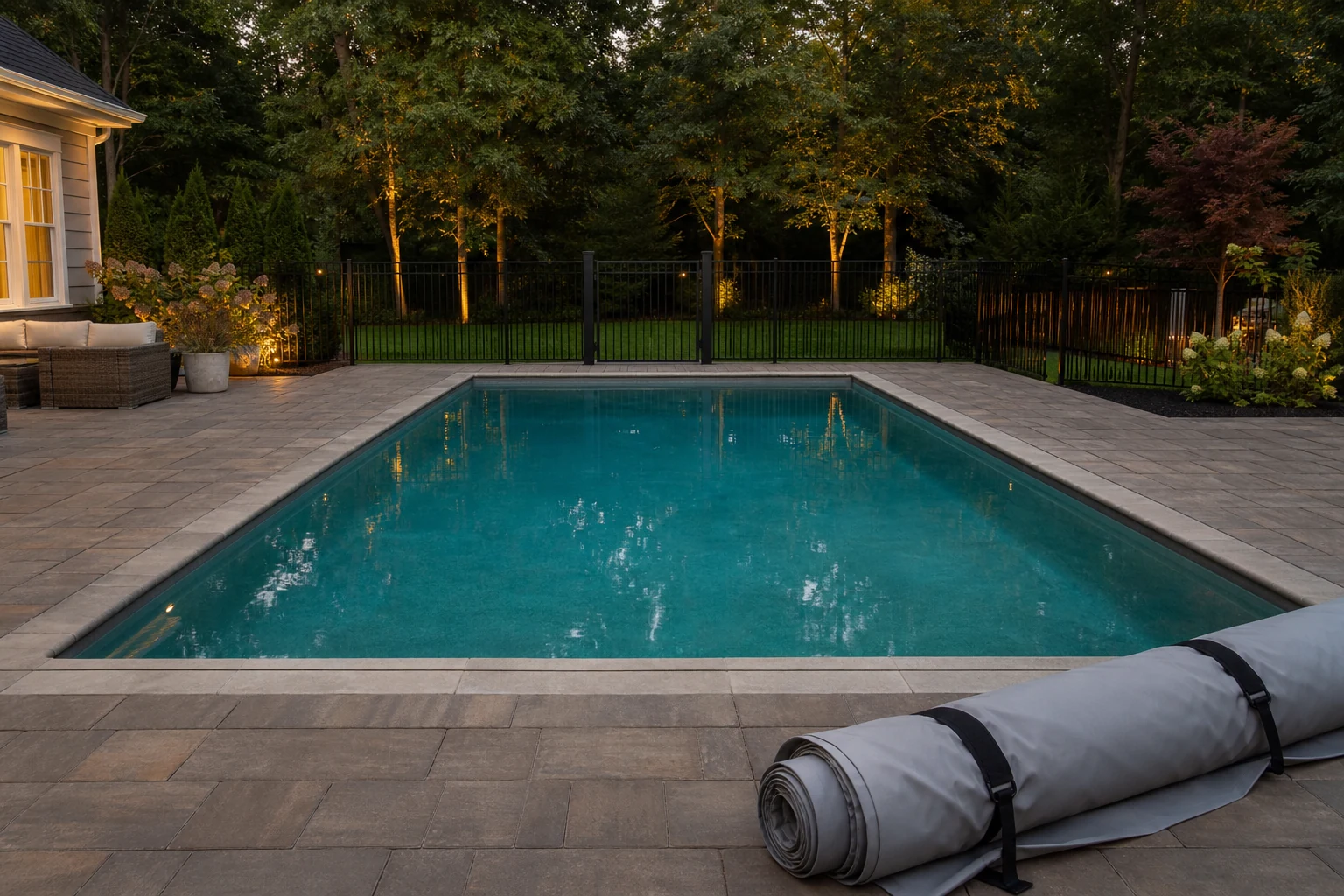
Count children and confirm each is with a caregiver. Remove floats and toys, close the cover if used, test the gate, secure doors, activate alarms, and verify that no guest remains in the water. The water watcher’s role continues through cleanup until access is restored.
Final takeaway
Safer pool use comes from clear roles and repeatable systems. Prepare the space, assess swimmers, assign a sober watcher, enforce a few strong rules, respond to weather, stage emergency tools, and close every barrier afterward. A lively gathering can still be disciplined; the host must make supervision visible and continuous.
Sources and Supporting Claims
American Red Cross
Published 2014-01-01
- Pool parties need specifically assigned supervision and an emergency plan.
- Supervision responsibilities should be explicit and continuous.
American Red Cross
- Home-pool safety uses barriers, a designated water watcher, close supervision, water competency, and emergency preparation.
- CPR and water-rescue skills should be learned through appropriate training.
- Swim sober and keep swimmers away from drains.
Centers for Disease Control and Prevention
Published 2025-05-29
- Close supervision, four-sided fencing, water skills, and CPR are complementary safety layers.
- Pool chemicals should be secured and used according to their labels.
- Swimmer hygiene reduces contaminant demand on disinfectant.