What changes when a residential pool uses a saltwater chlorine generator?
A saltwater system converts dissolved chloride into chlorine; it is not chlorine-free. Owners still test free chlorine and pH, inspect and clean the cell as directed, verify salt independently, and protect surfaces and equipment from unsuitable chemistry or installation.
A saltwater chlorine generator is a chlorine system. It passes mildly salty pool water through an electrolytic cell that generates chlorine, reducing the need to add routine chlorine by hand. Owners still test free chlorine and pH, manage cyanuric acid and total water balance, inspect the cell, verify salt independently, and secure supplemental chemicals.
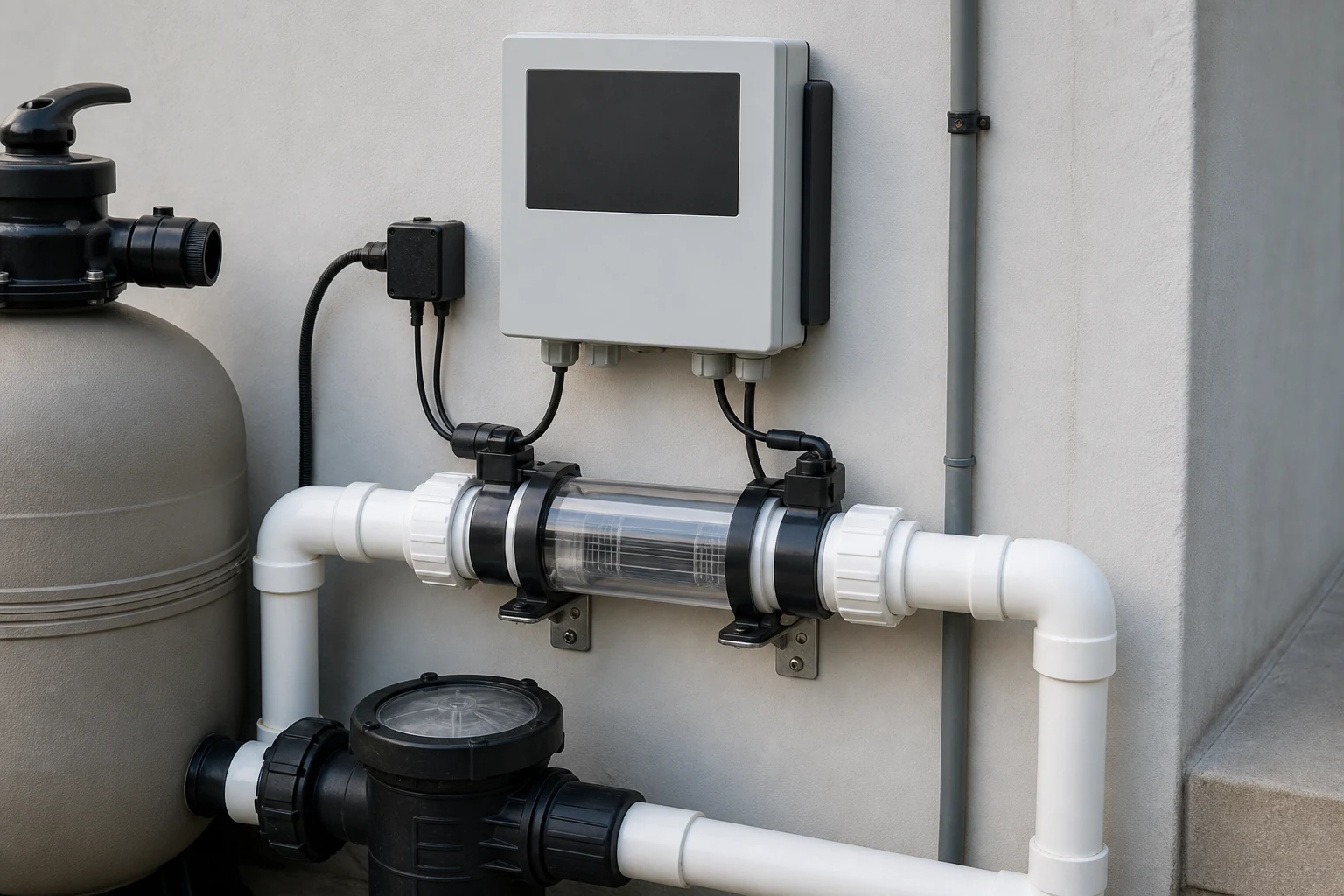
What the system changes
The cell produces chlorine while water flows and the controller is energized. Output is commonly adjusted as a percentage of run time or capacity. The amount delivered depends on cell size, setting, pump schedule, water temperature, flow, salt level, and cell condition.
The system smooths routine production but cannot anticipate a party, storm, algae outbreak, or feeder error without testing. A “generating” light proves the controller’s state, not the free-chlorine residual in the pool.
What the system does not change
Swimmers still introduce contaminants. Sunlight still consumes chlorine. pH still affects disinfection. Filters and brushes still remove debris and biofilm. CDC’s home-pool guidance for chlorine and pH remains relevant.
Saltwater is not seawater, but dissolved salt remains in the water. Evaporation leaves it behind; splash-out, backwashing, and leaks remove it. Do not add salt every time the water level drops. Test first.
Size for real demand
Cell ratings are often expressed as maximum pool volume under defined conditions. Selecting a cell at the edge of its rating can require near-continuous high output in hot, sunny, heavily used conditions, reducing operating flexibility and potentially cell life.
Discuss climate, pool volume, cover use, sunlight, planned pump time, and desired reserve capacity with the installer. Confirm the cell’s required flow and whether the pump schedule can provide it without wasting energy.
Add and verify salt correctly
Use the salt type and target range specified by the generator. Test existing salt with an independent method before adding more. Other chlorine products and fill water may already have raised the level.
Pentair’s IntelliChlor manual, for example, directs owners to distribute approved salt around the pool perimeter, brush, circulate, and verify after dissolution rather than pouring it through a skimmer. That is model-specific evidence; follow the manual for the installed system.
New plaster, fiberglass, vinyl, stone, and metal components can have salt restrictions or curing periods. The surface and builder instructions control startup.
Manage pH and water balance
Salt systems often operate in pools with a persistent upward pH trend, especially where aeration drives carbon dioxide out. Test pH and total alkalinity, look at the trend, and adjust in controlled steps. Do not solve recurring pH rise with an oversized automatic acid feeder before understanding the system.
Scale can form inside the cell when local conditions favor calcium carbonate precipitation. Evaluate calcium hardness, alkalinity, pH, temperature, and saturation balance together. A scaled cell is evidence to inspect the water and flow, not simply to repeat an aggressive acid cleaning.
Inspect and clean the cell safely
Turn power off and isolate the cell as the manual instructs. Look for scale, debris, damaged plates, eroded coating, leaks, or wiring problems. Some deposits may rinse away; chemical cleaning should use only the manufacturer-approved concentration, container, protective equipment, and exposure time.
Excessive acid cleaning can shorten cell life. Never scrape plates with metal tools or mix acid with chlorine residue. If the cell or housing is damaged, replace it or obtain authorized service.
Protect materials and the equipment pad
Salt can concentrate where splash-out evaporates, at overflowing planters, on stone, and around leaking equipment. Rinse appropriate surfaces with fresh water and correct leaks. Confirm that heaters, rails, covers, cleaners, and specialty finishes are compatible.
Grounding and bonding are electrical safety systems, not corrosion guarantees. Have a qualified pool electrician verify code compliance. Do not add an unlisted sacrificial device as a substitute for correcting chemistry, leaks, or electrical faults.
Plan for cold water and cell life
Many cells reduce output or stop generating below a specified water temperature. Read the manual and use a safe seasonal sanitation plan. Never assume a cold-water warning means the pool needs more salt.
Cells are consumable equipment. Track output setting, run hours, test results, cleaning, warnings, and installation date. When chlorine production declines, verify flow, salt, temperature, settings, and water demand before condemning the cell.
Final takeaway
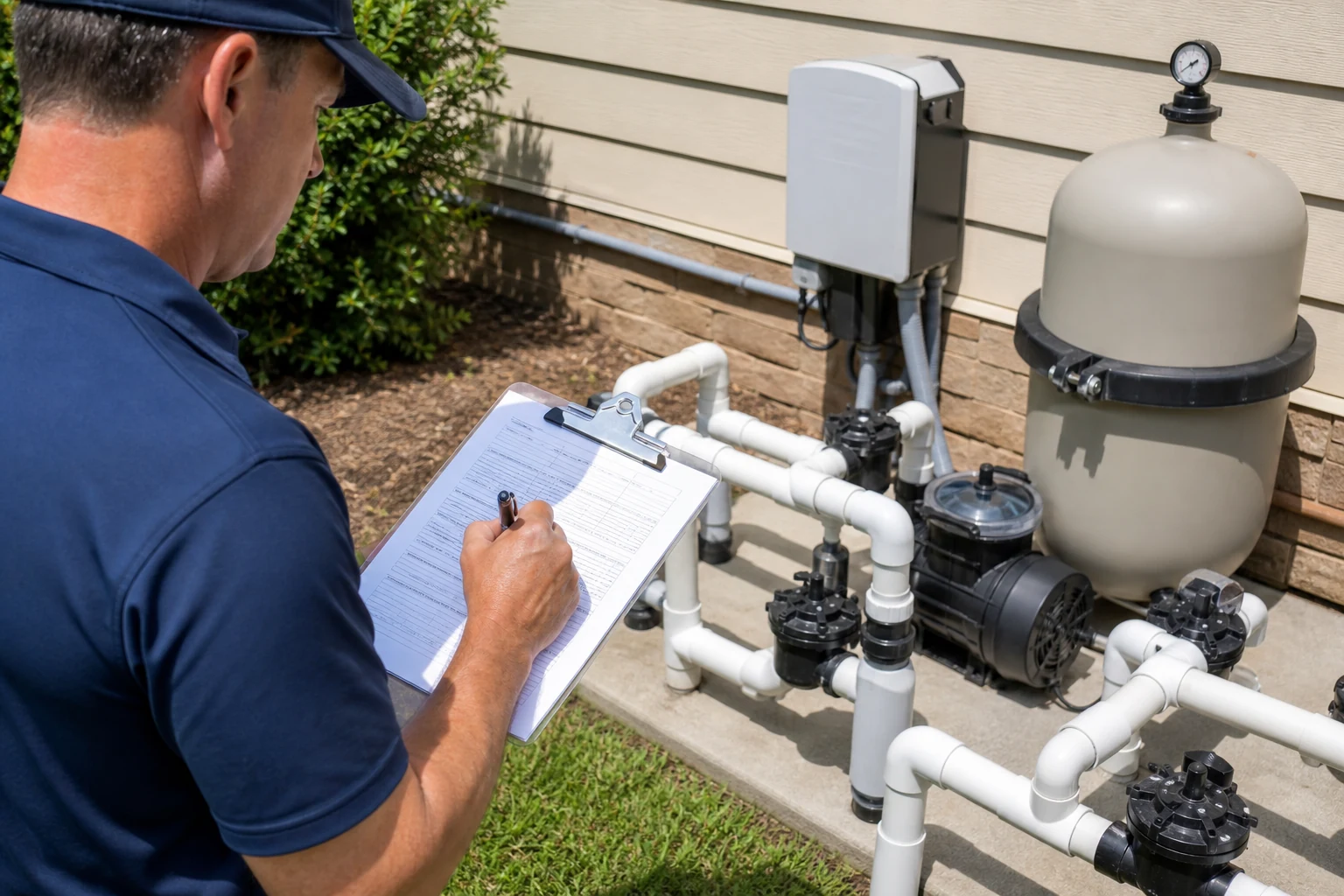
A saltwater generator automates chlorine production, not pool ownership. Size it with reserve, test free chlorine and pH, verify salt independently, manage saturation balance, and clean the cell only as directed. The best salt pool is operated as a measured chlorine pool with added attention to cell condition and material compatibility.
Sources and Supporting Claims
Pentair
- A saltwater chlorine generator still produces chlorine and requires free-chlorine control.
- Salt concentration, surface curing, circulation, and independent verification are model-sensitive.
- Manufacturer instructions control installation and operation.
Centers for Disease Control and Prevention
Published 2024-05-10
- Residential pools need routine free-chlorine and pH testing.
- CDC recommends pH 7.0 to 7.8 and provides minimum free-chlorine guidance.
- DPD kits are more accurate than strips and product directions control use.
National Pesticide Information Center at Oregon State University
- Pool antimicrobial products control bacteria, algae, and viruses.
- Chemical labels and first-aid directions control safe handling.
- Cyanuric acid slows chlorine breakdown in sunlight.